
Lieferung heute & morgen

Qualitätsgarantie

Willkommens-Angebote freischalten: KOSTENLOSE Lieferung | Bis zu 80 % RABATT | Kostenlose 30-Tage-JoyPlus-Testphase
App herunterladen
Glass storage containers are incredibly versatile: they keep leftovers fresh in the fridge, transport lunch to the office and organise dry foods in the pantry. However, attractive product images and general advertising claims do not automatically lead to the right purchasing decision.
Three common pitfalls occur particularly often:
For glass food storage containers that are also intended for reheating or baking, the material specification is crucial. Borosilicate glass is used as a heat-resistant material in several suitable products. Even so, you should always observe the specified temperature range for the individual product.
One example is the LocknLock Boroseal range. According to the product information, the glass container is suitable for use in the oven at up to 400 °C without the lid. It is not intended for use in the oven, microwave or air fryer with the plastic lid attached. Hot glass containers should also not be placed directly on cold surfaces or brought into contact with cold water. Such sudden temperature changes can cause thermal stress.
If you only want to store dry foods, you do not necessarily need an oven-safe glass container. Traditional storage jars can keep your kitchen and pantry organised when used for flour, rice, pasta or sweets.
With a glass container with lid, the design determines its intended use. Four-sided clip-lock closures with a silicone seal are designed for particularly secure storage. This is important for soups, dressings, sauces and prepared meals.
Look out for the following details:
Wooden or acacia lids often require different care from the glass itself. Some models are not dishwasher-safe or should be washed by hand. This matters for everyday use, as demanding care requirements can reduce the practical benefits of a storage jar.
The capacity should match your usual portion size. Small microwave-safe glass containers of around 380 ml, for example, are suitable for side dishes, fruit or smaller snacks. Containers between 600 and 800 ml are useful for individual portions, leftovers and lunch boxes. Larger sets with several capacities can be practical for meal prep and storing provisions.
Rectangular or square containers can often be arranged more space-efficiently in the fridge and freezer than round ones. Stackable glass containers, however, need a sturdy, flat lid and should only be stacked in accordance with the manufacturer’s instructions.
Removable seals make cleaning easier, as food residue is less likely to collect in hard-to-reach areas. Nevertheless, check whether the glass, lid and seal are each dishwasher-safe. For decorative jars, hand washing may be recommended to protect patterns, wood or metal components.
The following selection groups specific models according to typical uses. The information is based on the respective product details and does not replace checking the latest manufacturer’s instructions before use.

Why this product suits this profile: The set contains five 1,040 ml containers and five 370 ml containers. This makes it easy to cover different portion sizes for leftovers, snacks or lunch boxes.
The two sizes reduce the risk of using unnecessarily large containers for small portions. The Snap-Lock lids are designed for secure storage.
Ten-piece set with two clearly stated capacities and glass described as high-borosilicate.
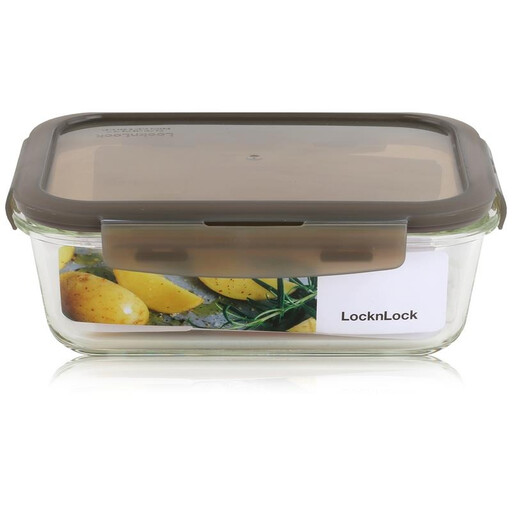
Why this product suits this profile: This rectangular borosilicate glass container is designed for storage, meal prep and reheating or baking without the lid.
The product information clearly distinguishes between the glass container and the lid: use in the oven and microwave is intended without the lid. The freezer and dishwasher instructions are also clearly specified.
630 ml capacity, four-sided closure, silicone seal and rectangular shape for space-saving storage.
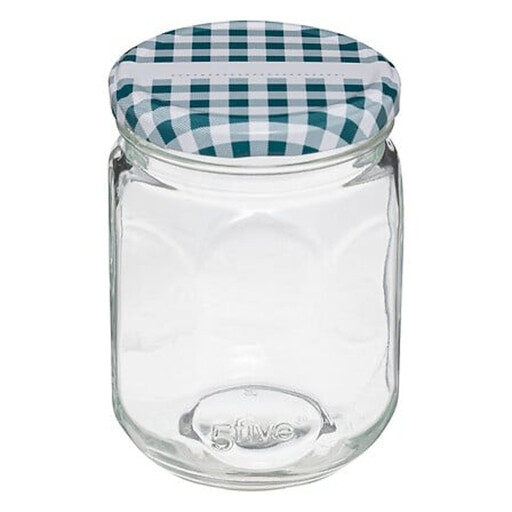
Why this product suits this profile: The six 0.5 l jam jars are suitable for homemade spreads, chutneys, pickled vegetables or layered desserts.
The set is specifically described as a collection of jars in the same size. This makes it easy to portion contents and arrange them uniformly in the pantry.
Six transparent jars with a capacity of 0.5 l and a classic shape for storage and presentation.
We have put together a complete, regularly updated list of products that fully meet these strict selection criteria and the safety regulations applicable in the EU.
That depends on the individual model. In many cases, the glass container without the lid can be used in the microwave, while plastic or wooden lids must be removed. The instructions for the specific product are the decisive factor.
With proper use, glass containers can be used for many years. Their actual lifespan depends on drops, scratches, temperature changes and the condition of the seal. Damaged containers should be discarded for safety reasons.
Models specifically described as having a silicone seal and secure closure may be intended for liquids. A decorative storage jar with a loose or unspecified lid is not automatically suitable for this purpose. Check the information about leakproofing and transport before buying.