
Lieferung heute & morgen

Qualitätsgarantie

Willkommens-Angebote freischalten: KOSTENLOSE Lieferung | Bis zu 80 % RABATT | Kostenlose 30-Tage-JoyPlus-Testphase
App herunterladen
For coffee aficionados, brewing is more than just pressing a button. It's a craft where every detail matters. A coffee scale with a timer is a key tool for achieving consistent and reproducible results. However, the market is flooded with models whose advertised features often create more confusion than value. Many buyers invest in devices that prove impractical for daily use. This guide will help you identify the crucial features and sidestep common purchasing pitfalls.
Common Problems When Choosing a Coffee Scale:
To avoid a bad purchase, you should focus on the fundamental properties that qualify a scale for coffee brewing. Marketing buzzwords are secondary to these objective criteria.
For coffee brewing, especially espresso, high precision is essential. A digital coffee scale with 0.1g increments has become the standard. It allows you to dose both the amount of coffee and water with exactness. Just as important is the sensor's response speed. A good scale displays weight changes in near real-time.
A coffee scale with a stopwatch is not a luxury but a necessity for reproducibility. Extraction time is a critical factor that significantly influences taste. Whether it's a filter coffee scale for pour-over or an espresso scale, timekeeping must be simple and reliable.
More advanced models offer additional features that provide real value for specific brewing methods.
Based on these criteria, we have identified a few models suited for different needs and use cases.
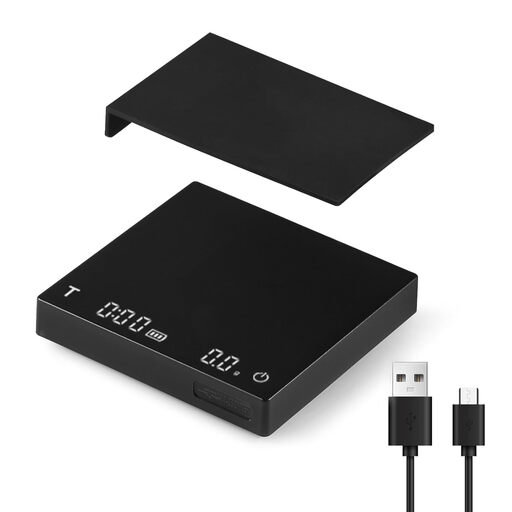
Why It's a Match: This model focuses on the essential features required for precise brewing. It's a solid choice for anyone looking to upgrade their coffee setup without investing in superfluous functions. Its compact design makes it versatile.
The scale features a smart auto-timing mode that simplifies timekeeping and minimizes user error. The sensor responds quickly, avoiding the frustration of a delayed display.
Offers high precision of 0.1 g and a rechargeable battery with a USB-C port. Its compact size fits on the drip tray of most espresso machines.

Why It's a Match: For users who want to refine their pour-over technique, controlling the pouring speed is crucial. This model was designed specifically for that purpose, offering the necessary tools to analyze and perfect every brew.
The flow rate function here is not a gimmick but a practical analytical tool. It provides objective data on your pouring speed, thus overcoming the problem of uncontrolled, inconsistent brews.
Displays the flow rate in real-time, enabling precise control over the brewing process. The minimalist design and clear LED display ensure intuitive operation.
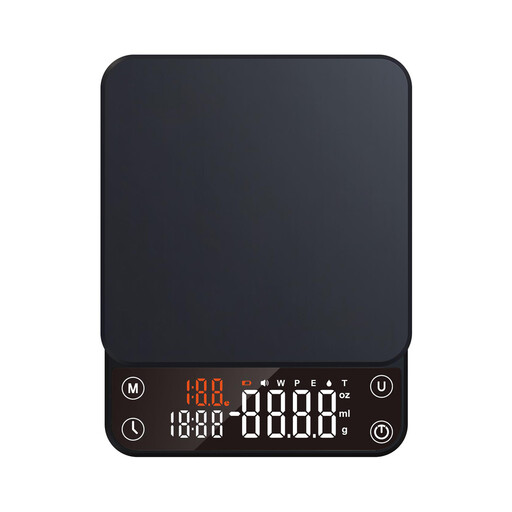
Why It's a Match: Anyone working with an espresso machine needs a scale that streamlines the workflow. This model offers special espresso modes that automate taring and timing, allowing you to focus entirely on the extraction.
The automatic timer function, triggered by the flow of liquid, solves the problem of awkward controls. You no longer need to press any buttons while the espresso is pulling, which drastically reduces the margin for error.
Four dedicated brew modes, including two for espresso (Espresso Auto Timer, Espresso Sensor Timer), offer maximum flexibility and efficiency for use with an espresso machine.
We have compiled a complete, up-to-date list of products that fully meet these strict selection criteria and all applicable safety regulations.
Yes, this level of accuracy is highly recommended for preparing espresso. A typical recipe for a double espresso uses around 18 grams of coffee grounds for a 36-gram beverage yield. A deviation of just one gram can noticeably alter the brew ratio and, consequently, the taste. A barista scale with 0.1-gram increments provides the necessary control for consistent results.
Most digital coffee scales come pre-calibrated. If recalibration is necessary, you will need a reference weight (often 100g or 500g). The process is model-specific and described in the user manual. Typically, you put the scale into calibration mode, place the reference weight on it, and confirm the calibration with the press of a button. For daily use, simply placing the scale on a level surface and pressing the tare button to zero it out before each measurement is sufficient.
Proper care is simple but crucial. Wipe the scale with a soft, slightly damp cloth after use. Avoid holding the scale directly under running water or submerging it in liquids, as this can damage the electronics. Always use the included silicone mat when placing hot carafes or cups on the scale to protect the weighing surface from heat damage. Store the scale in a dry place.