
Lieferung heute & morgen

Qualitätsgarantie

Willkommens-Angebote freischalten: KOSTENLOSE Lieferung | Bis zu 80 % RABATT | Kostenlose 30-Tage-JoyPlus-Testphase
App herunterladen
A digital kitchen scale can simplify recipes, make portions easier to compare and support consistent routines when preparing coffee. However, models vary considerably in weighing range, readability, power supply and extra functions. A large display alone says little about whether a scale is suitable for your everyday needs.
As a Joybuy Product Recommendation Officer, I therefore filter the relevant product details according to specific usage situations. This helps you avoid common unsuitable purchases without being swayed by vague marketing claims.
A kitchen scale with 1-g increments is suitable for flour, sugar, vegetables and many everyday ingredients. For espresso or filter coffee, however, a 0.1-g resolution can be useful. It is also important to check the weight range over which this resolution actually applies. Some coffee scales measure in 0.1-g increments below 1 kg, but only in 1-g increments above that.
If you are looking for a 5 kg kitchen scale for large quantities of dough, you will generally not need laboratory-level resolution. For small quantities of coffee beans, on the other hand, a suitable minimum weight is more important than a high maximum capacity.
A kitchen scale with a tare function resets the display to zero once you place a bowl on it. This saves you from making conversions and allows you to add several ingredients one after another. It is important to check whether the tare button is easy to reach and whether the container sits securely on the weighing platform.
Automatic switch-off can help preserve battery life, but it can be inconvenient when baking or carrying out a slow pour-over brew if it activates too soon. If you are choosing a coffee scale with a timer, check how the timer, tare function and switch-off feature work together on the specific model.
An stainless steel kitchen scale can generally be wiped clean with a soft, slightly damp cloth. However, stainless steel, glass and ABS plastic are not automatically waterproof. Electronic components must not be submerged. Hot pans or baking trays should only be placed on the weighing platform if the manufacturer expressly permits this.
A removable bowl, smooth surface and clearly marked buttons are often more practical for everyday use than an eye-catching design.
For cooking, baking and meal preparation, 5 kg capacity and 1 g accuracy are widely used specifications. A digital food scale with this range covers many household tasks. For coffee, a model with a timer and a finer display is recommended if you intend to weigh small quantities.
Look out for the following details:
The millilitre display is a conversion based on stored assumptions and does not always replace volume measurement for liquids. Check whether the scale distinguishes between water and milk.
An LCD display should remain visible even when a bowl is placed on the scale. On an espresso scale, an LED display with a timer is helpful if you want to operate as few controls as possible while pouring. Non-slip feet and a level surface also affect how easy the display is to read.
Battery-powered models often require two AAA batteries, which may need replacing depending on how frequently you use the scale. Rechargeable versions generally feature a USB-C port and an integrated battery. Check whether a charging cable is included and what charging instructions the supplier provides. Automatic switch-off reduces energy consumption, but it can affect ease of use.
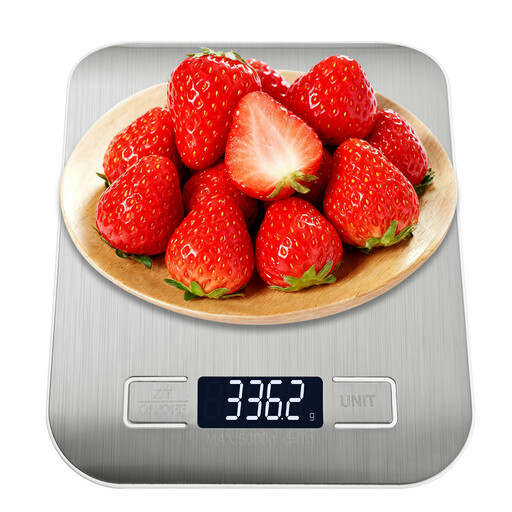
Why this product suits this profile: With a 5 kg capacity, 1-g increments and several units, this scale covers typical cooking and baking tasks.
The technical specifications clearly state the weighing range, graduation, overload warning and automatic switch-off instead of simply claiming high accuracy.
Stainless steel surface with anti-fingerprint coating, LCD display, four selectable units and operation with two AAA batteries.

Why this product suits this profile: This model combines a 0.1-g display, timer, flow-rate display and rechargeable power supply for pour-over brewing and kitchen tasks.
The stated weighing range of up to 2,000 g and 0.1-g graduation provide a clear basis for choosing the product; the cleaning instructions help limit contact with water.
USB-C battery, timer buttons, silicone protective mat, plus a display showing weight, unit and flow function.
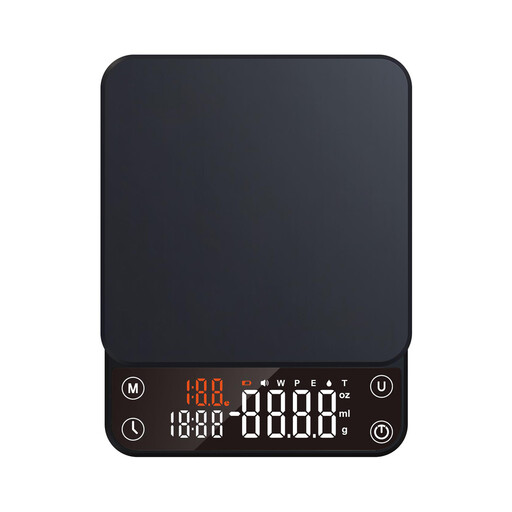
Why this product suits this profile: Baristas and coffee enthusiasts get four modes for weighing, a pour-over timer and two espresso timer functions.
The applications are described using specific modes and weighing limits: 0.1 g below 1 kg, 1 g from 1 kg and a maximum of 3 kg.
Automatic espresso timing through liquid detection, LED display and an integrated 800-mAh battery with USB-C charging.
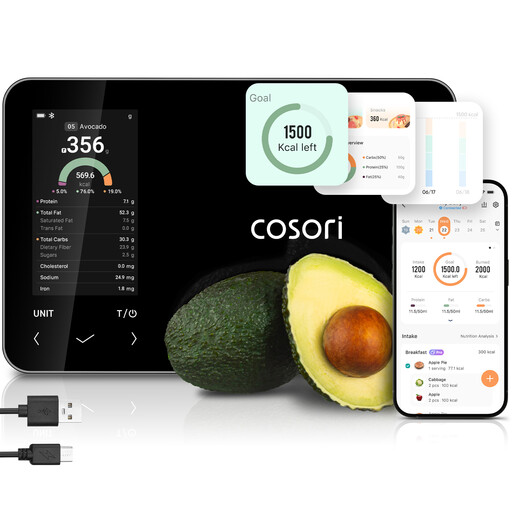
Why this product suits this profile: This scale combines portion weighing with app functions and a food database for personal record-keeping.
The product details transparently state the weighing range of 3 to 5,000 g, the tare function, Bluetooth and the required app use.
1-g increments, seven units, USB-C battery and app functions for tracking calories and selected nutritional data.
We have put together a complete, regularly updated list of products that fully meet these strict selection criteria and the safety regulations applicable in the EU.
Its lifespan depends on use, battery replacement, storage and care. Keeping the scale dry, placing it on a level surface and protecting it from knocks can reduce strain on the electronics and sensors. Without specific information from the manufacturer, it is not possible to give a reliable general lifespan.
For baking recipes, a weighing range of around 5 kg, 1-g increments, an easy-to-reach tare button and a clearly visible LCD display are practical criteria. If you often weigh small quantities of spices or coffee, you may also want to look for finer graduations.
There is no general answer to this. A rechargeable battery avoids the need to buy AAA batteries regularly, but it must be charged and has a limited lifespan. Running costs depend on how intensively you use the scale, your charging habits and the availability of compatible batteries.