
Lieferung heute & morgen

Qualitätsgarantie

Willkommens-Angebote freischalten: KOSTENLOSE Lieferung | Bis zu 80 % RABATT | Kostenlose 30-Tage-JoyPlus-Testphase
App herunterladen
By the Joybuy Product Recommendation Officer, August 29, 2026
Anyone who regularly cuts fabric, cardboard, leather, or carpet knows the challenge: manual scissors quickly lead to hand fatigue, messy edges, and imprecise results. A cordless electric scissor promises a solution—effortless, fast, and precise cutting. However, the market is flooded with models whose real-world performance often fails to live up to their advertising.
Before you make a purchase, it's crucial to understand the common pitfalls that can lead to frustration and a bad investment.
To make an informed decision, you should focus on objective technical specifications rather than marketing promises. Pay close attention to the following three core parameters.
The freedom of a cordless device lives and dies with its battery. Two metrics are critical here:
The blade is the heart of any cutting tool. For an electric scissor, it's not just the material (e.g., tungsten steel or carbon steel) that matters, but also the shape, which is optimized for specific tasks.
The motor speed (RPM) indicates how fast the blade moves. A high speed, such as 11,000 RPM, ensures a clean, low-resistance cut, even through tougher materials like carpet or leather.
A good tool should feel comfortable in your hand and be safe to operate.
We have analyzed products and matched them to different user profiles to help you make your choice.
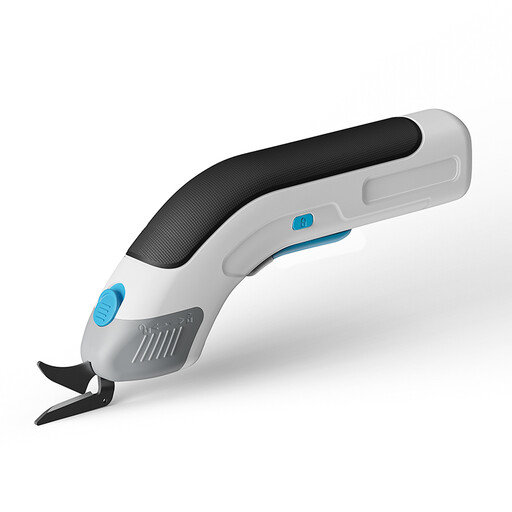
Why This Fits Their Persona: Ideal for crafters who need precise cuts in materials like cardboard, felt, or thin plastic. Its low weight of just 0.2 kg and pointed blade allow for excellent control around corners and curves.
This model features a well-defined safety lock that must be pressed before powering on, directly addressing the risk of accidental activation.
The powerful 11,000 RPM motor ensures clean cuts without effort. The USB-C port allows for fast and flexible charging.
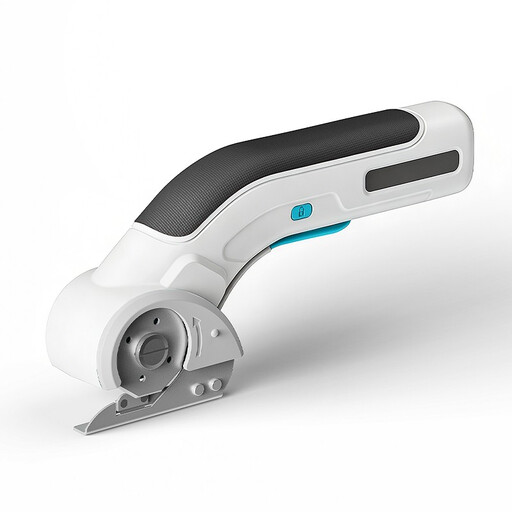
Why This Fits Their Persona: Perfect for hobbyist sewers and anyone who regularly works with fabrics. The round rotary blade glides smoothly through textiles without pulling or fraying them—a true upgrade from a manual rotary cutter.
This tool solves the blade incompatibility problem. Its self-sharpening rotary blade is specifically designed for fabric, delivering consistently clean results where all-purpose blades fail.
The long battery life of up to 2 hours allows for uninterrupted work on large projects. Its quiet operation under 70 dB is pleasant for home use.
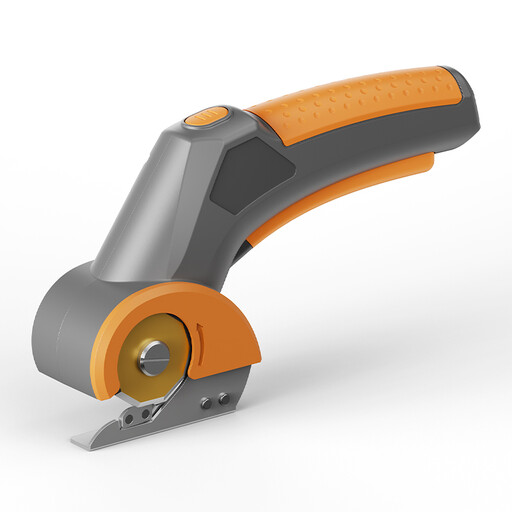
Why This Fits Their Persona: A robust all-rounder for DIYers cutting a wide range of materials, from carpet remnants and leather to packaging cardboard. Its high motor power and durable blade can handle even demanding tasks.
This model bypasses the battery trap with a runtime of up to 2 hours. It also includes a replacement blade and a dust bag, increasing its readiness and longevity.
The combination of long battery life, a powerful 11,000 RPM motor, and an included replacement blade makes this a reliable tool for various projects.
We've compiled a complete, up-to-date list of products that fully meet these strict selection criteria.
The battery life depends heavily on the capacity (in mAh) and the material being cut. Models with a 2000 mAh battery typically offer a continuous runtime of 45 minutes to 2 hours. For longer projects, it's wise to choose a model with USB-C fast charging to minimize downtime.
Yes, it's possible, but it depends on the blade type. Models with a pointed blade (precision cutter) are optimized for curves and tight radii, similar to manual scissors. An electric rotary cutter with a round blade is better suited for long, straight, or gently curved lines, especially in fabrics.
Most modern devices feature a tool-free blade change mechanism. Typically, you need to press a locking button to safely remove the old blade and insert a new one. It is crucial to always remove the battery or secure the device with the safety lock before changing the blade to prevent injury. Always follow the manufacturer's instructions.