
Lieferung heute & morgen

Qualitätsgarantie

Willkommens-Angebote freischalten: KOSTENLOSE Lieferung | Bis zu 80 % RABATT | Kostenlose 30-Tage-JoyPlus-Testphase
App herunterladen
By Joybuy Product Recommendation Officer, August 26, 2026
Cutting dies open up a world of creative possibilities for paper crafting. Whether for custom greeting cards, detailed scrapbooking, or unique DIY decor, the right tools can help you achieve impressive results. However, the market is vast, and not every die delivers on its promise. Before you make a purchase, it's helpful to know the most common problems to avoid disappointment and unnecessary expense.
This guide focuses on the objective criteria that define a good cutting die and helps you make an informed choice for your projects.
Many crafters know the frustration: the design tears, the edges are messy, or the die damages the paper. Often, the causes lie in product characteristics that are not apparent at first glance.
To avoid the problems mentioned above, you should focus on a few core technical features. These will help you objectively assess a die's suitability for your purposes.
The durability and cutting quality of a die depend directly on the material used. Most scrapbooking dies are made of steel.
A die's functionality is determined by the interplay with your die-cutting machine and the chosen paper.
It is important to distinguish between pure cutting dies and embossing folders.
Here are some product suggestions tailored to different needs and projects.
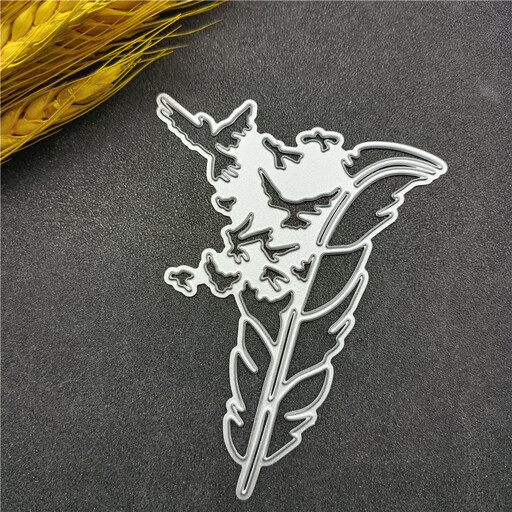
Why This Fits Their Persona: Ideal for crafters looking for a versatile and straightforward motif to get started. The clean, not overly intricate floral design is suitable for a variety of occasions, from birthdays to thank-you cards, without placing high demands on technique or paper.
The design is open and simple, which minimises the risk of paper tears and messy cuts. The large cutouts make it easy to remove the paper, so it doesn't get stuck in the die.
Universally applicable motif. Easy to use even with standard cardstock. Good foundation for multi-layered decorations.
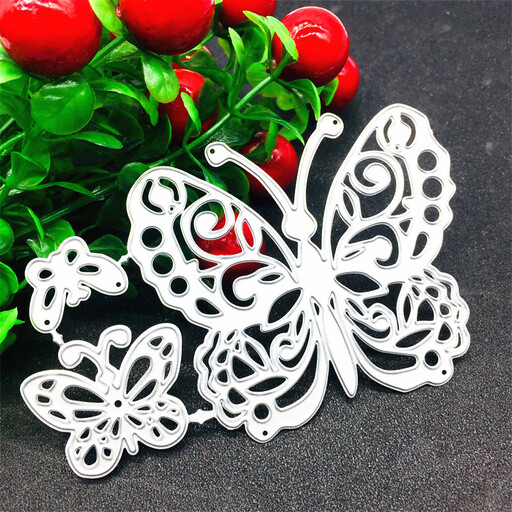
Why This Fits Their Persona: Perfect for advanced crafters who want to add a special touch to their projects with detailed and elegant elements. This intricate butterfly becomes the focal point of any card or scrapbook page.
Despite its intricate structure, this die has several small release holes. These are strategically placed to facilitate the removal of the fine paper pieces and prevent the motif from tearing.
Creates highly detailed, elegant cutouts. The carbon steel material provides the necessary sharpness to cut even fine lines cleanly.
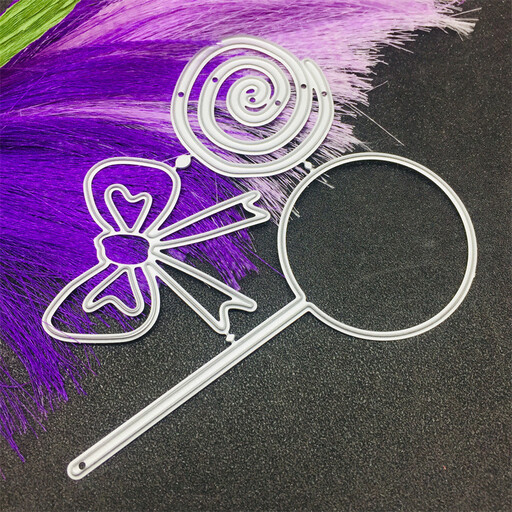
Why This Fits Their Persona: For creatives who enjoy designing projects around specific themes like birthday parties, candy buffets, or kids' cards. This set offers several matching motifs that are ideal for a coherent design concept.
The motifs are clearly defined and not overly cluttered. This ensures that even when using multiple die-cut elements on one card, a clean and professional result is achieved without the cuts appearing imprecise.
Provides a set of thematically coordinated motifs. Encourages the creation of cohesive projects. The individual elements can be combined in versatile ways.
We have compiled a complete, up-to-date list of products that fully meet these strict selection criteria and applicable regulations.
1. Do all cutting dies fit in every die-cutting machine? No, not necessarily. Compatibility depends on the width of the die and the maximum pass-through width of your machine. Additionally, different types of dies (e.g., thick steel-rule dies vs. thin chemically-etched dies) require specific plate combinations. Always check the die manufacturer's specifications and your die-cutting machine's manual.
2. Which paper gives the best results for die-cutting? For most die-cutting projects, especially for detailed motifs, smooth, firm cardstock with a weight of 160 to 220 g/m? works well. Very thin paper (under 120 g/m?) can tear easily, while very thick cardstock (over 250 g/m?) may not be cut through completely. For intricate dies, placing a sheet of wax paper between the die and the cardstock can make it easier to release the motif.
3. How do I clean and properly care for my cutting dies? After use, small paper scraps may remain in the crevices of the die. These are best removed with a stiff-bristled brush (e.g., a special tool brush or a clean toothbrush) and a pointed tool (picker). Store your dies flat and dry, ideally on magnetic sheets or in special storage pockets, to prevent bending and rust.