
Lieferung heute & morgen

Qualitätsgarantie

Willkommens-Angebote freischalten: KOSTENLOSE Lieferung | Bis zu 80 % RABATT | Kostenlose 30-Tage-JoyPlus-Testphase
App herunterladen
A cluttered workspace can disrupt focus and hinder productivity. The right desk organizer promises a solution, but not every model delivers on its promise. As a Joybuy Product Recommendation Officer, I'm here to filter the noise, helping you make an informed decision and steer clear of common purchasing pitfalls.
Many users invest in a desk organization system only to find that it fails to meet their needs after a short time. Before you make a choice, you should be aware of the three most common shortcomings that can render an initially promising product useless:
To avoid making the wrong purchase, you should check three key parameters. These will help you identify a durable and functional organization system for your desk.
The longevity of a desk organizer largely depends on its material. Models made of metal, particularly steel or cast iron, offer high stability. Pay close attention to the surface finish. A powder coating is a clear sign of quality. It not only protects the metal from scratches but also provides effective protection against oxidation and rust—an important factor, especially in a home office where a glass of water might get knocked over. A mesh wireframe (also known as metal mesh) provides a modern aesthetic and good ventilation, but it should be sturdy enough that it won't warp.
Functionality is determined by the type and arrangement of the compartments. Think carefully about what you want to store:
A crucial but often overlooked detail is non-slip feet made of rubber or EVA foam. They prevent the organizer from sliding when you retrieve items and protect the desk surface from scratches.
The available space on your desk is a limiting factor. While a classic desk tray offers quick access, it can take up valuable workspace. For small desks or minimalist setups, a wall-mounted document holder is an excellent alternative. These utilize vertical space and keep the work surface clear, a trend that is becoming increasingly popular in the home office accessories category.
Based on these objective criteria, we have identified a few models that are well-suited for different user profiles.
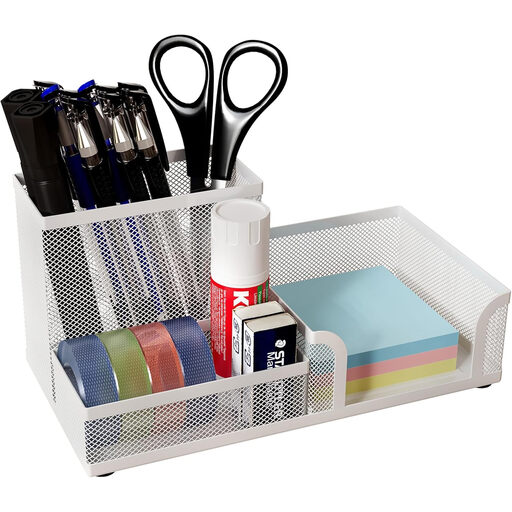
Why This Fits Their Persona: Ideal for students or professionals looking for a simple yet effective solution to organize pens, markers, and small paper clips without sacrificing much desk space.
The design is equipped with non-slip EVA pads that prevent it from sliding or tipping over. The powder coating protects the metal from premature rust.
Compact dimensions (20.3 x 10.3 x 9.8 cm) and a thoughtful three-compartment layout for essential writing tools.
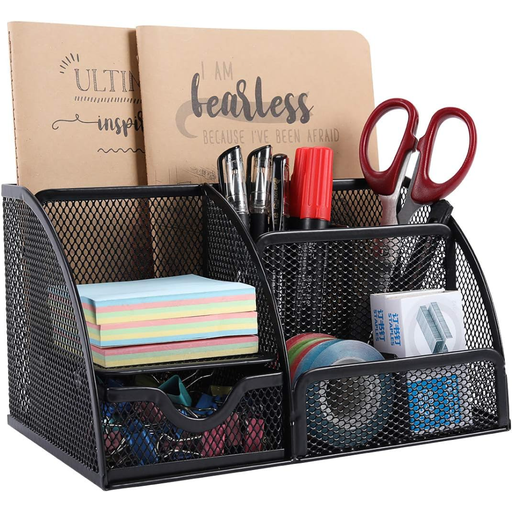
Why This Fits Their Persona: Suited for office or home office users who need to keep a wide range of items—from pens and staplers to notepads—within easy reach and in one place.
Crafted from cast iron, this organizer has a substantial weight (599 g), making it extremely stable. The 7 compartments are practically sized and can even hold A5 notebooks.
A very robust, all-in-one solution with seven compartments of various sizes for comprehensive organization. Non-slip rubber feet protect the desk surface.
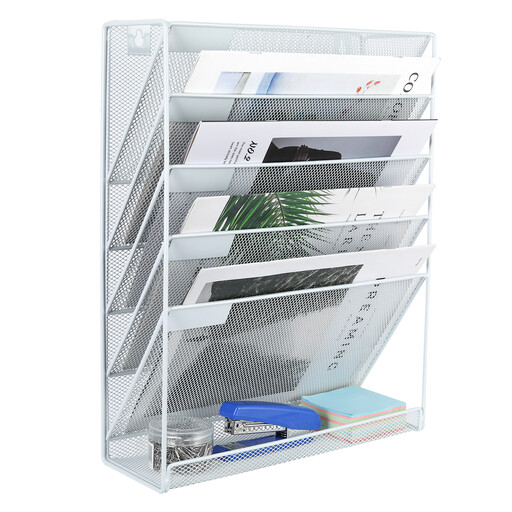
Why This Fits Their Persona: Perfect for users with limited desk space who want to organize A4-sized documents, magazines, or mail vertically, keeping their work surface completely clear.
This model solves the problem of impractical compartments with six clearly defined slots for A4 documents. Wall mounting eliminates any instability on the desk.
Flexible dual-design (can be wall-mounted or used freestanding) and an additional bottom tray for small items like keys or pens.
We've compiled a complete, up-to-date list of products that fully meet these strict selection criteria and adhere to rigorous safety standards.
Cleaning is straightforward. For most dirt, a soft, dry cloth is sufficient. For more stubborn stains, a slightly damp cloth can be used. It's important to dry the organizer thoroughly afterward to protect the powder-coated surface and prevent corrosion. Avoid using harsh chemical cleaners.
A good indicator is the product's own weight. Models made of cast iron or thicker steel are inherently more stable. Also, check the product description for the presence of non-slip feet (often referred to as "anti-slip pads" or a "non-slip base"). A wide, flat base also contributes to stability.
Most wall organizers come with standard screws for solid walls. If you plan to mount the organizer on a drywall (plasterboard) wall, it's advisable to use special hollow-wall anchors to ensure a secure hold, especially for high-capacity models. Before installation, check the nature of your wall and its load-bearing capacity.