
Lieferung heute & morgen

Qualitätsgarantie

Willkommens-Angebote freischalten: KOSTENLOSE Lieferung | Bis zu 80 % RABATT | Kostenlose 30-Tage-JoyPlus-Testphase
App herunterladen
By Joybuy Product Recommendation Officer, August 28, 2026
A digital torque adapter is a practical solution for converting an existing ratchet into a precision measuring instrument. For professional mechanics and ambitious DIYers working on cars, motorcycles, or bicycles, applying the correct tightening torque is critical for safety and functionality. However, the market is flooded with models whose performance claims don't always hold up in practice. Before you invest, you should be aware of the common pitfalls that can lead to a bad purchase and potentially costly damage to your vehicle.
Choosing the right tool is often complicated by marketing promises. Pay close attention to these three points to make an informed decision:
To avoid these mistakes, focus on the following technical specifications. These define the real-world usability and reliability of a digital torque adapter.
The torque range, specified in Newton-metres (Nm), is the most important criterion. It must match your intended applications. For a torque wrench for a bicycle, values up to 40 Nm are often sufficient, while car wheel nuts may require 120 Nm or more. A range that is too wide can compromise accuracy at lower torque values.
Pay attention to the specified bidirectional measurement accuracy. A value of ±2% clockwise and ±2.5% counter-clockwise is a solid standard for most automotive work. This ensures the digital torque tool provides reliable readings both when tightening and when checking left-hand threads.
Most ratchets used in the automotive sector have a 1/2-inch drive. A good digital torque adapter should come with this drive size as standard. To ensure maximum flexibility, included reducers for 3/8-inch and 1/4-inch sockets are a significant advantage. This allows you to use the torque meter for cars, motorcycles, and bicycles with your existing tool collection.
Modern adapters offer various working modes that streamline the workflow:
Based on these objective criteria, we have identified a few models that are well-suited for specific user profiles.
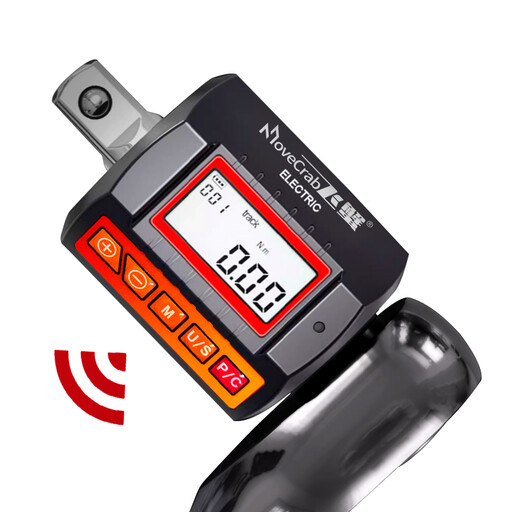
Why This Fits Their Persona: This model is ideal for users who primarily work on bicycles, scooters, or smaller engine components. The torque range up to 135 Nm covers these tasks as well as common automotive jobs like oil changes or interior fittings.
It bypasses the compatibility pitfall by including adapters for 3/8" and 1/4". You can immediately start working with different socket sizes.
Cost-effective precision for a wide range of tasks; high flexibility thanks to the adapter set; data storage for 1,000 measurements.
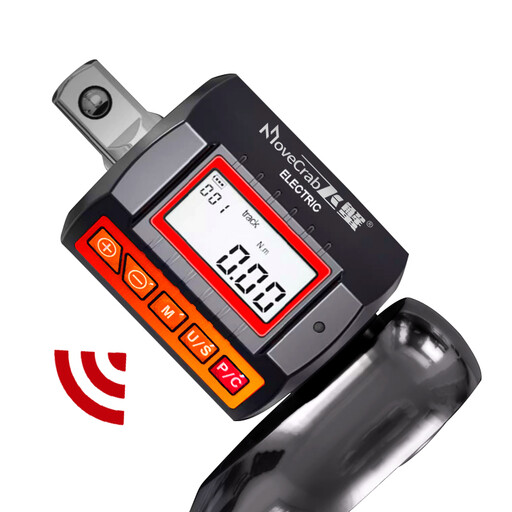
Why This Fits Their Persona: Anyone who regularly works on their own car or motorcycle and performs tasks like wheel changes, brake jobs, or suspension work needs a wider torque range. With up to 200 Nm, this model covers most common tightening torques in the automotive field.
It avoids the mistake of buying a tool with an insufficient torque range that would hit its limits on critical suspension or wheel bolts. The documented accuracy of ±2% provides confidence for safety-relevant parts.
Practical torque range for most automotive applications; audible and visual alarms for precise work; automatic shutoff to conserve battery.
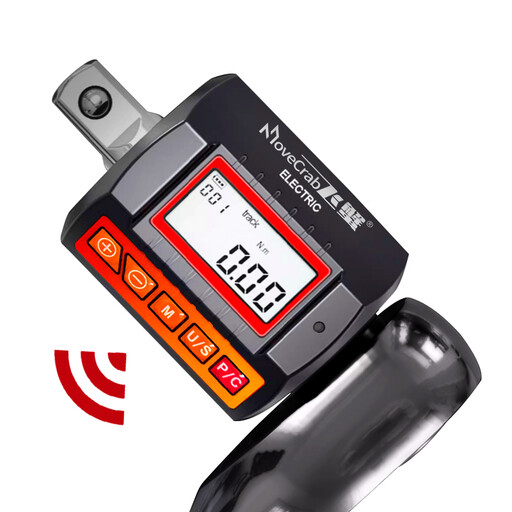
Why This Fits Their Persona: For work on larger engines, truck components, or high-strength chassis parts, torques above 200 Nm are required. This model, with a range up to 340 Nm, offers the necessary power reserves for professional applications and demanding projects.
It closes the gap left by many standard torque wrenches, preventing the need to resort to inaccurate methods or overloaded tools for heavy-duty fastening jobs.
Very high maximum torque value; covers nearly all common and demanding automotive applications; all necessary adapters are also included here.
We have compiled a complete, real-time updated list of products that fully meet these strict selection criteria and German safety regulations.
Yes, like any precision measuring device, an electronic torque wrench or adapter should be regularly checked and, if necessary, calibrated. Calibration is especially important if the tool has been dropped, subjected to impact, or loaded beyond its maximum capacity. For professional use, an annual calibration is often recommended.
The process is straightforward: simply insert the digital torque adapter between the square drive of your ratchet and the socket. Ensure the drive sizes match (e.g., 1/2-inch to 1/2-inch) or use the appropriate reducers or increasers. Then, turn on the adapter, select the desired mode and target torque, and you can begin tightening.
With models from reputable manufacturers, the accuracy stated in the specifications (e.g., ±2%) is comparable to that of complete electronic torque wrenches of the same quality level. The main advantage of the adapter lies in its compactness, flexibility, and the ability to cost-effectively upgrade your existing automotive torque tools. For most applications in the workshop and for DIY projects, the precision of a high-quality adapter is perfectly sufficient.