
Lieferung heute & morgen

Qualitätsgarantie

Willkommens-Angebote freischalten: KOSTENLOSE Lieferung | Bis zu 80 % RABATT | Kostenlose 30-Tage-JoyPlus-Testphase
App herunterladen
Wet dishes piling up on the countertop is a common problem in many kitchens. This takes up valuable space and can disrupt your workflow. A well-chosen dish rack not only creates order but also promotes hygiene by allowing plates, cups, and cutlery to air-dry quickly.
This guide introduces different types of dish racks and explains their specific features. Our goal is to provide you with the practical information needed to find a functional solution that perfectly suits your kitchen's layout and needs.
The right model for you depends on several factors, including your available space, material preferences, and the daily volume of dishes.
The material affects the dish drainer's durability and ease of cleaning. A stainless steel dish rack is a popular choice due to its corrosion resistance and hygienic properties. Models made from coated metal or plastic can also be functional, but they require regular inspection for any damage to the coating to prevent rust. Look for a smooth finish that makes cleaning easier.
The shape and size of the dish rack should complement your kitchen.
Consider the size of your household. A rack should offer enough space for plates, bowls, glasses, and cutlery. Additional holders for cups, glasses, or a separate cutlery basket can improve organisation. A removable drip tray catches excess water and protects your countertop.
Here is a selection of different models tailored to various needs and kitchen sizes.
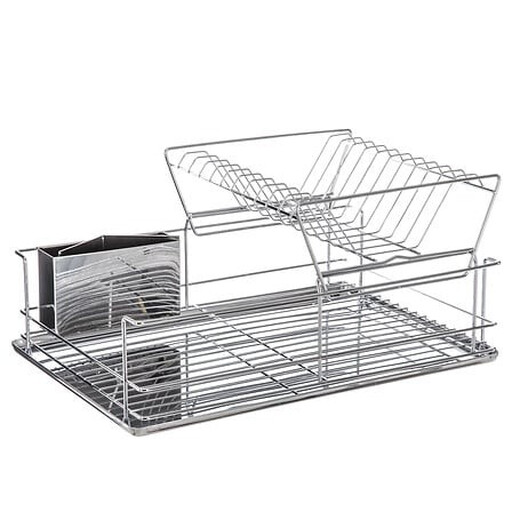
View Product: 2-Tier Stainless Steel Dish Rack
Why it stands out: This model makes efficient use of vertical space. Its two-tier design doubles the drying capacity while occupying a minimal footprint.
Advantages:
Who it's for: Households with a consistently high volume of dishes that need a space-saving solution for their countertop.
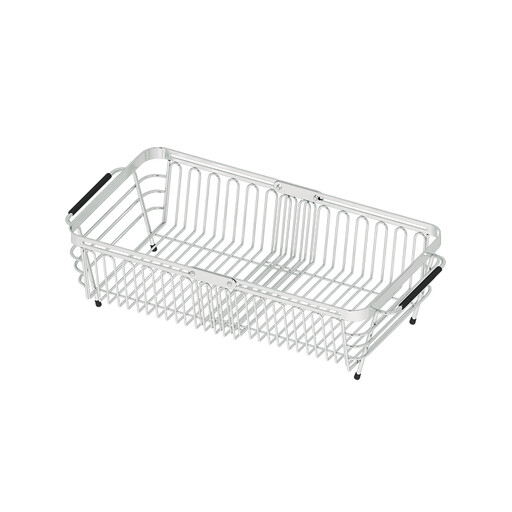
View Product: Maxcook Over-the-Sink Dish Rack
Why it stands out: This rack is placed directly over the sink, keeping your countertop completely clear. Its telescopic frame flexibly adjusts to fit different sink sizes.
Advantages:
Who it's for: Anyone looking to maximise their counter space and who prefers a flexible, multifunctional solution for the sink area.
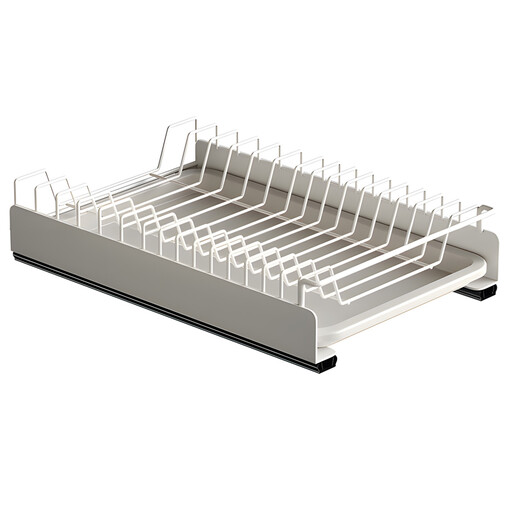
View Product: VIVREAL Pull-Out In-Cabinet Dish Rack
Why it stands out: Designed as a built-in solution, this in-cabinet dish rack integrates seamlessly into your kitchen cabinetry for a minimalist look.
Advantages:
Who it's for: Homeowners seeking a permanent, integrated, and discreet solution for organising dishes in deep cabinets.
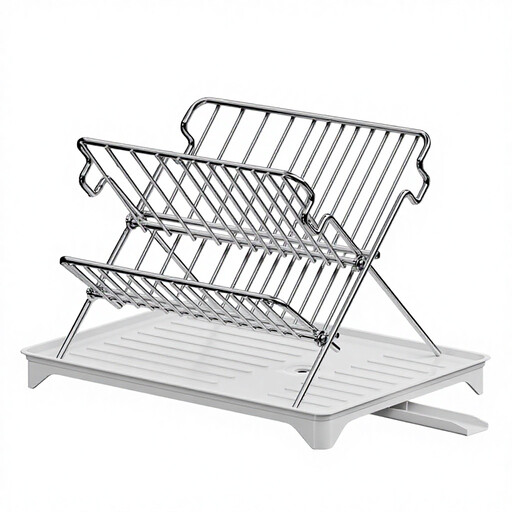
View Product: Maxcook 2-Tier Foldable Dish Rack
Why it stands out: This model combines the high capacity of a two-tier rack with the flexibility of a collapsible design.
Advantages:
Who it's for: Households that need high drying capacity but also value a flexible solution that can be stored away when not needed.
The models featured here cover the most common use cases. However, if you need a different size, material, or a specific design, you can find more alternatives in our kitchen organisation category.
Discover More Kitchen Sink Organisers Here
1. What is the best way to clean a stainless steel dish rack? A stainless steel dish rack can usually be cleaned easily with warm water, a mild dish soap, and a soft cloth. To prevent limescale spots, it should be wiped dry after cleaning. For stubborn deposits, a solution of water and vinegar can help.
2. Which dish rack is suitable for a very small kitchen? For kitchens with limited space, a collapsible dish rack, a space-saving dish drainer, or an over-the-sink dish rack are particularly suitable. Collapsible models can be stored away after use, while over-the-sink models keep the countertop completely free.
3. Can you clean a dish rack in the dishwasher? Whether a dish rack is dishwasher-safe depends on its material. Models made of pure stainless steel or heat-resistant plastic are often suitable. Caution is advised for coated metal racks or those with wooden elements, as high temperatures and harsh detergents can damage the materials. Always check the manufacturer's instructions.