
Lieferung heute & morgen

Qualitätsgarantie

Willkommens-Angebote freischalten: KOSTENLOSE Lieferung | Bis zu 80 % RABATT | Kostenlose 30-Tage-JoyPlus-Testphase
App herunterladen
Freedom from stationary power sources is becoming increasingly important for many people—whether for camping, in an RV, or as part of emergency preparedness. A foldable solar panel offers a flexible and eco-friendly way to power a portable power station and other devices on the go. However, the market is vast, and the technical specifications can be overwhelming.
This article serves as a guide to help you navigate your options. We'll explain the most important criteria to consider when making your selection and present a curated list of models that are well-suited for various use cases due to their specific features.
To make an informed decision, you should consider three key aspects: power, portability, and compatibility.
The rated power, measured in watts (W), determines how quickly your devices or power station will charge. A 200W solar panel is a common and versatile choice, sufficient for most medium-sized power stations. However, the actual output heavily depends on the efficiency of the solar cells and the current light conditions.
Modern panels often use monocrystalline solar cells, which can achieve a high efficiency rate of over 23%. This means they generate more energy than older models, even on cloudy days or with suboptimal orientation. Pay close attention to the stated efficiency rating to compare the performance of different panels.
A portable solar panel should be lightweight and compact. Compare the weight and folded dimensions of different models. A 200W solar briefcase, as they are often called, is typically designed for easy transport and storage.
The surface material is crucial for durability. Many high-quality models are coated with an ETFE (Ethylene Tetrafluoroethylene) lamination. This material is scratch-resistant, stain-repellent, and more weather-resistant than conventional PET. The IP (Ingress Protection) rating indicates the level of protection against dust and water. For example, an IP65 certification means the panel is dust-tight and protected against water jets.
Ensure the solar panel is compatible with your power station. Most manufacturers, like Bluetti or Jackery, use standardised MC4 connectors, which ensure broad compatibility. Nevertheless, you should always check the technical specifications of both devices, especially the maximum input voltage (Volts) and current (Amps) of your power station. Using an incompatible panel can damage the power station or the panel itself. A mobile solar module for an RV should also be matched to the vehicle's onboard electronics.
Here is a selection of models compiled based on their technical specifications and intended applications.
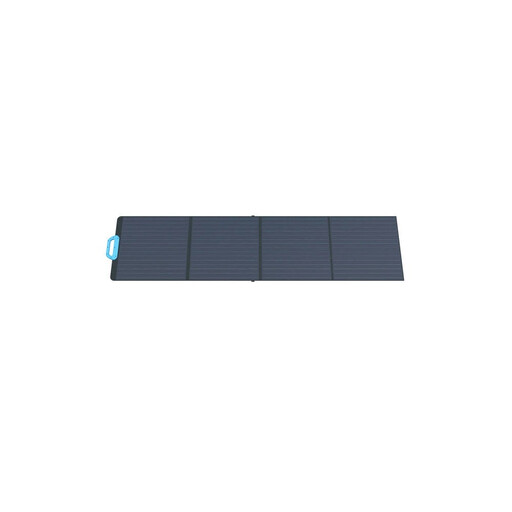
Why it stands out: The BLUETTI PV200 combines a high 200W output with an efficiency of up to 23.4%. Its ETFE coating and robust construction make it a durable companion for outdoor use.
Advantages:
Who is it for? This panel is an excellent choice for owners of BLUETTI power stations (e.g., EB55, EB70, AC200 series) who need a reliable and efficient charging solution for camping or as an emergency power supply.
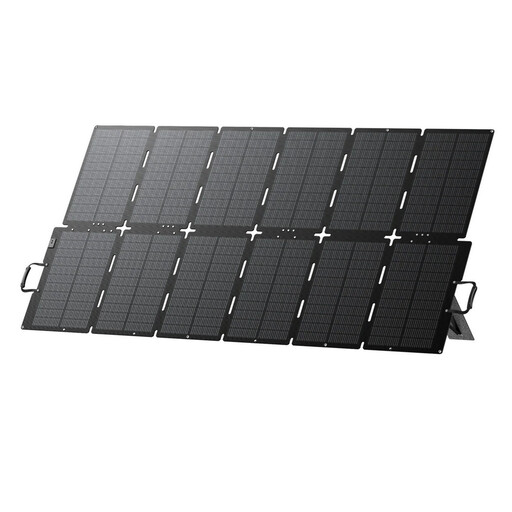
Why it stands out: With a rated power of 500 watts and an efficiency of up to 25%, the SORA 500 is designed for demanding applications. Its high IP67 protection rating makes it particularly resistant to environmental factors.
Advantages:
Who is it for? Users with high energy demands who operate large power stations like the BLUETTI AC200PL or AC270P and require a very powerful and robust charging solution. Due to its weight of 12.9 kg, it is better suited for stationary use at a campsite or RV rather than for long hikes.
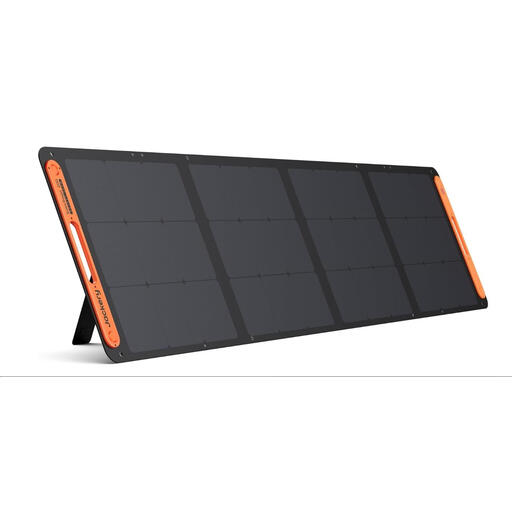
Why it stands out: The Jackery SolarSaga 200W is distinguished by its very high efficiency of up to 24.3% (according to the manufacturer) and its ease of use. It is specifically designed to work with Jackery Explorer power stations.
Advantages:
Who is it for? Ideal for users within the Jackery ecosystem, especially owners of the Explorer 1000 V2 or 2000 V2. It is an excellent choice for outdoor adventures where fast and efficient energy generation is required.
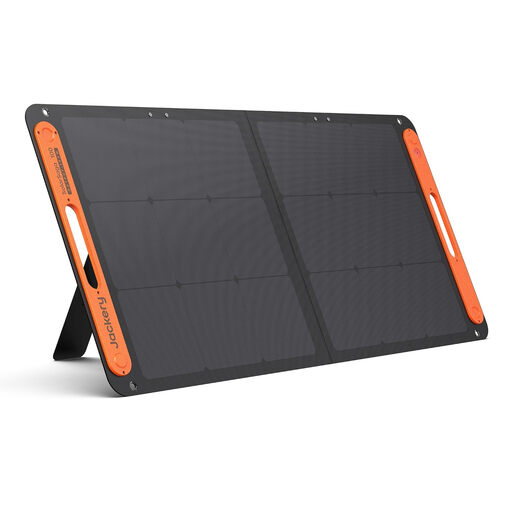
Why it stands out: The SolarSaga 100 is a compact and lightweight solution known for its high portability and integrated USB ports. With an efficiency of up to 25%, it is also very efficient.
Advantages:
Who is it for? Perfect for hikers, campers, and anyone who needs a lightweight and flexible solar solution for smaller power stations (e.g., Jackery Explorer 500) or for directly charging small devices.
While this guide focuses on mobile, foldable panels for on-the-go use, solar energy also offers a wide range of solutions for the home and garden. If you are interested in stationary applications like solar-powered lighting, you may find suitable products in our Solar House Lamps category.
The required power depends on the capacity of your power station and your daily energy consumption. For a medium-sized power station (500-1000 Wh), a 100W to 200W panel is a good choice to fully charge it on a sunny day. For larger stations (>1500 Wh) or with high consumption, panels of 200W or more are recommended.
Most high-quality panels are at least splash-proof (e.g., IP65). Models with an IP67 or IP68 certification can also withstand heavy rain or brief immersion. However, it is recommended to take down and store the panels in a protected area during extreme weather conditions like storms or hail, as they are not designed for permanent outdoor installation.
For optimal performance, you should position the panel as perpendicular to the sun as possible. Adjust its orientation throughout the day to follow the sun's path. Avoid any shading, as even a small shadow on a single cell can significantly reduce the output of the entire panel. Also, keep the surface clean, as dust and dirt will reduce its efficiency.