
Lieferung heute & morgen

Qualitätsgarantie

Willkommens-Angebote freischalten: KOSTENLOSE Lieferung | Bis zu 80 % RABATT | Kostenlose 30-Tage-JoyPlus-Testphase
App herunterladen
A 200W foldable solar panel is suitable for camping, van life, the garden, travelling and charging portable power stations. A rated output of 200 watts may sound straightforward, but on its own it tells you little about the energy you can generate in practice. What matters is the connections, compatibility, setup options and protection against the typical demands of outdoor use.
So, when buying a 200-watt portable solar panel, don’t focus solely on efficiency figures or marketing terms such as ‘High Efficiency’. Some common buying mistakes can leave you with a panel that isn’t compatible with your power station or is far less versatile in everyday use than you expected.
The 200-watt figure usually describes the rated output under standardised test conditions. In the UK, factors such as the sun’s position, cloud cover, shade, temperature, orientation and dirt all affect the actual output. So, a 200W solar panel for motorhomes and camping should be positioned to face the sun as directly as possible.
Even high efficiency can’t make up for poor positioning. Depending on how the cells are connected, partial shading can reduce the output of the entire panel. That’s why integrated feet or adjustable stands are useful features.
A portable solar panel may have MC4, XT60, Anderson, DC5521, USB-A or USB-C connections, for example. These aren’t automatically compatible with one another. The important things to check are the connector type, input voltage, permitted current and polarity of your power station.
A solar panel with USB-C can power small devices directly. A power station, on the other hand, will usually have a dedicated DC or solar input. Before buying, compare the technical specifications of both devices.
IP ratings such as IP54, IP65, IP67 or IP68 refer to specific conditions. They don’t replace the instruction manual. Strong winds, hail, prolonged exposure to moisture or physical strain can damage a foldable solar panel, even if its casing is protected against dust or splashes.
Store the panel folded and in a dry place. Keep the cables and connectors clean. The dark surface can become considerably warm in direct sunlight.
When buying a foldable solar panel for a power station, compare at least these figures:
An adapter changes the connector type, but it doesn’t automatically change the electrical characteristics. The solar panel’s specifications must match those of the power station’s solar charger.
Monocrystalline solar cells are often used in foldable outdoor panels. Manufacturer efficiency figures of around 23 to 24.3 per cent describe conversion under specified conditions. They don’t guarantee a particular daily energy yield.
On some models, an ETFE-coated surface can help protect against scratches and environmental factors. Even so, don’t step on or bend the panel, or clean it with harsh products. A soft, damp cloth is usually all you need.
Weight and packed size are particularly important for backpacking or if you move the panel frequently. An integrated carry handle, magnetic fasteners and support feet make setup easier. Check the unfolded dimensions too: a 200-watt panel needs a sufficiently large, flat surface.
When using the panel in the garden, in a motorhome or at a campsite, secure it to prevent it tipping over or slipping. Make sure the cables don’t create a trip hazard.
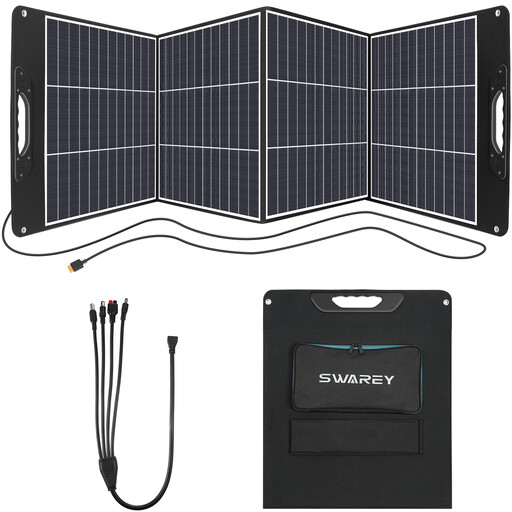
Why it suits this user: The panel offers several direct charging options, including USB-A, USB QC3.0, 18 W USB-C PD and XT60 with adapters. At 5.5 kg, it’s relatively easy to handle for mobile use.
The range of adapters reduces the risk of finding that your existing equipment only fits a single connector type. The support feet allow you to adjust the angle from 0 to 90 degrees.
Monocrystalline cells, a stated efficiency of 23 per cent, a weight of 5.5 kg and a 24-month manufacturer’s warranty, according to the product details.
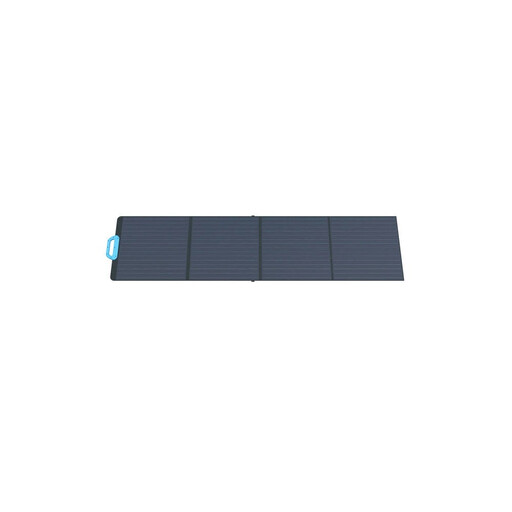
Why it suits this user: Its four-fold design, stated ETFE material and MC4 connectors make it a good fit for users looking for a well-designed solution for power stations and longer stays outdoors.
The stated figures of 20.5 V Vmp, 9.7 A Imp and 26.1 V Voc make it easier to check compatibility with your solar input. However, the panel isn’t designed to be left exposed to the weather for extended periods.
200 W rated power, a stated efficiency of up to 23.4 per cent, a weight of 7.3 kg and an MC4 cable included, according to the manufacturer.
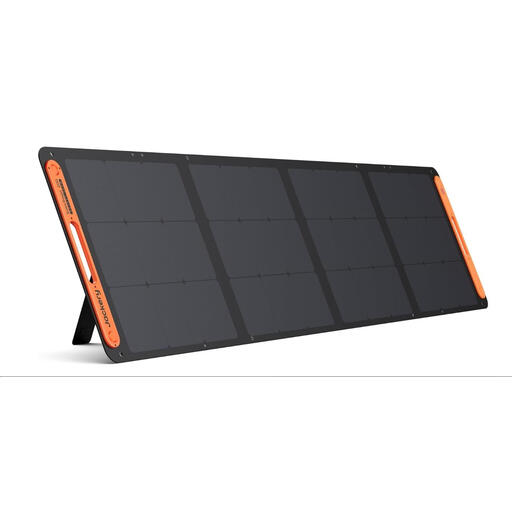
Why it suits this user: This panel is worth considering if you’re looking for a foldable option with a carry bag, USB-A and USB-C outputs, and a stated IP68 rating.
Clearly listed dimensions, voltage and current figures make it easier to plan your system. Even with this rating, follow the manufacturer’s safety guidance on wind, water and physical strain.
A stated efficiency of up to 24.3 per cent, a weight of 6.2 kg, three-part support feet, and USB-A and USB-C outputs, according to the product description.
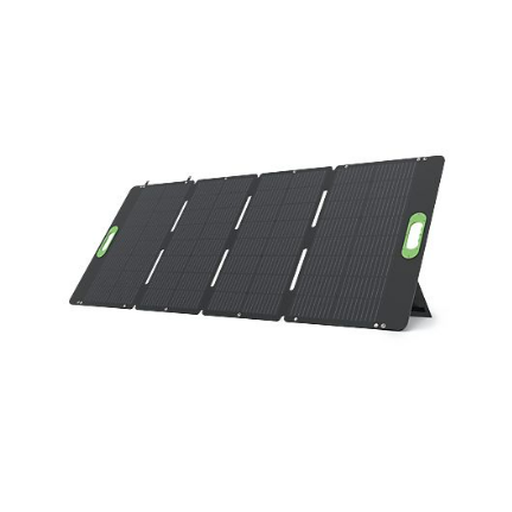
Why it suits this user: Weighing 8.5 kg, this panel is aimed at users who prefer MC4 connectors, a stated IP67 rating and a robust design for camping, motorhomes or the garden.
The technical figures of 18.24 V Vmp and 12.06 A Imp allow you to check compatibility precisely. However, the IP67 rating doesn’t protect the panel from storms or make it suitable for permanent outdoor storage.
Monocrystalline 10BB cells, a stated efficiency of 23 per cent, an MC4-to-XT60 cable and integrated support feet, according to the manufacturer.
We’ve put together a comprehensive, regularly updated list of products that meet these strict selection criteria and the safety requirements in force in the EU.
To connect the panel to a power station, first plug it into the designated solar input, then position it to face the sun. With MC4 systems, make sure the connectors are fully clicked into place. Check beforehand whether you need an MC4-to-XT60 connection or another adapter.
Avoid shade from trees, vehicle fittings or buildings. Even small areas of shade can reduce output. Take the panel down and store it somewhere dry in strong winds, thunderstorms or hail. Don’t use solvents or place objects on the surface.
The actual output is often lower than the rated power because weather, the sun’s position, orientation, temperature and charging losses all have an effect. 200 watts is a test figure under defined conditions, not a guaranteed continuous output.
No. The open-circuit voltage, input voltage, current and connector type must be compatible with the power station. Before buying, compare the technical specifications of both devices. An adapter alone doesn’t guarantee electrical compatibility.
Its lifespan depends on the cell technology, coating, transport, storage and exposure to the elements. Only fold the panel at the designated points, protect it from sharp objects and store it somewhere dry. The manufacturer’s warranty and operating conditions can also help you assess its expected lifespan.