Who is a food slicer suitable for?

Cutting roast beef into thin slices

If you mainly want to cut roast beef from the farmers’ market into even, thin slices, pay attention to the blade type, fine adjustment and carriage guidance. ritter describes smooth slicing blades as suitable for soft foods and particularly thin slices; the manufacturer does not recommend this blade for bread.

Slicing meat regularly and cleaning the appliance

If you use the slicer every week, accessible contact surfaces and parts that can be removed in accordance with the manufacturer’s instructions are important considerations. The German Federal Institute for Risk Assessment recommends using separate kitchen utensils for raw foods and cooked foods or foods eaten without further heating.

Limited kitchen space

If you need to put your food slicer away after use, a folding design may be a good fit. Also check that you have enough worktop space for slicing and that the blade and controls suit your needs; Severin describes the base plate of the AS 3912 as foldable.

What should you look for when buying?

For your weekly shop, consider the cut you want, how easy the slicer is to clean after contact with meat, how much storage space you have and whether you might use it for other foods too.

What matters to you What to check before buying Who is this important to?
Thin slices of roast beef Check whether the specific version comes with a smooth slicing blade and how finely you can adjust the thickness. If I want to cut roast beef as thinly and evenly as possible, the combination of blade, settings and carriage matters to me. Around 36% of consumers put a fine cut first.
Cleaning after contact with meat Check whether the blade, carriage and stop plate are accessible or removable according to the instructions, and whether a finger guard and food holder are included. If I use the slicer regularly for meat, I want to be able to reach the contact surfaces easily and handle them safely after use. Around 29% of consumers prioritise cleaning and ease of use.
Worktop space and storage Compare the dimensions during use and when stored with the space available in your kitchen; remember to allow room for the carriage to move. If the appliance needs to fit in a cupboard between weekly uses, its design is a key consideration for me. Around 21% of consumers put space-saving storage first.
Versatility and accessories Tell the difference between blades included in the box and optional accessories, and check compatibility against the full model name. If I want to slice other foods as well as roast beef, I look for suitable blades and check which accessories are actually included. Around 14% of consumers prioritise versatility and ongoing costs.

CE marking is required for electrical appliances covered by harmonised EU rules when the relevant rules require it. As Your Europe explains, it is a declaration by the manufacturer, not an independent quality mark. Parts intended to come into contact with food must meet EU requirements for food contact materials (EUR-Lex). Check the documentation for the specific model and its intended use.

Common buying mistakes

  • ‘Food slicer’ doesn’t automatically mean ‘suitable for fine slices of roast beef’

    A universal serrated blade and a smooth slicing blade are not the same thing. ritter describes its smooth blade as suitable for soft foods and very thin slices, but not for bread.

    Check what’s included and the full model name. Before buying an accessory, check which blades are compatible with that exact version.

  • Comparing only the finest stated thickness setting

    A fine setting alone doesn’t guarantee even slices of roast beef. The blade and carriage guidance also matter when choosing a slicer; ETM TESTMAGAZIN lists adjustable slicing thickness as an important point to check.

    Consider the settings and ease of use together, and don’t treat manufacturer specifications as a measured roast beef slicing result.

  • Leaving worktop space and cleaning until after you buy

    A fixed appliance needs worktop space while slicing; even a folding model needs room for the carriage when in use. After slicing, clean the contact surfaces in accordance with the appliance instructions.

    Measure your worktop and storage space, and check the instructions in advance to see how to clean the blade, carriage and stop plate.

A guide to suitable brands

Severin

The AS 3915 and AS 3912 offer different options, balancing meat slicing with space-saving storage.

  • The manufacturer’s specifications for the AS 3915 list a ham blade, removable blades, a finger guard and a food holder. The model is also described as having a continuously adjustable thickness setting from 0–15 mm and a tilting carriage.
  • For the AS 3912, Severin lists a foldable base plate. This design alone doesn’t guarantee particularly good results when slicing roast beef.

GRAEF

According to the manufacturer, the Master M20F is designed for fine adjustment and comes with a smooth blade.

  • GRAEF lists settings in 0.25 mm increments from 0–2 mm and a 17 cm blade for this model.
  • These manufacturer specifications are not an independent comparative test of roast beef slicing. Check which blade is included with the specific version.

ritter

The E 16 is a fixed food slicer with a serrated blade for a range of foods.

  • The manufacturer lists an inclined metal design, a removable carriage, and momentary and continuous switches. The E 16 has a stated footprint of 22.5 × 33.5 cm.
  • A serrated blade is included as standard. According to ritter, a smooth slicing blade is better suited to thin slices of soft foods, but not to bread.

Clatronic

The MA 3585 is a documented all-purpose option with a serrated blade.

  • For the MA 3585, Clatronic lists a continuously adjustable thickness setting from 0–15 mm, a 190 mm blade, a finger guard and a tilting carriage table for cleaning.
  • The manufacturer’s information about possible uses and features is not an independent comparison of roast beef slicing quality.

Food slicers at Joybuy

The Joybuy models listed here are electric food slicers for roast beef and cold cuts. Depending on the product, the focus may be on slicing thickness, blade type, cleaning or storage.

Electric food slicer with adjustable thickness setting, foldable

Electric food slicer, foldable, 0–15 mm

Worth considering if you want to slice roast beef and then store the appliance away neatly.

Slicing thickness: 0–15 mm; foldable design; stainless steel blade.

View at Joybuy
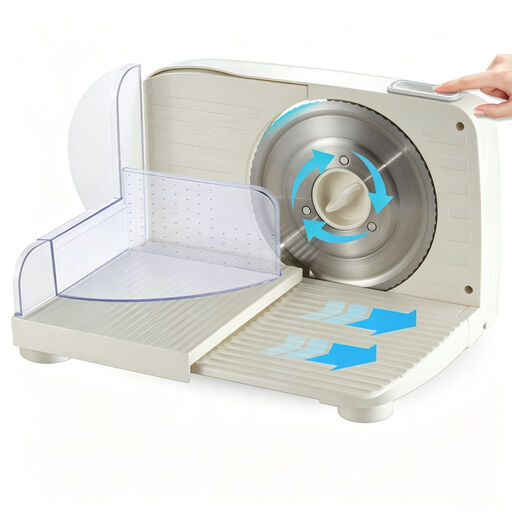
Electric food slicer with 250 W motor and two blades

Electric food slicer, 250 W, two blades

An option for thinly sliced foods, if the smooth blade suits what you want to use it for.

Power: 250 W; two blades; adjustable slicing thickness from 0–15 mm.

View at Joybuy
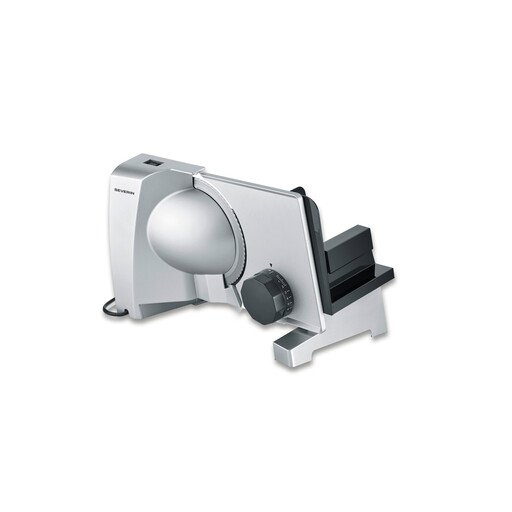
Severin AS 3917 food slicer with adjustable thickness setting

Severin AS 3917 food slicer, 130 W

Could be suitable for cold cuts if the adjustment range and removable parts meet your slicing and cleaning needs.

Slicing thickness: 0–23 mm; power: 130 W; metal housing; removable blade and carriage table.

View at Joybuy
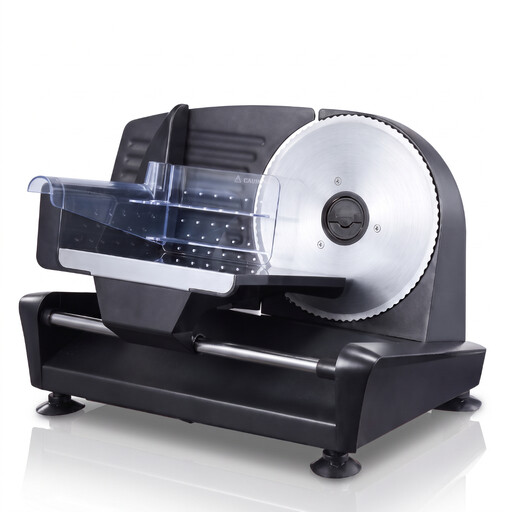
FOHERE electric food slicer with two 19 cm blades

FOHERE electric food slicer, 200 W

A possible choice for meat and cold cuts if a smooth blade and removable parts suit your needs.

Power: 200 W; two stainless steel blades, each 19 cm; slicing thickness: 0–15 mm; removable carriage.

View at Joybuy
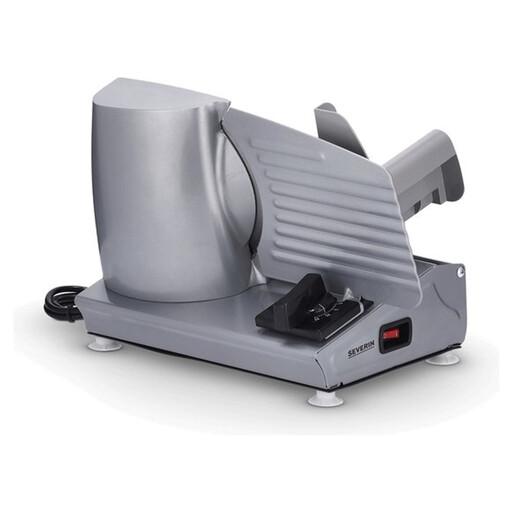
Severin AS 3915 food slicer with ham blade

Severin AS 3915 food slicer, 180 W

Worth considering for thinly sliced roast beef if the included ham blade and access for cleaning suit your needs.

Power: 180 W; two removable stainless steel blades, including a ham blade; slicing thickness: 0–15 mm; finger guard and food holder.

View at Joybuy

Frequently asked questions

Which blade is suitable for thin slices of roast beef?

For soft foods, ritter describes a smooth ham or slicing blade as suitable for particularly thin slices. The manufacturer does not recommend this blade for bread, so check which blade comes with the specific machine.

What should I do if I also want to slice raw meat with the appliance?

The German Federal Institute for Risk Assessment recommends using separate kitchen utensils for raw foods and cooked foods or foods eaten without further heating. Clean the contact surfaces in accordance with the appliance instructions, and keep perishable foods chilled until you prepare them.

Can I keep sliced roast beef unrefrigerated until the next farmers’ market?

No. The German Federal Institute for Risk Assessment recommends keeping perishable foods in the fridge until they are eaten or prepared; its kitchen hygiene guidance gives a temperature of 2 °C to no more than 7 °C. A food slicer does not extend the shelf life of food.

What are the rules in Germany for CE marking, food contact and guarantees?

For appliances covered by relevant harmonised EU rules, CE marking is required when those rules call for it; it is a declaration by the manufacturer, not an independent quality assessment. Parts intended to come into contact with food must meet EU requirements for food contact materials. The statutory guarantee against the seller is separate from a voluntary manufacturer’s guarantee.