People who need to avoid certain allergens
What matters is whether the ingredients and any possible traces in the specific variety are suitable for your needs. A vegan or gluten-free label doesn’t answer this for every allergen.


If you need to avoid certain allergens, don’t choose a bar for your gym bag based on a ‘free from’ label alone. What matters is the current ingredients list, highlighted allergens and any ‘may contain’ warnings. If protein is your priority, compare the nutritional information per bar. And if you have several dietary restrictions, check that the labelling for the specific variety covers everything you need to avoid.
What matters is whether the ingredients and any possible traces in the specific variety are suitable for your needs. A vegan or gluten-free label doesn’t answer this for every allergen.
You’re looking for a bar to enjoy on the go and want to compare the protein content per serving with the ingredients, sweeteners and any allergens that matter to you.
For example, you may need to avoid both gluten and lactose, as well as other ingredients in the recipe. Check each variety individually: a claim relating to one feature says nothing about all the others.
First, work out which substances you need to avoid. Then compare the protein per bar and any other ingredients that matter to you.
| What matters to you | What to check | Who it matters to |
|---|---|---|
| Allergens and possible traces | Check the ingredients list for each variety, including highlighted allergens and any ‘may contain’ warning. According to the European Commission, the 14 regulated allergens must be clearly identified when used as ingredients. | If I need to avoid a known trigger, I also want to take possible cross-contamination into account. Around 42% of consumers put this allergen check first when choosing. |
| Protein per bar | Compare the nutritional information per bar rather than just per 100 g, then check the ingredients. | For a snack around my training session, I want to know how much protein there is in an individual serving. Around 33% of consumers prioritise this. |
| Recipe if you have several dietary restrictions | Check the specific gluten-free or lactose-free claim and, where relevant, the sweeteners against your requirements. | If I need to avoid several ingredients or take sugar alcohols into account, a single free-from claim isn’t enough. That’s why the full recipe is the priority for around 25% of consumers. |
These claims relate to different characteristics. A bar with one of these labels may still contain other allergens or carry a warning about possible traces.
Work out which substances you need to avoid, then check the ingredients list, highlighted allergens and any ‘may contain’ warning for your chosen variety.
The HistaFood Organic Oat Bar White Creme & Pistachio, described by dm, is labelled gluten-free and lactose-free, but contains pistachios. It also carries a warning that it may contain traces of other allergens.
Check all the details on the current pack against the substances you need to avoid, rather than relying on a single claim.
The German consumer advice centre warns that large amounts of sugar substitutes can have a laxative effect. So a sugar claim doesn’t tell you which sweeteners the bar contains.
Check the ingredients for sugar alcohols such as maltitol. If you’re sensitive to them, don’t try a new variety for the first time immediately before a training session.
The HistaFood Organic Oat Bar White Creme & Pistachio described by dm is sold as vegan, gluten-free and lactose-free, and is described as suitable for a low-fructose, low-histamine diet. These claims apply to the variety mentioned.
TREK describes its protein oat bars as vegan and gluten-free, with 9 g of plant protein per bar.
ALL STARS states that its vegan protein bar contains 14.4 g of protein per 45-g bar and describes it as gluten-free. This information applies to this product and serving size.
These Joybuy products address two different needs: protein bars for a snack around your training session, and a wafer bar specifically labelled gluten-free. For each product, check the current pack for any ingredients and possible traces that matter to you.
 No image available
An option if you’re looking for a protein bar labelled vegan to enjoy on the go, and don’t need to avoid peanuts, soya or wheat protein. Check the current pack for possible traces and the protein content per bar.
 No image available
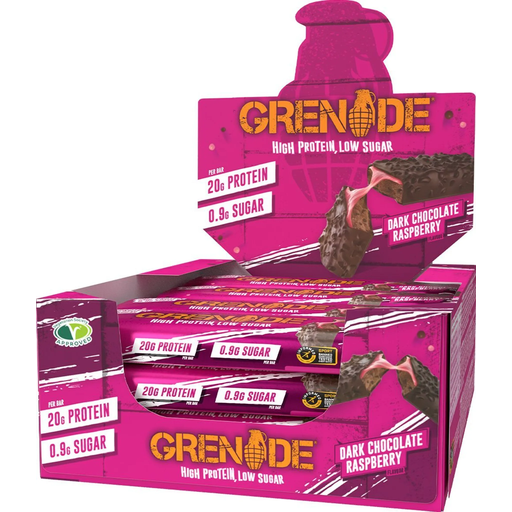
A protein bar to enjoy on the go. Check the recipe carefully, particularly if you need to avoid milk, soya or sugar alcohols. The product information lists milk and soya as ingredients, possible traces of other allergens and polyols. The current pack is the one to rely on when making your choice.
 No image available
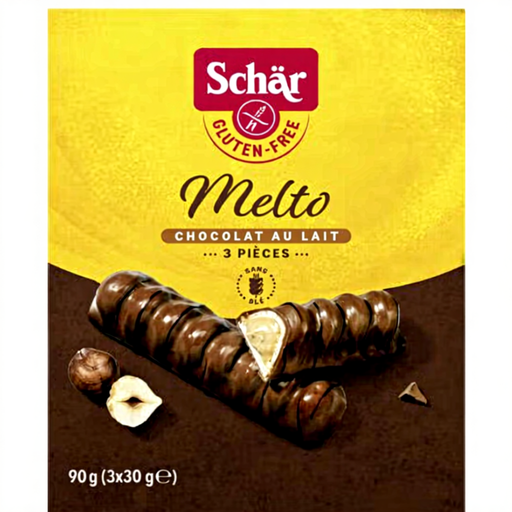
A wafer bar labelled gluten-free for enjoying on the go, as long as the other ingredients meet your needs. The product information lists hazelnuts, milk and soya, as well as possible traces of peanuts and other nuts. Check this against the current pack.
No. The claim relates to the specific feature named. According to the European Commission, the 14 regulated allergens must be clearly identified when used as ingredients, so check the ingredients list for your chosen variety.
This warning indicates that the named allergen may have been accidentally introduced; it isn’t a regular ingredient. According to the German Food Federation, this type of warning is voluntary. It doesn’t confirm that traces are actually present, nor does the wording rule out the possibility.
Look for the explicit ‘gluten-free’ claim and check the other ingredients and allergens too. Under EU Implementing Regulation (EU) No 828/2014, the claim may be used if the food contains no more than 20 mg/kg of gluten.
No. A claim about sugar doesn’t describe the whole recipe. The German consumer advice centre warns that large amounts of sugar substitutes can have a laxative effect. If you’re sensitive to them, check the ingredients for sugar alcohols such as maltitol.
Check that the packaging is undamaged, then read the best-before date and the ingredients and allergen information on that specific pack. Especially if you’ve chosen a new variety, the front-of-pack claim alone isn’t enough to make your decision.