
Lieferung heute & morgen

Qualitätsgarantie

Willkommens-Angebote freischalten: KOSTENLOSE Lieferung | Bis zu 80 % RABATT | Kostenlose 30-Tage-JoyPlus-Testphase
App herunterladen
Freezer bags are a staple in many UK households. They allow you to portion food, protect it from freezer burn and keep stored supplies organised. However, products vary considerably in terms of capacity, material thickness, closure and pack size.
If you focus only on a low unit price, you may end up buying bags that are too small for the intended contents, tear when being filled or fail to close securely in the freezer. The following selection from the Joybuy Product Recommendation Officer explains what matters when choosing freezer bags and which options suit different shopping profiles.
A 1L freezer bag is generally suitable for individual portions, small quantities of vegetables or leftovers. For two portions, baked goods or larger pieces of meat, 2L freezer bags or 3L freezer bags are often a better choice.
The litre measurement describes the intended capacity. Actual suitability also depends on the external dimensions and shape. For example, a bag with a gusseted base is easier to fill than a flat bag with the same stated capacity.
Dry foods and solid portions can often be sealed with a clip or knot. With soups, sauces, marinades or moist foods, the risk of leaks increases. In these cases, resealable freezer bags, a sturdy zip closure or freezer bags with a double closure are a better choice.
A double closure does not replace careful handling. The closure must be fully sealed, and when freezing liquids, you should leave some space in the bag to allow for expansion.
Terms such as “extra strong” or “leak-proof” should be checked against verifiable product details. Relevant factors include:
A labelling panel is also useful, but it does not replace correct labelling on the packaging. The contents and freezing date should be written clearly and legibly.
The right size depends on the portion and type of food:
With large freezer bags, the opening should be wide enough. This makes filling easier and reduces the risk of sharp edges damaging the film.
Polyethylene films or multilayer composite films are commonly used for freezing. According to the product description, a multilayer design may be intended to provide greater tear resistance and a more stable barrier. The specific manufacturer’s information remains the decisive factor.
The pely models described here are stated to remain flexible down to -40 °C. This information refers to the product description and should not be interpreted as unrestricted suitability for every application. Hot food should be allowed to cool before being placed in the bag.
If you are looking for particular material properties, you can choose BPA-free freezer bags. This information should be verifiable on the product or in the manufacturer’s documentation. With reusable options, it is important to distinguish between silicone and plastic. A reusable silicone freezer bag is appealing to users who want to reduce the number of single-use bags they use. Care, temperature and cleaning instructions should be followed carefully.
A basic clip is sufficient for dry or solid foods, while a press-seal closure makes opening and closing more convenient. For liquids, leak-proof freezer bags with a secure closure should be stored upright.
Before freezing, the following procedure is recommended:
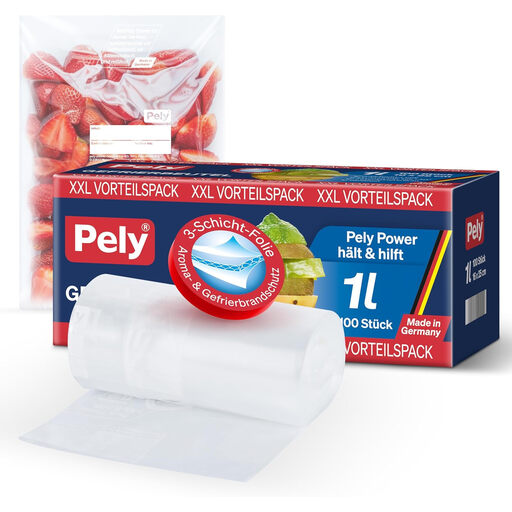
Why this product suits the profile: The pack of 100 is ideal for households that regularly freeze small portions, leftovers and meal-prep ingredients.
The 1-litre size prevents small portions from taking up unnecessary space. The stated 3-layer film and labelling panel provide clear, verifiable product features.
100 bags, dimensions 16 x 25 cm, BPA-free 3-layer film according to the product information.
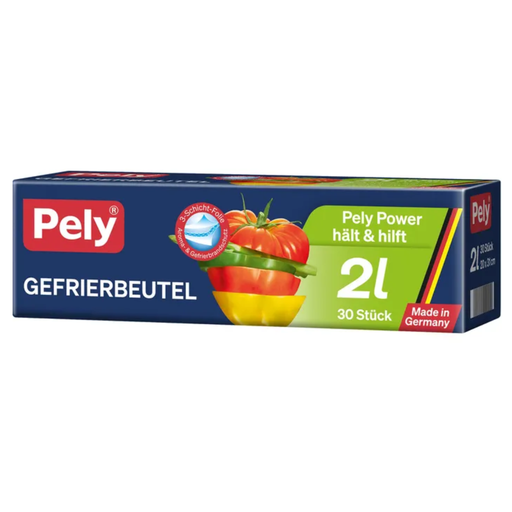
Why this product suits the profile: Two litres provide more room for portions for two people, baked goods and larger quantities of ingredients.
The dimensions of 20 x 31 cm make the choice clearer than relying on the litre capacity alone. The manufacturer also states that the bags remain flexible down to -40 °C.
30 bags, 2-litre capacity, labelling panel and BPA-free 3-layer film according to the product description.
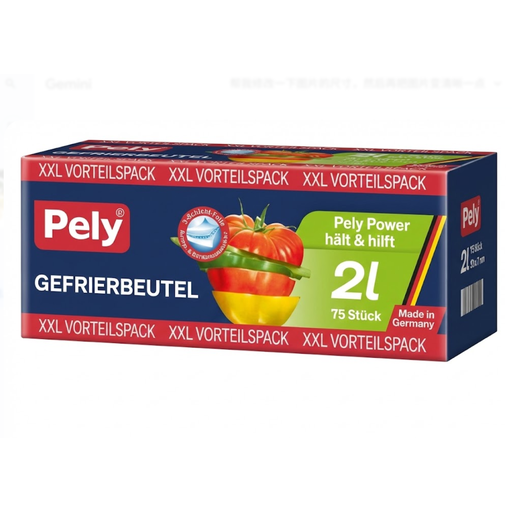
Why this product suits the profile: The 4-litre size is aimed at families, keen home cooks and bulk buyers who freeze larger quantities of food.
The wide opening, measuring 25 x 38 cm, is designed for bulky foods. This means the contents do not need to be pushed or twisted as much.
45 bags, 4-litre capacity and 3-layer film according to the product information.
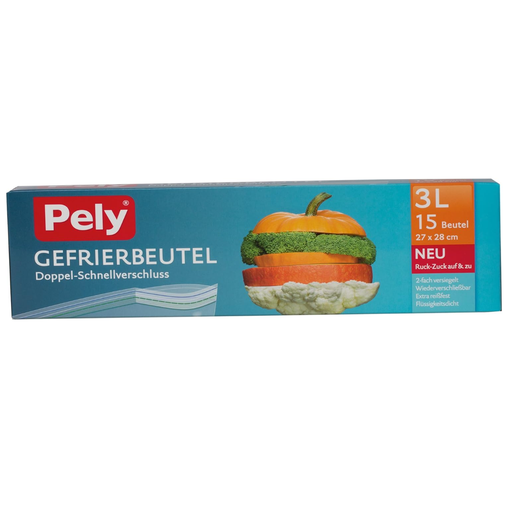
Why this product suits the profile: Three litres and a double closure are well suited to soups, sauces, marinades and prepared family meals.
The double press-seal helps address the risk of the bag not being closed fully. Nevertheless, the bag should be stored upright while freezing.
15 bags, 3-litre capacity, double closure and labelling panel according to the product description.
We have put together a complete, regularly updated list of products that fully meet these strict selection criteria and the safety regulations applicable in the EU.
For very large quantities, 6L freezer bags or 10L freezer bags may be suitable. The pely 6-litre versions are available in dimensions of 29 x 44 cm; according to the product information, the 10-litre version measures 34 x 50 cm. These large freezer bags need sufficient space in the freezer and should not be overfilled.
For packaging with as little air as possible, food vacuum bags are an option. However, they require a compatible vacuum sealer and should not be confused with standard press-seal bags.
Food storage bags may be suitable for the fridge or dry foods, but should only be used for freezing if this is expressly stated on the product. Reusable silicone bags offer an alternative to single-use film bags. Before buying, check the closure, cleaning requirements, temperature range and permitted appliances, such as a dishwasher or microwave.
A 1-litre bag is typically suitable for individual portions, small quantities of fruit or vegetables and leftovers. The amount it can actually hold depends on the shape, water content and external dimensions. For family-sized portions, 2- to 4-litre models are usually more practical.
Liquids should be allowed to cool before freezing. The bag must not be overfilled and needs room for expansion. A fully closed double seal and an upright position while freezing help reduce the risk of leaks. Damaged bags should not be reused.
Single-use freezer bags are intended for one-time use unless the manufacturer states otherwise. Reusable silicone freezer bags can be used repeatedly if they are thoroughly cleaned after every use and checked for damage. The instructions on the packaging and product page are decisive.