
Lieferung heute & morgen

Qualitätsgarantie

Willkommens-Angebote freischalten: KOSTENLOSE Lieferung | Bis zu 80 % RABATT | Kostenlose 30-Tage-JoyPlus-Testphase
App herunterladen
A well-organised child's room not only creates order but also fosters independence and a love for reading. A central piece of furniture in this space is the children's bookshelf. However, the sheer number of options can quickly become overwhelming. Many models look practical at first glance but prove to be unsuitable or even unsafe in daily life. Before you make a decision, it's crucial to understand the typical pitfalls that often lead to disappointment and unnecessary expense.
The three most common problems when choosing a bookshelf are:
This guide will help you navigate these issues and make an informed decision that prioritises safety, functionality, and durability.
To find a suitable and safe bookshelf for a child's room, you should focus on a few crucial technical parameters. These features determine whether a shelf can withstand the demands of daily life with children.
Stability is the most important criterion. A freestanding kids' shelf must stand firm and secure. Always look for an included shelf with an anti-tip kit. This is a device (usually a bracket or a strap) that anchors the furniture securely to the wall. This installation is essential to prevent accidents caused by tipping.
The construction is just as important. The corners and edges of the shelf should be rounded to minimise injuries from bumps. The surfaces must be smooth, splinter-free, and treated with non-toxic, water-based lacquers. Look for material specifications like P2 or E1 grade MDF, which guarantee low formaldehyde emissions.
A good children's bookshelf is designed so that children can use it independently. This means:
Book storage for kids needs to withstand a lot. MDF (Medium-Density Fibreboard) is a common and practical choice for a white kids' shelf or other colours. It is warp-resistant, robust, and offers a smooth, easy-to-clean surface. A high-quality melamine or lacquer coating makes the shelf resistant to scratches and moisture. Solid wood is a durable but often more expensive alternative. Regardless of the material, an easy-to-maintain surface is crucial so that minor mishaps can be cleaned up quickly.
Instead of presenting an overwhelming list, we have matched a few products based on specific needs and use cases.
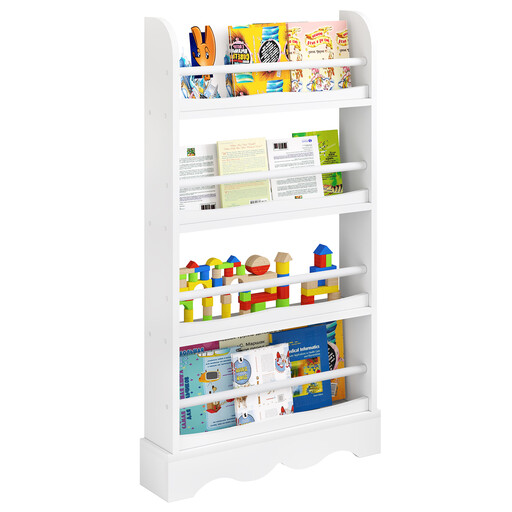
Why This Fits Their Persona: This shelf is specifically designed for the needs of toddlers. The height, front-facing book display, and safety features are prioritised to give parents peace of mind.
It directly addresses the risk of instability with the included anti-tip kit and prevents injuries with its rounded corners. The design solves the problem of inaccessible books.
The open, front-facing book display promotes independence. At just 12 cm deep, it's extremely space-saving and fits even in narrow nooks.
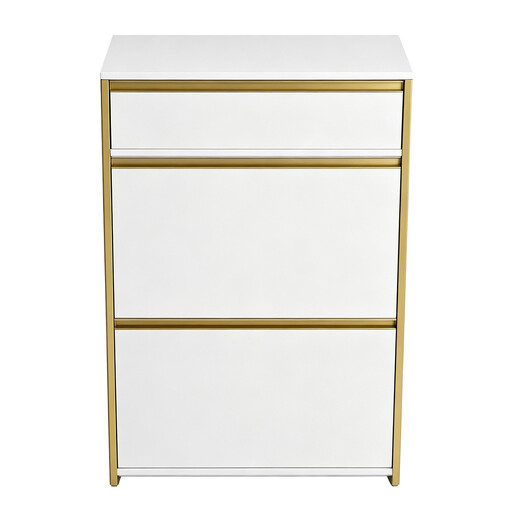
Why This Fits Their Persona: For families looking for a stylish solution that also looks great outside the nursery. This piece can serve as a toy shelf and book storage, evolving with the family's needs.
It offers a stable structure equipped with an anti-tip kit that goes beyond typical nursery design. This makes it a more durable investment that also looks sharp in a hallway or living room.
The combination of closed doors and an open display shelf allows for neatly stowing away toys while showcasing favorite books or decor. The interior shelves are adjustable.
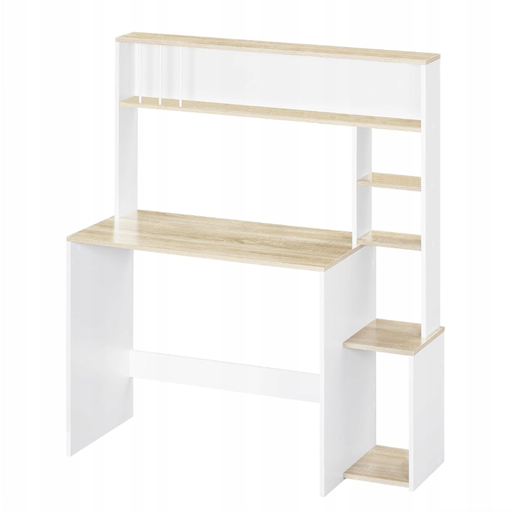
Why This Fits Their Persona: This desk and shelf combination is a long-term solution for a child's room that is evolving into a study and work area for a school-aged child. It provides space for homework, craft supplies, and books.
Instead of buying multiple separate and potentially unstable pieces of furniture, this model offers an integrated and stable unit. The wide base and solid construction from E1-grade particleboard minimize the risk of wobbling.
The generous work surface (90 x 45 cm) is combined with six open shelf compartments, offering plenty of storage for books and school supplies. An all-in-one solution.
We've curated a complete, up-to-date list of products that meet these strict selection criteria and safety standards.
Secure mounting is critical. Always use the included anti-tip kit. Drill holes into the wall, insert appropriate wall anchors (e.g., hollow-wall anchors for drywall, expansion anchors for masonry), and screw the bracket in tightly. Ensure the shelf is level before you finally fix it in place.
A Montessori bookshelf is useful as soon as a child can sit independently and show interest in books, typically between one and two years of age. The front-facing display of books allows them to make their own choices, which promotes cognitive development and a love for reading from an early age.
For a bookshelf in a child's room, both MDF boards (E1 or P2 grade) and solid wood are good options. MDF is often more affordable and very easy to clean, making it a practical choice for a white kids' shelf. Solid wood is extremely durable and robust. However, more important than the base material are a non-toxic surface treatment (e.g., water-based lacquer) and careful construction without sharp edges.