Shoppers who prioritise fibre
You want to compare a specific fibre value for your weekday breakfast. The figure per 100 g gives you a clearer comparison than a wholegrain claim alone.


For a weekday breakfast with a focus on fibre, start by comparing cereals and muesli using the nutrition information. Under EU Regulation (EC) No 1924/2006, a product can be described as “high fibre” if it contains at least 6 g of fibre per 100 g or 3 g per 100 kcal. Also check the sugar content, serving size and ingredients for the specific variety. Wholegrain ingredients or a crunchy texture alone tell you neither enough about the fibre content nor about the nutritional value of the meal as a whole.
You want to compare a specific fibre value for your weekday breakfast. The figure per 100 g gives you a clearer comparison than a wholegrain claim alone.
Cinnamon flavour or a crunchy texture matters to you. At the same time, you want to know how much sugar and fibre your chosen variety contains.
If you need to avoid certain ingredients, check the labelling for the specific variety. A general statement about a brand is no substitute for checking the current pack.
Start with fibre per 100 g, then compare sugar and ingredients. The serving size can then help you relate the figures to the breakfast you actually eat.
| Criteria | What to check when buying | Who it matters most to |
|---|---|---|
| Fibre | Compare fibre per 100 g. Under EU Regulation (EC) No 1924/2006, a product can be described as “high fibre” if it contains at least 6 g per 100 g or 3 g per 100 kcal. | If fibre is my main selection criterion, I need a figure for the specific variety rather than a wholegrain claim. Around 46% of consumers put this need first. |
| Sugar and flavour | For similar products, check the sugar per 100 g and the stated serving size. | I want my crunchy or cinnamon-flavoured breakfast to taste good, but I don’t want to overlook the sugar content. This balance is the main consideration for around 27% of consumers. |
| Ingredients and allergens | Read the ingredients list, highlighted allergens and, where relevant, any precautionary allergen information on the current pack. | If I need to avoid certain ingredients, the exact recipe determines whether a variety is suitable for me. This is the main concern for around 27% of consumers. |
Wholegrain describes an ingredient, but it does not in itself prove that a product meets the EU requirements for a “high fibre” claim.
Check the nutrition table: EU Regulation (EC) No 1924/2006 sets the threshold at at least 6 g of fibre per 100 g or 3 g per 100 kcal.
Manufacturers’ figures show why it’s worth looking further: Nestlé lists 6.4 g of fibre and 24 g of sugar per 100 g for CINI MINIS; Seitenbacher lists 11 g of fibre and 20 g of sugar per 100 g for “Die geröstete Ballaststoffquelle #477”.
For products in the same category, compare both nutritional values per 100 g rather than drawing conclusions about the whole recipe from a single figure.
Ingredients and the possibility of cross-contamination vary from product to product. A description of a brand’s range therefore cannot reliably tell you what’s in the pack you plan to buy.
Check the ingredients and allergen information for the current variety, and look for any voluntary precautionary allergen information if needed.
Two mueslis with clearly stated nutritional information offer useful points of comparison for fibre within this product category.
CINI MINIS could suit shoppers who enjoy cinnamon flavour and crunchy cereals.
The Oaties range may appeal to shoppers looking for oat-based cereals with a crunchy texture.
The Swiss muesli ranges offer a variety of recipes to compare, including options for shoppers with specific ingredient preferences.
This selection includes flakes and crunchy muesli for weekday breakfasts. Check the current nutrition and ingredients information for each variety; flakes and ready-to-eat crunchy muesli are different product categories.
 Image unavailable
For a breakfast made with coarse rolled oats; the pack contains 500 g. If fibre or sugar content is a key factor in your choice, check the nutrition information on the current pack.
 Image unavailable
Another option if you’d prefer coarse rolled oats to a ready-made cereal mix. The pack contains 500 g; if you have specific ingredient or allergen requirements, always refer to the current labelling.
 Image unavailable
For shoppers looking for crunchy muesli rather than plain flakes. The pack contains 600 g. Don’t rely on a less-sweet description without checking the sugar content, and check the ingredients if you have allergies.
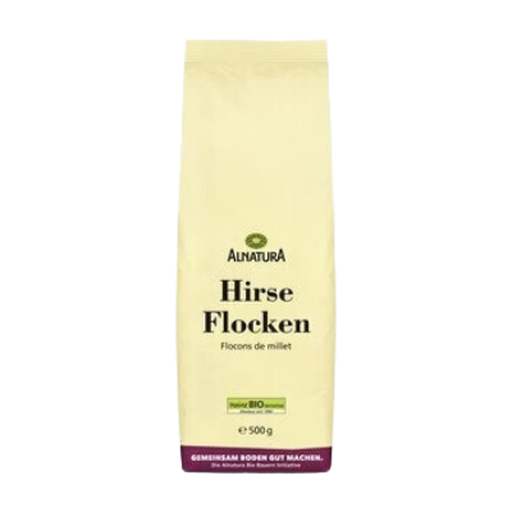 Image unavailable
Millet flakes are an alternative if you’d rather not have a ready-made muesli mix for breakfast. This pack contains 500 g; check the labelling carefully if you need to avoid certain ingredients.
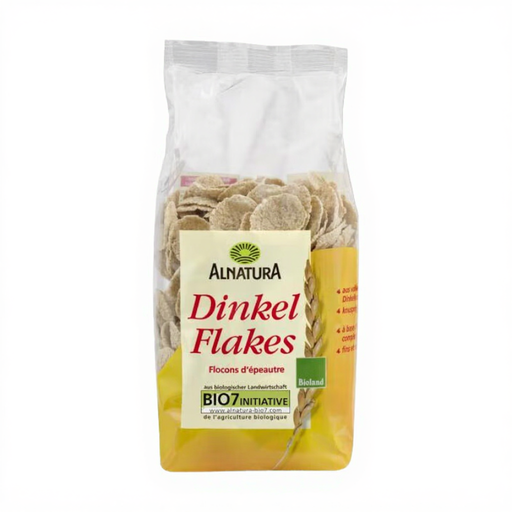 Image unavailable
For a breakfast with spelt flakes instead of a ready-made cereal mix. The pack contains 200 g; if you need to avoid gluten, check the current ingredients and allergen information.
Under EU Regulation (EC) No 1924/2006, the claim is permitted if the product contains at least 6 g of fibre per 100 g or at least 3 g per 100 kcal. A wholegrain claim alone does not prove this; compare the nutrition information for the specific variety.
No, it describes just one part of the meal. For cereals and muesli, also compare sugar per 100 g, the portion you actually plan to eat and the other parts of your breakfast.
Read the ingredients and allergen information on the current pack. According to Germany’s Federal Ministry of Agriculture, Food and Regional Identity, the 14 allergens that must be declared have to be listed on packaged foods. These include cereals containing gluten, peanuts, soya, milk and tree nuts.
No. An allergenic ingredient that has been deliberately added must appear in the ingredients information; a warning about possible traces relates to potential unintended contact. Lebensmittelklarheit points out that these voluntary precautionary allergen statements are regulated differently from the labelling of allergenic ingredients. If you need to avoid an allergen, always check the information for the specific product.