
Lieferung heute & morgen

Qualitätsgarantie

Willkommens-Angebote freischalten: KOSTENLOSE Lieferung | Bis zu 80 % RABATT | Kostenlose 30-Tage-JoyPlus-Testphase
App herunterladen
A high-quality salt mill is an essential tool in any kitchen. A Himalayan Salt Mill, in particular, promises not only functionality but also a touch of elegance and pure flavour. However, the market is flooded with models of widely varying quality. Before you make a decision, it's crucial to understand the common weaknesses that often only become apparent after a few weeks of use.
Many buyers report three recurring issues:
This guide will help you navigate these pitfalls and find a mill that meets your standards for quality and durability.
To make an informed decision when buying a pink salt mill, you should examine three key technical parameters. These are the primary determinants of the product's functionality and lifespan.
The grinder is the most critical component. Its quality determines how evenly and reliably the salt is ground.
The body not only protects the salt but also affects handling and aesthetics.
If you specifically want to buy Himalayan salt, pay attention to its properties. It is a coarse rock salt whose characteristic pink colour comes from mineral inclusions like iron oxide. Although it is often marketed as a mineral-rich salt, its contribution to daily mineral intake through normal consumption is minimal. More important are the purity of the salt (free from additives and anti-caking agents) and a grain size suitable for mills. A reputable supplier like Kotányi salt ensures that the quality of the contents matches that of the grinder.
Here are some product recommendations tailored to different needs and use cases.
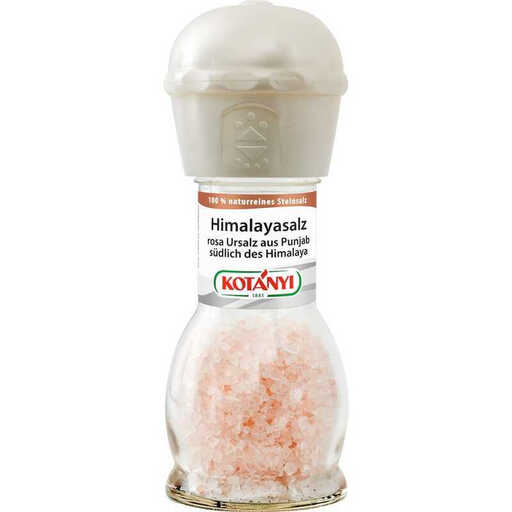
Why This Fits Their Persona: Ideal for users seeking an aesthetically pleasing and ready-to-use solution for the dining table. The elegant glass design showcases the pink salt, making the mill a stylish accessory.
This mill is equipped with a precise ceramic grinder specifically designed for hard Himalayan salt, thus avoiding the typical wear and tear of inferior grinders.
Ready to use, pre-filled with high-quality Kotányi salt. The glass body is hygienic and preserves the flavour. All food-contact parts are BPA-free.
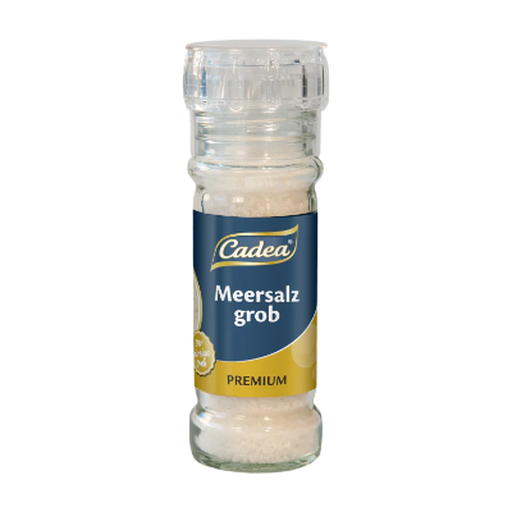
Why This Fits Their Persona: Perfect for home cooks who need a functional and reliable mill for daily kitchen use. The focus here is on functionality and good value.
This model focuses on the essentials: a solid mill with coarse sea salt. It avoids the pitfall of overpaying for marketing hype around exotic salts when simple, high-quality salt is sufficient.
The larger 110g capacity is ideal for frequent use while cooking. The simple design is practical and unobtrusive. Made in Germany.
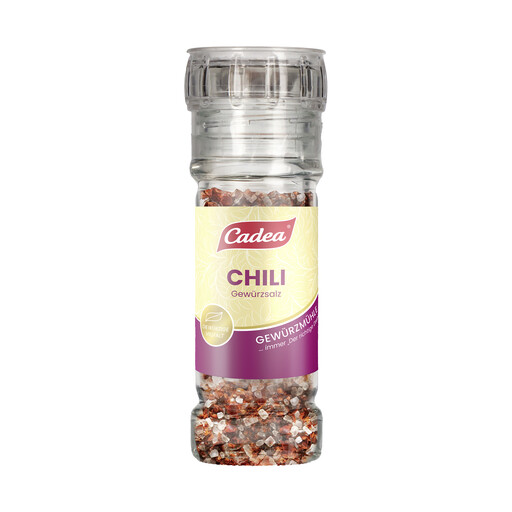
Why This Fits Their Persona: For users looking to expand their spice collection and add a special touch to their dishes. This mill offers a ready-made blend of sea salt and chili for piquant seasoning.
Instead of relying on the hype of a single type of salt, this product offers a clear, functional flavour profile. It's a specialty product that delivers what it promises: a spicy salt blend.
An easy way to add a spicy depth to dishes like meat, vegetables, or eggs without having to mix multiple spices. The mill provides freshly ground heat.
We have compiled a complete, real-time list of products that fully satisfy these strict selection criteria and UK safety regulations.
1. How long does a ceramic grinder in a salt mill last? With normal household use, a high-quality ceramic grinder can last for many years, often a decade or more. Ceramic is extremely hard, resistant to abrasion from salt crystals, and does not corrode. However, its lifespan also depends on proper handling; for example, the mill should not be operated empty.
2. Can any salt mill be refilled with Himalayan salt? No. Only mills explicitly marked as refillable should be opened. Furthermore, the grinder must be designed for hard rock salt. Using coarse Himalayan salt in a mill designed for finer sea salt or pepper can damage the grinder. Pay attention to the manufacturer's specifications for the appropriate grain size.
3. Is pink salt really healthier than regular table salt? Himalayan salt is a natural rock salt that, unlike refined table salt, contains no anti-caking agents or artificial additives. It contains trace minerals that give it its colour. However, the concentration of these minerals is so low that they do not make a significant contribution to daily nutrient requirements. The main advantage lies in its purity and unadulterated flavour. Its health superiority is not scientifically proven.