Who might benefit from a heating panel?

People with a cold or damp-prone external wall

If you notice a cold wall, it’s important to distinguish between how warm it feels and the cause of any damp. The Federal Environment Agency recommends identifying and addressing the cause of excess moisture if mould is present.

People who use a room occasionally

If you only need extra warmth in a particular spot, you could consider using a panel alongside your existing heating. Remember to factor in electricity costs for the time you’ll actually use it; the ADAC highlights the ongoing costs of electric infrared heaters.

People with limited space for installation

In a small room, the panel’s dimensions, position, direction and controls need to suit the space available. According to the manufacturer, the Könighaus P series is available with different power ratings and thermostat options.

What to look for when buying

Consideration What to check before buying Who is this important to?
Cold walls and damp Establish whether the wall is simply cool, or whether it is damp or affected by mould. The Federal Environment Agency recommends identifying and addressing the cause of any existing damp. If an external wall feels persistently cold or damp, I want to know first whether there’s an underlying damp problem; around 33% of consumers put this question about walls and damp at the top of their list.
Targeted warmth and power Take room size, insulation and external walls into account. The ADAC gives 500–700 W for 10 m² as a guide, not as a substitute for checking the specific heating requirements. If you only want to warm an area you use occasionally, you need a suitable power rating and direction, not just a figure based on floor area; around 27% of consumers prioritise targeted extra warmth.
Electricity costs and running time Factor in the rated power, expected operating hours and your own electricity price per kWh. According to the consumer advice centre, a discounted heating electricity tariff is not a given. If the panel will be used often or for long periods, I want to be able to estimate the electricity costs in advance; around 27% of consumers mainly prioritise predictable running costs.
Space, installation and controls Check the dimensions of the specific version, available wall space, cable route and the type of thermostat included. With limited free space, the installation needs to suit the room and the direction you want the heat to face; around 13% of consumers prioritise space and practical controls.

Common mistakes when choosing heating panels

  • Assuming a heating panel will fix a damp wall

    Extra warmth will not automatically address the cause of existing mould.

    If there is damp or visible mould, first find out what is causing it and what action is needed. The Federal Environment Agency advises addressing the cause of excess moisture.

  • Comparing the purchase price alone

    If you use the panel frequently, its electricity consumption and running time will affect your ongoing costs. According to the consumer advice centre, a cheaper heating electricity tariff is not a given.

    Calculate costs using the rated power, expected operating hours and your own electricity price per kWh.

  • Applying test results to a different version

    Power, dimensions and thermostat options vary between versions, so a review of one specific model won’t necessarily apply to every version.

    Check the full model name and specification against the product listing. According to the manufacturer, the Könighaus P series is available with different power ratings and thermostat options.

Brands and relevant product ranges

Könighaus

The P series is aimed at buyers looking for a wall-mounted panel with a choice of power ratings and thermostat options.

  • The manufacturer lists versions including 600 W and 1000 W.
  • According to the manufacturer, some versions are also available without a thermostat, so check the exact model.

VASNER

The Citara-M series is a metal panel that the manufacturer says is designed to provide additional infrared warmth.

  • This range is worth considering if you’re looking for a metal heating panel.
  • The manufacturer’s claims of high efficiency do not, in themselves, demonstrate specific savings in a small room.

Klarstein

The Wonderwall Air Art Smart is a wall panel featuring a picture design; the listed features relate to a 700-W version.

  • For this version, Klarstein lists a thermostat, a weekly timer and app control.
  • The advertised electricity savings compared with other electric heaters are a manufacturer’s claim, not a reliable basis for calculating the costs for your own room.

Heating panels for occasional extra warmth

This selection includes infrared heating panels for extra warmth indoors. Check that the power rating, dimensions and installation options are right for your room and how you plan to use the panel.
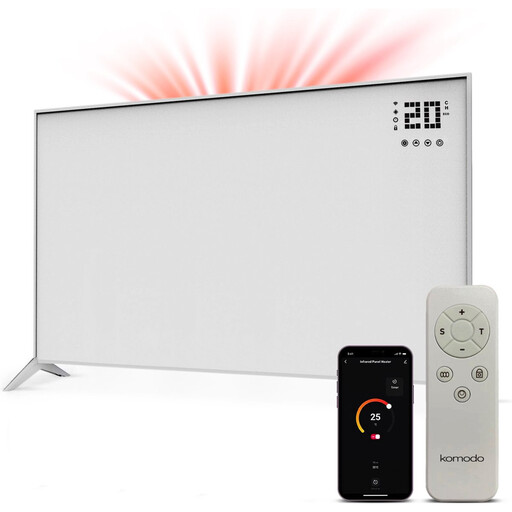
Komodo Blazi infrared heating panel, 800 W, 100 × 80 cm

Komodo Blazi infrared heating panel, 800 W, 100 × 80 cm

This could be an option if you’re considering a panel with app control and the choice of wall or freestanding installation.

The product title lists 800 W, 100 × 80 cm, Wi-Fi app control and IP24. The product description warns that the surface gets hot and that the panel must not be covered.

View at Joybuy
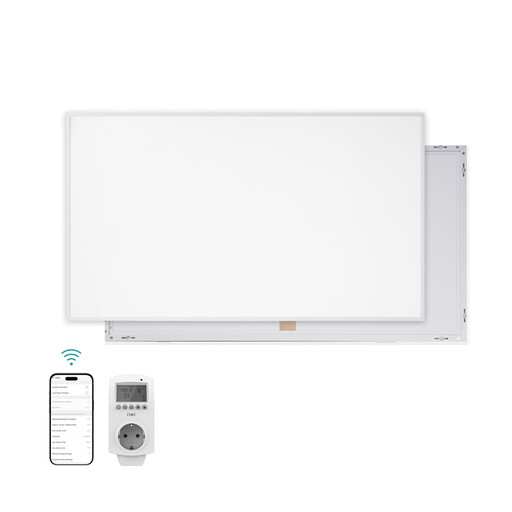
EMKE infrared wall heater, 600 W, 1005 × 595 mm, white

EMKE infrared wall heater, 600 W, 1005 × 595 mm, white

This version could be suitable if its stated power rating and dimensions fit your intended use and installation space.

The product title lists a plug-in thermostat and app control. The description warns that the surface gets hot and recommends installing the panel out of children’s reach and not covering it.

View at Joybuy
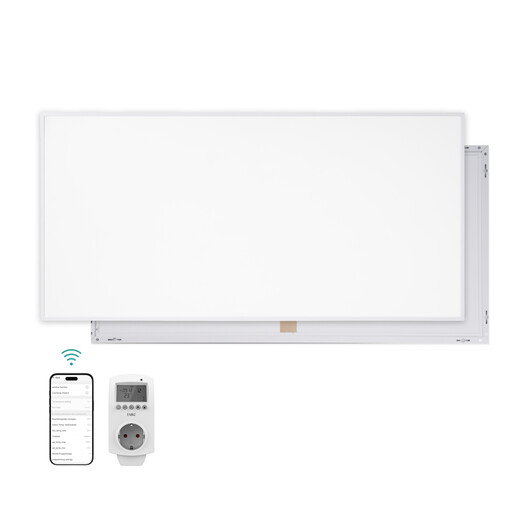
EMKE infrared wall heater, 1000 W, 1195 × 595 mm, white

EMKE infrared wall heater, 1000 W, 1195 × 595 mm, white

Consider this version only if its power rating and larger panel dimensions suit your heating requirements and available wall space.

The product title lists a plug-in thermostat and app control. The description warns that the surface gets hot and recommends installing the panel out of children’s reach and not covering it.

View at Joybuy
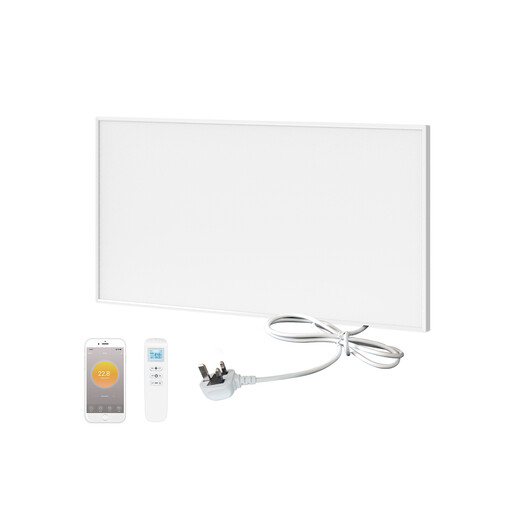
Welltin infrared heating panel with graphene heating element, 60.3 × 30.3 × 1.4 cm

Welltin infrared heating panel with graphene heating element, 60.3 × 30.3 × 1.4 cm

This could be an option for an indoor space if the stated dimensions suit your installation area.

The product title lists a graphene heating element and dimensions of 60.3 × 30.3 × 1.4 cm. The panel is listed as having a surface temperature of 80–100 °C; keep it away from children and flammable materials.

View at Joybuy
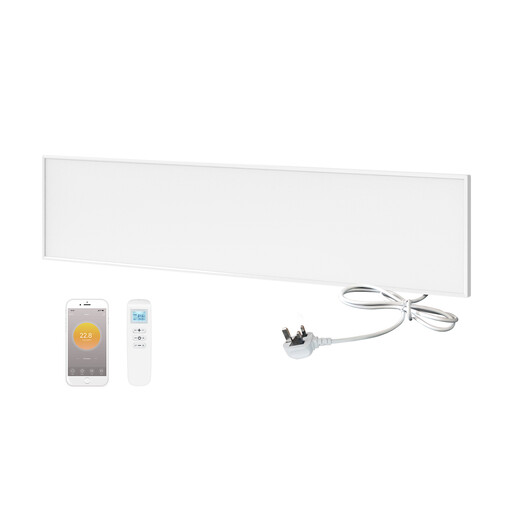
Welltin infrared heating panel with graphene heating element, 90.3 × 20.3 × 1.4 cm

Welltin infrared heating panel with graphene heating element, 90.3 × 20.3 × 1.4 cm

Check that the long, narrow shape and stated dimensions suit your available space and planned installation.

The product title lists a graphene heating element and dimensions of 90.3 × 20.3 × 1.4 cm. The panel is listed as having a surface temperature of 80–100 °C; keep it away from children and flammable materials.

View at Joybuy

FAQs about heating panels for cold walls

What power rating do I need for a small room?

There’s no single wattage that suits every room. The ADAC gives 500–700 W for 10 m² as a guide, and notes that insulation and external walls affect heating requirements. Take these factors into account rather than choosing based on a product’s floor-area figure alone.

Will a heating panel prevent mould on a cold wall?

A heating panel is not a reliable solution on its own for preventing mould. If mould is already present, the Federal Environment Agency recommends treating the affected materials and identifying and addressing the cause of excess moisture. Heating and ventilating your home properly can help prevent it.

What should I check before installation?

Measure the available space and check the installation method, power connection, thermostat and what’s included with the exact version. According to the manufacturer, the Könighaus P series comes in different panel sizes, and some versions do not include a thermostat.

Can I expect a discounted heating electricity tariff?

Not without checking first. The consumer advice centre notes that infrared heaters are usually powered by standard household electricity. A discounted heating electricity tariff has technical requirements, and you’re not automatically entitled to one.

Can I install one as the main heating system in an existing residential building without any further checks?

No, it would be inaccurate to give a blanket answer. Section 46 of the GModG sets out requirements for thermal insulation when installing direct electric heating in an existing residential building, as well as exceptions. These include certain owner-occupied buildings with no more than two dwellings and the replacement of an existing direct electric heater for a single room. The official text on Laws on the Internet explains the conditions; the building and installation must be assessed for each specific project. This does not mean there is a blanket restriction on buying every type of supplementary heater.