
Lieferung heute & morgen

Qualitätsgarantie

Willkommens-Angebote freischalten: KOSTENLOSE Lieferung | Bis zu 80 % RABATT | Kostenlose 30-Tage-JoyPlus-Testphase
App herunterladen
A kitchen bin needs to do more than simply hold rubbish. It should suit the space available, the amount of waste produced each day and your own cleaning habits. Many poor purchases happen because product images are given more importance than dimensions, lid mechanisms or the actual internal layout.
A slim bin can look spacious in a product image, yet be too wide or too deep for a niche. Before buying, check the width, depth and height. Also consider the lid’s opening radius and whether a nearby door or drawer can still be opened fully.
With a wall- or door-mounted 8-litre bin, the shallow depth can be an advantage. However, the mounting surface must be stable enough. A freestanding pedal bin, on the other hand, needs a level surface so that it does not move when the pedal is pressed.
The litre measurement describes the container’s volume. A removable inner bin, a second compartment or a heavily rounded interior can affect the practically usable capacity. For singles and couples, a 30-litre bin is often sufficient, while families with more waste may wish to consider a large 60-litre bin.
However, a larger container is not automatically the better choice: the longer organic waste remains inside, the more important regular emptying, a tightly closing lid and an easy-to-clean interior become.
A bin with a soft-close lid closes slowly and reduces noise. This makes it particularly appealing in open-plan kitchens or for use at night. However, it cannot compensate for an unstable construction. Look for a sufficiently large foot pedal, a firm base and a mechanism that remains free of obstacles.
The term ‘odour-proof bin’ should also not be assessed in isolation. A tightly closing lid can limit air exchange, but it will not prevent odours permanently if the bin is overfilled or damp waste is left inside for too long.
Do not base your choice solely on the size of your household. Instead, consider how often you actually empty the bin:
Smaller bins can be a sensible choice for food waste because they are emptied more frequently. For general waste, a larger capacity can reduce the number of trips to the outside bin. Also check that the bin bags you use fit the shape and rim of the container.
A space-saving bin should not only be narrow; it must also be genuinely practical in the intended location. With a door-mounted model, the door thickness, mounting method and freedom of movement are crucial. A freestanding pedal bin can be positioned more flexibly, but requires sufficient floor space.
A bin with a removable inner bin makes emptying and cleaning easier. Look for handles, bag-fixing holes or a continuous retaining ring to prevent the bin bag from slipping inside. With pedal models, the foot pedal should not sit directly against a wall or cupboard.
A stainless steel bin can be cleaned with a damp cloth if it has a suitable finish. Coatings can reduce fingerprints and visible marks, but abrasive cleaners or wire wool may damage the surface. Plastic models are usually lighter and are also easy to care for.
Rounded edges, a removable insert and a lid without hard-to-reach gaps are also important. Before buying, read the manufacturer’s information on materials, load limits, cleaning and safety warnings in full.
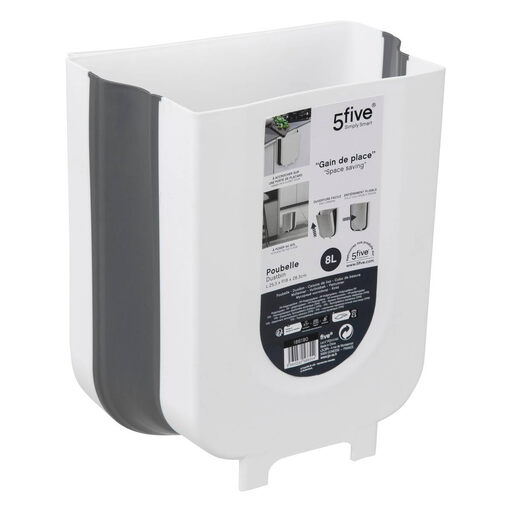
Why this product suits this profile: The 8-litre model is designed for small amounts of waste in the kitchen, bathroom or office and folds away when not in use. Measuring 25.3 × 9 × 29 cm, it is suitable for very limited floor or door space.
The clearly stated shallow depth and folding design help avoid taking up unnecessary space. Before installation, check that the surface is sufficiently stable.
8-litre capacity, polypropylene housing, pedal opening and fold-away design.
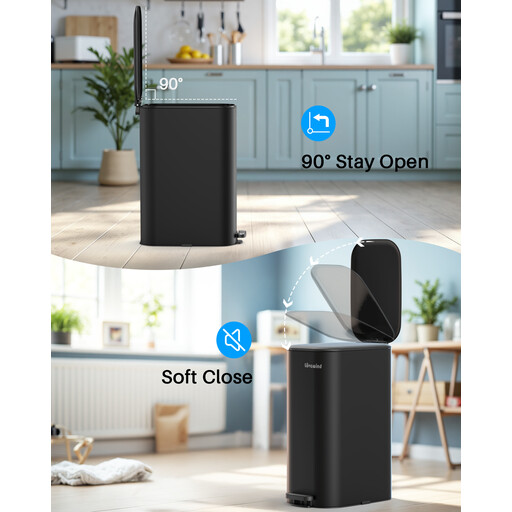
Why this product suits this profile: This 30-litre kitchen bin combines a slim design with stainless steel, a soft-close lid and a removable inner bin. It is therefore well suited to kitchens, offices and utility rooms with a regular amount of waste.
The product details specify a removable inner bin with two handles and fixing holes for bin bags. This makes changing the bag easier and reduces the risk of it slipping into the inner compartment.
30-litre capacity, coated stainless steel, soft-close lid and 90-degree stay-open function.
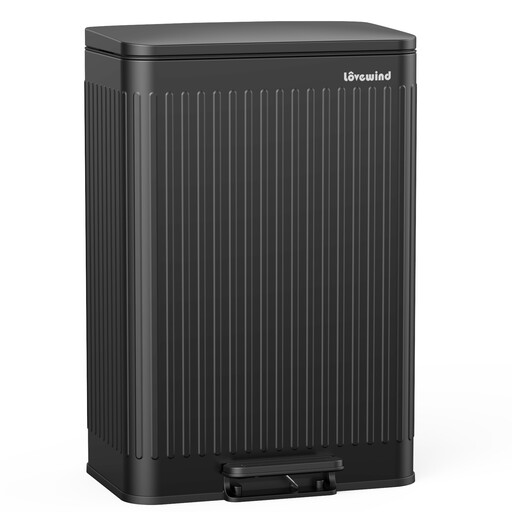
Why this product suits this profile: This 60-litre model is designed for households that produce more waste. The two removable inner bins can be used to organise different types of waste, provided this is compatible with your local waste collection system.
The two inner bins with handles make emptying easier despite the larger overall capacity. According to the product details, the lid features soft-close and a 90-degree stay-open function.
60-litre total capacity, two removable inner bins, stainless steel housing and pedal operation.
We have put together a complete, regularly updated list of products that fully meet these strict selection criteria and the safety regulations applicable in the EU.
Empty the bin before the lid can no longer close fully. Damp kitchen waste should not be left in the bin for unnecessarily long periods. For many models, a soft, damp cloth and a mild cleaning product are all that is needed. Removable inserts can be cleaned separately and dried thoroughly.
With a soft-close lid, no objects should obstruct the closing area. Place a large bin on a stable, level surface and do not overfill it. With door- or wall-mounted models, check the fixings regularly.
For singles and couples, a 30-litre bin is often a practical starting point. If space is limited or the amount of waste is low, an 8-litre model may be sufficient. Families should check their daily usage, bin bag size and available floor space before choosing a 60-litre bin.
The soft-close function is designed to close the lid more slowly and reduce impact noise. How quiet the bin actually seems also depends on the mechanism, the surface it stands on and how it is used. The closing area should be kept clear.
Choosing the right capacity prevents both unnecessarily frequent emptying and waste being left inside for too long. A removable inner bin makes cleaning easier. Also look for suitable bin bags, clean the bin regularly and separate waste correctly in line with the requirements of your local waste collection service.