
Lieferung heute & morgen

Qualitätsgarantie

Willkommens-Angebote freischalten: KOSTENLOSE Lieferung | Bis zu 80 % RABATT | Kostenlose 30-Tage-JoyPlus-Testphase
App herunterladen
A kitchen dish drainer should safely hold plates, glasses and cutlery after washing up, channel water away effectively and keep the worktop as clear as possible. In small UK kitchens, the stated capacity is not the only consideration. What matters is whether the dish drainer actually fits the available space, stands securely and can be cleaned without too much effort.
Product descriptions such as “large capacity” or “space-saving design” mean little if the available space has not been measured. As well as length and width, you should also take the height into account. A 2-tier dish rack may hold more dishes, but it might not fit beneath wall units or in front of a window.
Before buying, measure:
A dish rack with a draining tray initially keeps water away from the worktop. However, without a slope, spout or removable tray, water can collect underneath the rack. This increases cleaning requirements and may cause moisture damage to sensitive surfaces.
Look for a draining tray with a water outlet, a spout directed towards the sink or an easy-to-remove tray. With an open design, a dish drying mat can also be useful, provided it is wiped down regularly and allowed to dry completely.
“Metal” does not automatically indicate a particular level of corrosion resistance. With stainless steel, for example, the workmanship, material thickness and standing water all matter. Coated steel components may become more vulnerable if scratched. Plastic parts are lightweight and easy to care for, but should be checked regularly for cracks and deformation.
The product description should make the following clear wherever possible:
A dish drainer for the sink should not be selected solely by its overall size. Check whether plates fit vertically into the slots provided and whether glasses can stand securely with enough space between them. For a one- or two-person household, a single-tier model may be sufficient. Families or households that wash up regularly are more likely to benefit from vertical storage.
A space-saving dish drainer makes use of the height without significantly increasing the worktop area required. The construction must nevertheless be stable enough to prevent the rack from shifting while you are loading it.
Effective water drainage is essential for any kitchen dish rack. The tray should be removable for emptying. With models featuring a spout, its position is important: it should point towards the sink or have enough distance from a surface used to collect the water.
For small quantities or delicate glasses, a dish drying mat can be a simple alternative. A mat requires no installation, but usually provides less organisation for plates and cutlery. According to the product information for the Draining Mat presented here, it is not suitable for washing machines or dishwashers and should only be cleaned with a damp cloth and mild soap.
Angular supports and narrow gaps can make cleaning more difficult. A smooth, accessible tray is generally more practical for everyday use. Remove water regularly and wipe surfaces dry. Wooden components should not be left soaking for long periods. With coated parts, avoid abrasive products to prevent unnecessary damage to the surface.
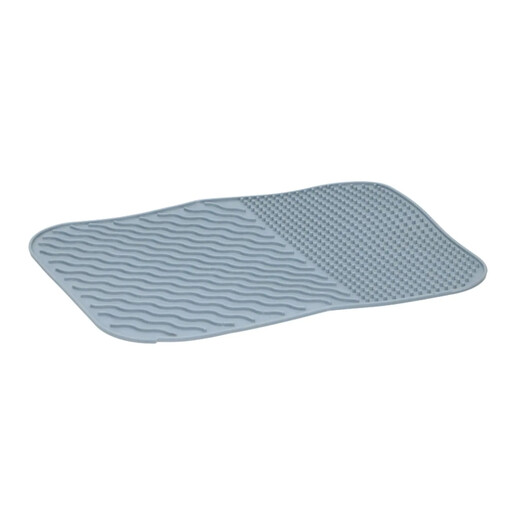
Why this product suits this profile: The freestanding mat requires no installation and is suitable for households that only occasionally need extra drying space.
The dimensions of 34,5 × 26,5 cm are clearly stated. The ribbed rubber surface is designed to reduce dishes slipping, while care involves simply wiping it clean.
Compact footprint, no installation required and a structured surface for individual plates, cups or kitchen utensils.
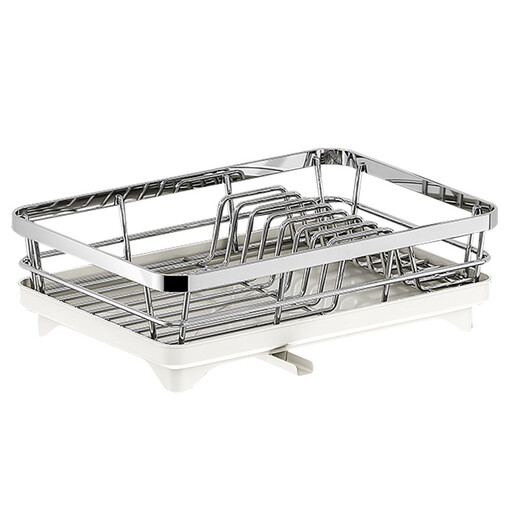
Why this product suits this profile: This model combines a stainless steel rack with a PP draining tray, making it suitable for shoppers who pay attention to material specifications and organised storage.
The dimensions of 42 × 29 × 12,7 cm make it easier to check the available space in advance. The stated rotating water drainage system helps direct water towards the sink.
Stainless steel construction, integrated PP tray, cutlery holder and an assembly-free design according to the product description.
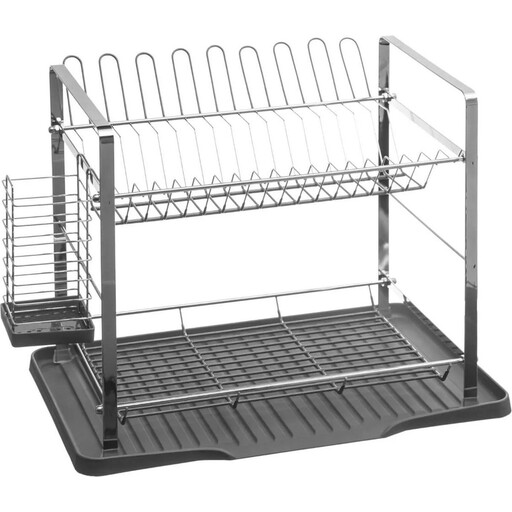
Why this product suits this profile: Two tiers and a stated capacity of up to 17 plates make it suitable for households that wash up regularly or for mobile use when camping.
The dimensions of 50 × 30,5 × 34 cm clearly show the vertical and horizontal space required. A removable cutlery tray and a drip tray are specified.
2-tier design, non-slip base, removable cutlery basket and space for up to 17 plates according to the product information.
We have put together a complete, regularly updated list of products that fully meet these strict selection criteria and the safety regulations applicable in the EU.
Place the dish drainer on a level, sturdy surface and position any drainage outlet towards the sink. Heavy plates should go at the bottom or in the slots intended for them. Glasses should be positioned so that air can circulate and they do not knock against one another.
For a longer service life, we recommend:
This depends on the available worktop space and the amount of washing up you do each day. Measure the length, width and height of the intended area. For small kitchens, a narrow single-tier model or a vertical rack is often more suitable than a wide dish drainer.
A draining tray prevents water from running directly onto the worktop. However, it does not replace regular cleaning. The key is to choose a tray that can be removed or emptied easily and to prevent water from collecting for long periods.
Its lifespan depends on the material, load, moisture and care. A persistently wet environment, excessive weight or damaged coatings can shorten its useful life. You should therefore regularly check the rack’s stability, supports, tray and drainage system.