
Lieferung heute & morgen

Qualitätsgarantie

Willkommens-Angebote freischalten: KOSTENLOSE Lieferung | Bis zu 80 % RABATT | Kostenlose 30-Tage-JoyPlus-Testphase
App herunterladen
Whether you’re storing flour, rice, sugar, cereal or pet food, the right kitchen storage containers make it easier to keep your kitchen organised and protect dry food from moisture, odours and dirt. But design and capacity aren’t the only things to consider. The seal, material, ease of cleaning and dimensions all affect how practical a container will be day to day.
A lid with a click-lock closure isn’t automatically airtight over the long term. Look for clear information about the seal, the closure mechanism and the intended use. Some models are described as having an “airtight” seal, while others simply have a silicone ring or a hinged lid. These differences matter when you’re storing food that’s sensitive to moisture.
A large capacity might sound practical, but a full container can be heavy. It also needs to fit the width, height and depth of your shelves. Before you buy, check how much space you have and compare it with the product dimensions. Stackable storage containers also need a sufficiently level surface.
Grooves, hard-to-reach seals and lids with non-removable parts can make cleaning more difficult. If you’re choosing plastic storage containers, check whether they’re suitable for the dishwasher. Glass containers with lids are transparent and tend to retain fewer odours, but they can be heavier and may break if knocked. Always use food containers in accordance with the manufacturer’s instructions.
BPA-free plastic, such as polypropylene, is lightweight and a good choice for larger containers. It’s handy for cereal, rice or pet food if you move the container regularly. Check that the manufacturer confirms it’s suitable for food contact, and whether it’s specifically approved for use in the microwave, freezer or dishwasher.
Glass is transparent, generally absorbs fewer odours and works well for storage jars on open shelves. Borosilicate glass is often used for heat-resistant household products. However, always follow the manufacturer’s instructions: a glass container with a wooden lid, for example, isn’t automatically suitable for the microwave or dishwasher.
Stainless steel is resistant to light and can be used to store dry food. With stainless steel storage containers, check the lid design, seal and how easy the fastening clips are to clean.
For flour, sugar and cereal, choose a closure that can be sealed completely. A silicone seal can reduce contact with air and moisture. Hinged lids with additional locking clips are useful if you’ll be lifting or pouring from the container often.
Also be aware that “airtight”, “aroma-tight” and “splash-proof” don’t mean the same thing. Make sure the container is completely dry before filling it with powders or other dry food. Even a good seal can’t prevent moisture problems if wet residue is left inside.
Small storage jars holding 0.4 to 1 litre are suitable for tea, spices, nuts or small quantities of baking ingredients. Rectangular storage containers often make better use of cupboard space than round ones. For larger quantities of flour, rice or pet food, consider models with a capacity of 5 to 12 litres.
Look for:
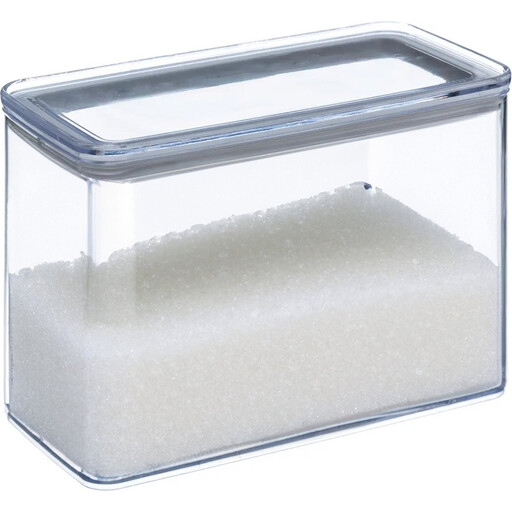
Why this product suits this profile: Its rectangular shape and 2-litre capacity make it a good choice for storing modest quantities of dry food in a cupboard or pantry.
The product details specify an airtight silicone seal. Before buying, check whether the fact that it isn’t dishwasher-safe works with your cleaning routine.
Transparent polystyrene, rectangular dimensions of 20 × 10 × 14 cm and a stackable design, according to the product description.
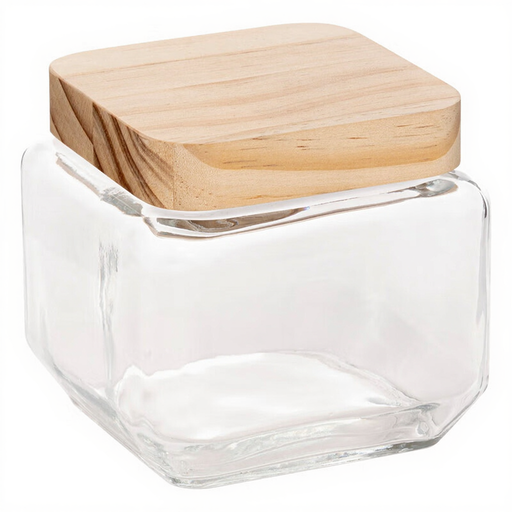
Why this product suits this profile: The transparent glass looks at home on open shelves and lets you see at a glance how much coffee, pasta, rice or flour is left.
The product description specifies an airtight seal. The pinewood lid should be washed by hand, so don’t expect it to fit into your usual dishwasher routine.
Reusable glass, a capacity of 0.85 litres and contents you can see at a glance; according to the product details, the glass is dishwasher-safe.
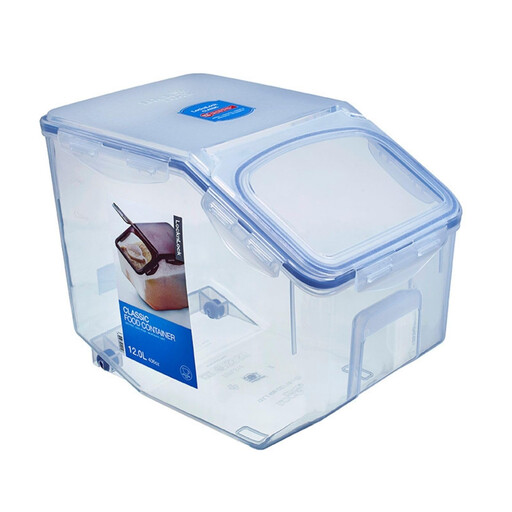
Why this product suits this profile: Its generous capacity is designed for families, frequent baking and larger quantities of rice, flour, cereal or pet food.
Check the dimensions of 35 × 23 × 27 cm against your cupboard before buying. According to the product details, only the container—not the lid—is suitable for microwave use.
BPA-free plastic, a hinged lid with a silicone seal, a measuring cup and, according to the product details, suitability for the dishwasher, freezer and microwave without the lid.
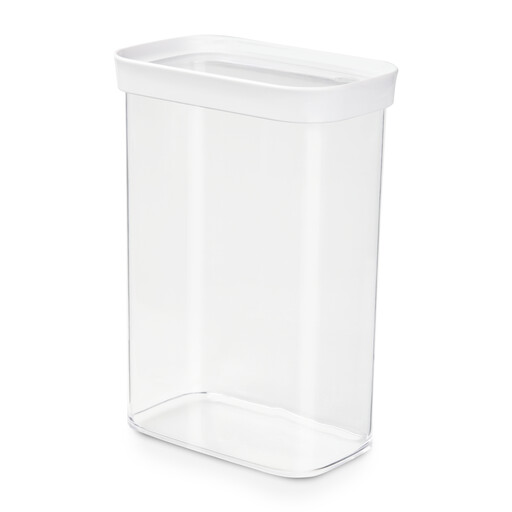
Why this product suits this profile: This rectangular storage container is designed to fit standard cupboard shelves and keep several containers neatly organised.
The audible click makes it easier to check that the lid is securely closed. According to the product details, the container is intended for dry food and isn’t suitable for hot liquids or microwave use.
A capacity of 2.2 litres, transparent plastic, a freshness seal, a carrying aid and stackable edges, according to the manufacturer.
We’ve put together a comprehensive, regularly updated list of products that meet these strict selection criteria and fully comply with the safety regulations in force in the EU.
Wash new food storage containers with warm water and mild washing-up liquid before using them for the first time. Dry the container and lid completely before adding flour, sugar or other powders. If the lid is opaque, label the contents with the purchase date or best-before date too.
Damaged seals, cracks or brittle closures are signs that it’s time to replace the container. Check the rim of glass containers for chips. For pet food, it’s best to use a dedicated container rather than one that’s also used for human food.
Choose a dry, well-sealed container with a wide enough opening for flour and sugar. A capacity of between 2 and 5 litres is manageable for many households. If you store larger quantities, a 12-litre container may be useful, as long as its dimensions and weight suit your cupboard.
Both materials can be suitable for food, provided they’re labelled as such and cleaned regularly. Glass typically absorbs fewer odours, but it’s heavier and more prone to breakage. Plastic is lighter and often a better choice for storing larger quantities.
How long a container lasts depends on its material, closure, cleaning and how heavily it’s used. Dishwasher cycles, significant temperature changes and abrasive cleaning products can put strain on plastic or seals. Check your containers regularly and replace damaged parts in line with the manufacturer’s instructions.