
Lieferung heute & morgen

Qualitätsgarantie

Willkommens-Angebote freischalten: KOSTENLOSE Lieferung | Bis zu 80 % RABATT | Kostenlose 30-Tage-JoyPlus-Testphase
App herunterladen
Konjac jelly, often simply called a jelly snack, has evolved from a niche Asian sweet into a popular product for health-conscious consumers in the UK and beyond. The search for a light, satisfying, and flavourful snack leads many to this product. However, the market is crowded and confusing, and not every jelly delivers on the promise of its colourful packaging. As your Joybuy Product Recommendation Officer, I'll help you recognise the common pitfalls and make an informed choice.
Before you buy a fruit jelly, you should be aware of the common marketing traps that often lead to disappointment.
To ensure you find the right product for your needs, you should check three key parameters.
The texture is the heart of a good konjac jelly. The key ingredient responsible for this is konjac powder, a plant-based gelling agent derived from the konjac root. It provides the typical, satisfyingly firm bite. Products that contain a proper amount of konjac powder (often in combination with other gelling agents like carrageenan E407 or locust bean gum E410) generally offer the most authentic experience. Since konjac is of plant origin, many of these products are also a suitable vegan jelly, provided no other animal-derived additives like milk powder are included.
Don't rely on marketing claims on the front of the package. The nutrition facts table is the most reliable source of information. Pay particular attention to the value for Energy (kcal) per 100g. Only this value allows for an objective comparison between different brands and pack sizes. A snack can only be considered a truly low-calorie sweet if this value is correspondingly low. Values below 50 kcal per 100g are a good benchmark for a very light option.
Asian sweets like konjac jelly often come from Japan, Korea, Thailand, or China. The origin can be an indicator of traditional recipes. However, the ingredients list is more important. It reveals whether real fruit juice provides the flavour or if "flavouring" is primarily used. It also provides information about the type of sweeteners (e.g., sugar, fructose, sucralose, erythritol), which is relevant for personal dietary planning.
Here are some recommendations tailored to different needs and preferences.
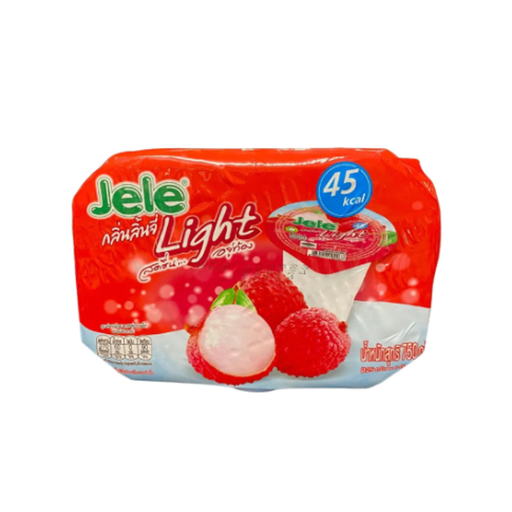
Why This Fits Their Persona: Ideal for anyone who wants to try the trend without a big investment. The 6-pack offers great value and multiple servings to get acquainted.
The product provides a clear and transparent calorie count of just 36 kcal per 100g. This helps you bypass the 'sugar-free' trap and make a conscious, calorie-based decision.
Very low in calories (36 kcal/100g) and fat-free. Convenient multipack for stocking up.
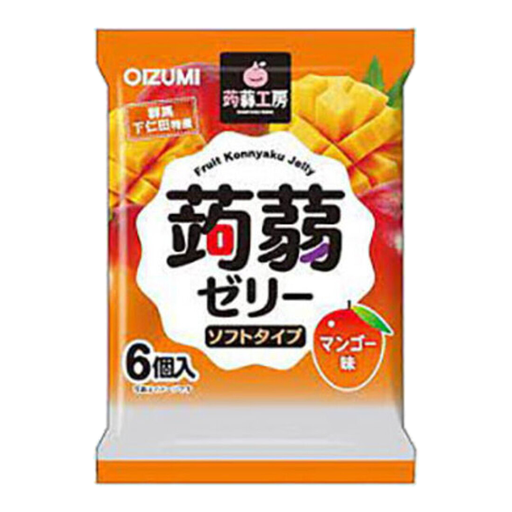
Why This Fits Their Persona: For snack lovers who value an authentic chewing experience. Its Japanese origin and emphasis on konjac promise a traditional, firm-to-the-bite consistency.
This product avoids the incorrect texture trap. The explicit mention of konjac flour from the Shimonita region indicates high quality and the desired chewy consistency, rather than a soft, standard jelly.
Made in Japan, known for its characteristic konjac texture. Fat-free.
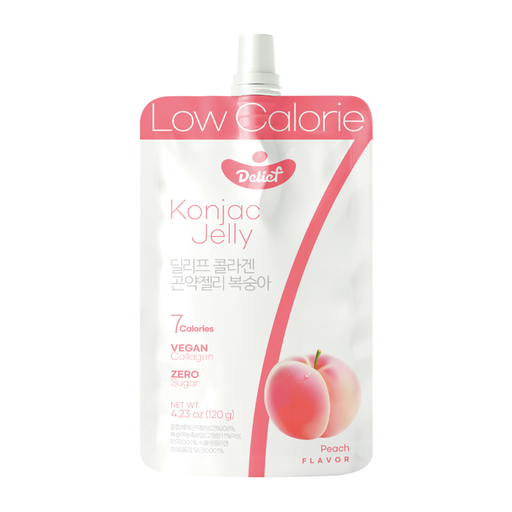
Why This Fits Their Persona: Perfect for anyone seeking a snack with minimal calories. At just 5 kcal per 100g and 0g of sugar, this jelly fits into even the strictest diet and is also explicitly labelled as vegan.
This product is the epitome of a low-calorie snack. It bypasses the 'sugar-free' trap not just by omitting sugar, but by having an extremely low total calorie count, which is what many buyers truly want.
Extremely low-calorie (5 kcal/100g according to the manufacturer), 0g of sugar, and labelled as a vegan product.
We've compiled a complete, up-to-date list of products that fully meet these strict selection criteria and UK regulations.
Most konjac jellies are shelf-stable at room temperature and should be stored in a cool, dry place. However, for a more refreshing taste experience, it is often recommended to chill them in the refrigerator before eating. Opened packages should always be refrigerated and consumed quickly.
Due to its firm, chewy texture, it is important to chew konjac jelly thoroughly and not swallow it whole. Many products, especially those in small cups or pouches, carry a corresponding warning notice. This is particularly true for children and the elderly, who should be supervised while eating.
The base ingredient, konjac powder, is purely plant-based. Therefore, a large proportion of the products on the market are suitable for a vegan diet. Nevertheless, a look at the ingredients list is essential. Some products may contain additives such as milk powder (in "non-dairy creamer") or other non-vegan gelling agents. Products explicitly labelled as vegan jelly offer the greatest certainty here.