
Lieferung heute & morgen

Qualitätsgarantie

Willkommens-Angebote freischalten: KOSTENLOSE Lieferung | Bis zu 80 % RABATT | Kostenlose 30-Tage-JoyPlus-Testphase
App herunterladen
An LED ceiling light can illuminate a room evenly, create accents or adapt the lighting to your daily routine via an app or remote control. The range extends from a compact LED ceiling light for the hallway to a dimmable, smart-controlled fixture for the living room.
However, not every light is suitable for every room. High lumen ratings, decorative designs or an extensive range of features alone say little about whether a product is the right choice. Checking the technical specifications before buying helps you avoid unnecessary returns and unsuitable purchases.
With integrated LEDs, wattage primarily indicates power consumption. The luminous flux in lumens determines the actual amount of light produced. For example, a 24-watt light may deliver 2,700 lumens, while another model with a similar power rating may emit considerably less light.
When choosing a light, consider lumens, room size and intended use together. A ceiling light for the hallway generally requires a different light distribution from a central ceiling light for the living room.
A warm-white ceiling light at 3,000 Kelvin usually creates a comfortable, inviting atmosphere and is well suited to bedrooms, hallways and living areas. Neutral- or cool-white light from around 4,000 Kelvin can be more practical in kitchens, work areas or utility rooms.
Not every LED light is dimmable. Some models offer three fixed brightness levels, while others allow seamless adjustment. A ceiling light with remote control or a smart ceiling light also requires an explicitly stated control function. A conventional wall dimmer is not automatically compatible.
A light with IP20 is designed for dry indoor spaces. For balconies, bathrooms or other areas with increased humidity, the stated IP rating must match the installation location. According to its product description, the Yeelight Ultra Slim Smart Ceiling Light, for example, is rated IP54, but it is not designed to withstand a direct water jet, such as inside a shower.
Installation on existing ceiling wiring should only be carried out by someone with sufficient electrical expertise. For a fixed electrical connection in Germany, using a qualified electrician is the safest option. Disconnect the power supply before cleaning or installation.
Lumens indicate how much visible light a fixture emits. As a practical guide:
Ceiling height, wall colours, furnishings and the desired lighting effect all influence the result. A high lumen rating also does not automatically guarantee glare-free or evenly distributed illumination.
3,000 Kelvin represents warm-white light. 4,000 Kelvin is generally perceived as neutral white, while 6,500 Kelvin appears noticeably cooler. Models with multiple colour temperatures are practical when you need flexible lighting for different situations.
Seamless dimming from 5 to 100 per cent offers more precise control than a three-level switch. Also check whether the light can be operated via a wall switch, remote control, app or voice control. A memory function can retain the last selected setting when the light is switched on again.
The diameter or width should suit the ceiling area and interior design. A 22-centimetre light has a discreet presence in a narrow hallway, but may look undersized in a large living room.
For energy efficiency, the EU energy label, power consumption in watts and luminous flux are all relevant. Product specifications may list efficiency classes such as D, E or F. The “kWh/1,000 h” figure enables a more objective comparison of electricity consumption than broad claims about potential savings.
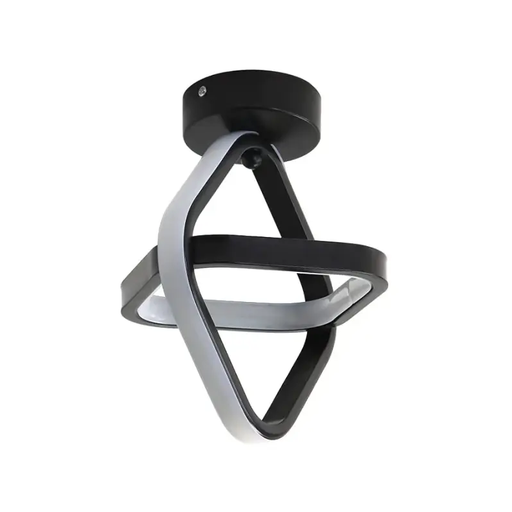
Why it’s a good fit: According to the product specifications, this compact black model with a 22 cm diameter is designed for hallways, entrance areas, stairwells, balconies and smaller rooms of approximately 5 to 15 m².
The luminous flux, colour temperature, diameter and recommended applications are clearly specified. However, the light is not listed as dimmable.
24 W, 2,700 lumens, 3,000 K warm-white light, integrated LED and black metal finish.
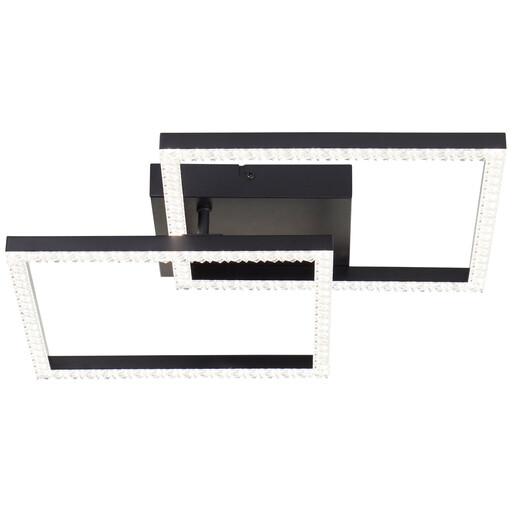
Why it’s a good fit: According to the product data, this 41 × 41 cm black light combines 4,000 K with 2,700 lumens, making it suitable for living rooms, bedrooms, dining areas and hallways where neutral-white light is preferred.
The product data specifies the dimensions, power consumption, luminous flux, colour temperature and efficiency class D. The light is rated IP20 for dry indoor areas.
2,700 lumens at 20 W, adjustable frame element, black design and integrated LED.
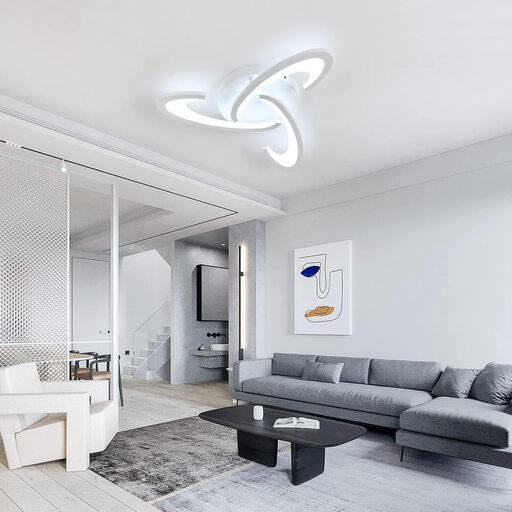
Why it’s a good fit: For rooms with changing lighting requirements, this model offers seamless adjustment from 3,000 to 6,500 K as well as remote-controlled brightness adjustment, according to its description.
The dimming and colour-temperature functions are explicitly stated. Before buying, you should nevertheless check that the installation method and room size are suitable.
3,000–6,500 K, brightness adjustment from 5 to 100 per cent, remote control and memory function according to the product description.
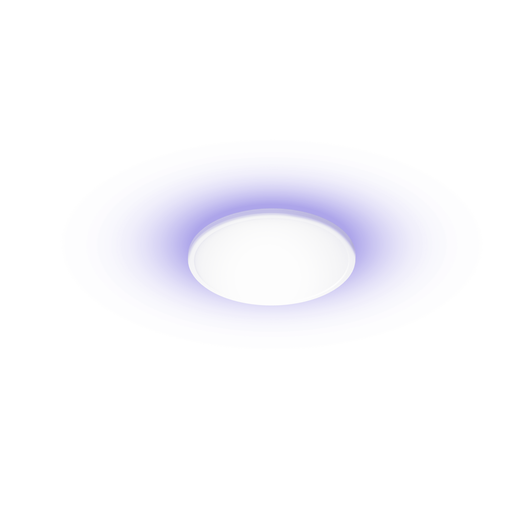
Why it’s a good fit: According to the product description, this slimline smart ceiling light is designed for living rooms, bedrooms, kitchens and indoor areas with higher humidity. It can be controlled via Wi-Fi, app or voice commands.
Wi-Fi control without a hub, the IP54 rating and permitted installation areas are clearly described. Direct exposure to a water jet is excluded.
Ultra-slim profile, RGB backlighting, app and voice control, plus schedules and automations according to the product data.
We have put together a current selection of products, including suitable solutions for different rooms, installation methods and lighting requirements.
Before placing your order, check the ceiling connection, mounting distances and dimensions. Integrated LEDs are not designed for bulb replacement. If the light develops a fault, the fixture will generally need to be inspected or replaced as a complete unit.
A soft, dry cloth is usually sufficient for cleaning. Water, abrasive cleaning products and covering the light may damage its surface or impair heat dissipation. For balconies, bathrooms or kitchens, the IP rating is crucial; an IP20 ceiling light specified for indoor use should not be installed in damp areas.
That depends on the room size, intended use and desired brightness. Around 1,500 to 2,700 lumens may be sufficient for smaller hallways. Larger rooms may require a higher luminous flux or multiple light sources. The key consideration is not just the lumen rating, but also even light distribution.
Actual service life depends on factors including operating hours, heat dissipation, power supply and product quality. Manufacturers’ lifespan claims should be treated as technical guidelines. Since the LED is permanently integrated, it cannot be replaced individually like an E27 bulb.
Running costs are calculated based on wattage, daily usage and the electricity price. The basic formula is: Wattage ÷ 1,000 × operating hours × electricity price. A 24-watt light used for three hours per day consumes around 26.3 kWh per year. The actual cost depends on your individual electricity tariff.