
Lieferung heute & morgen

Qualitätsgarantie

Willkommens-Angebote freischalten: KOSTENLOSE Lieferung | Bis zu 80 % RABATT | Kostenlose 30-Tage-JoyPlus-Testphase
App herunterladen
As a Joybuy Product Recommendation Officer, I see every day how crucial the right equipment is for professional tradespeople and ambitious DIY enthusiasts. An often underestimated yet critical component is storage. A good tool case not only protects expensive equipment but also optimises workflows. However, the market is flooded with options that promise more than they deliver. Before you make a decision, you should be aware of the common pitfalls.
Common Problems When Choosing Tool Cases:
A well-considered choice based on objective criteria prevents these problems from the outset.
To avoid a bad purchase, you should focus on the fundamental features of a case rather than on marketing promises. For a professional transport case for tools, three parameters are crucial.
The biggest advantage of a system like the Makita case system lies in its end-to-end compatibility. The cases are designed to connect seamlessly with each other. Look for a system where every tool case is stackable and has robust connecting clips. This allows for the secure and stable transport of multiple units as a single tower. The Makita MAKPAC Size 2 is an integral part of this system and can be combined with all other MAKPAC sizes.
The durability of a case depends directly on the material used and the design of the latches. High-quality system cases are typically made of impact-resistant plastic such as ABS. This material offers high stability at a relatively low weight. Examine the latches: are they wide, easy to grip, and do they engage securely with a satisfying click? The case with the model number Makita 821550-0 has four such latches that ensure a firm connection to the next case in the stack.
Before buying, check the exact internal dimensions and compare them with the tool you want to store. The MAKPAC Size 2, for example, offers internal dimensions of 377 x 277 x 124 mm. Even more important is the availability of custom-fit inlays. A modular system allows you to use a specific moulded inlay for each tool. This ensures everything has its designated place, is optimally protected, and is immediately accessible. While empty cases offer flexibility, custom-fit inlays are essential for protecting sensitive electronics or precision measuring instruments.
Based on these objective criteria, we have put together various solutions for typical user scenarios.
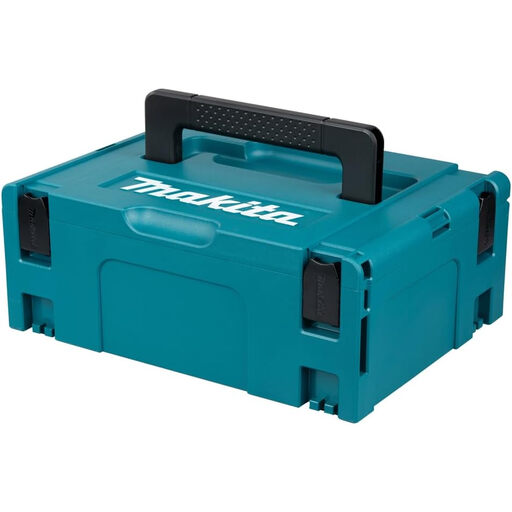
Why This Fits Their Persona: Ideal for users who already own Makita tools and want to expand their existing MAKPAC system. Perfect for securely integrating a newly purchased body-only tool or replacing a damaged case.
Solves the problem of incompatible standalone solutions through seamless integration into the established Makita case system. The robust latches prevent defects.
Fully stackable and combinable with all MAKPAC sizes. Can be customised with a wide variety of optional inlays.
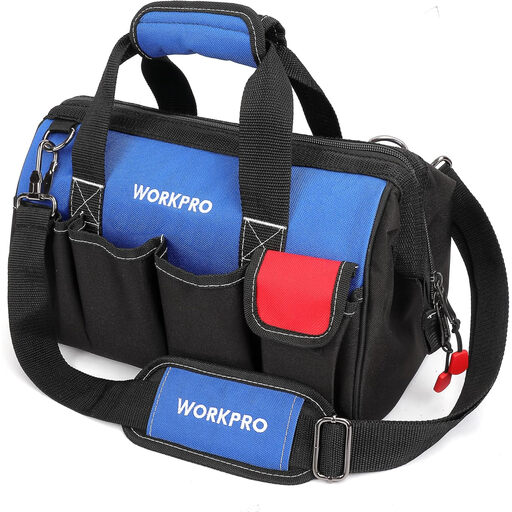
Why This Fits Their Persona: Suitable for tradespeople who prefer a lightweight, mobile, and non-system-bound solution for smaller jobs or inspections. Ideal for quick access to hand tools.
Bypasses the problem of rigid internal organisation. The numerous internal and external pockets allow for a flexible and clear arrangement of tools of various sizes.
Made from durable 500D polyester with a waterproof PE base. Offers high carrying comfort with a padded handle and adjustable shoulder strap.
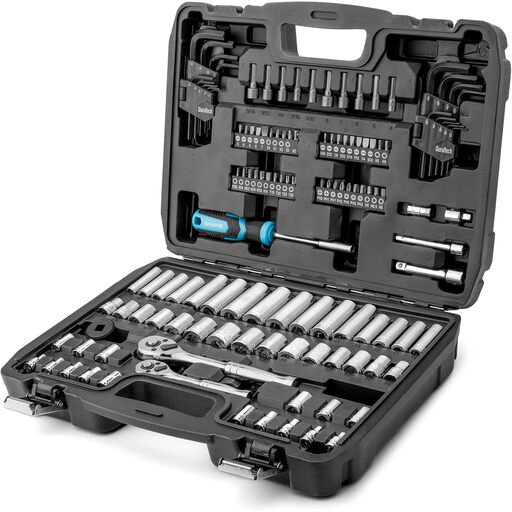
Why This Fits Their Persona: A complete solution for anyone needing a solid basic set of tools, delivered already perfectly organised in a sturdy case. Ideal for automotive repairs and general assembly work.
Solves the problem of poor internal organisation from the ground up. Each of the 121 pieces has its own fixed, marked spot in the case, eliminating the need to search for the right tool.
Comprehensive set made of heat-treated chrome vanadium steel. The case itself is robust and designed for transport, with easy-to-read size markings for quick identification.
We have compiled a complete, up-to-date list of products that fully meet these strict selection criteria and local safety regulations.
No, the MAKPAC Size 2 is designed for a specific range of medium-sized tools such as cordless drill drivers, impact drivers, or smaller saws. For larger tools like large angle grinders or circular saws, Sizes 3 or 4 are intended. It is advisable to check the dimensions of your tool or use a recommended, custom-fit inlay for your tool model.
The cases in the Makita MAKPAC system are not certified as waterproof. They offer very good protection against dust and splashing water on the job site or during transport. However, they should not be permanently exposed to heavy rain or submerged in water, as moisture could penetrate through the latches and the lid seal.
Yes, that is one of the core advantages of the system. All four MAKPAC sizes (1, 2, 3, and 4) have the same footprint (length and width) and can be stacked and locked together in any combination. So you can easily place a MAKPAC Size 2 on a Size 4 and vice versa. This ensures maximum flexibility when organising your equipment.