
Lieferung heute & morgen

Qualitätsgarantie

Willkommens-Angebote freischalten: KOSTENLOSE Lieferung | Bis zu 80 % RABATT | Kostenlose 30-Tage-JoyPlus-Testphase
App herunterladen
A mini electric sewing machine can be a practical solution for repairs, decorations and small DIY projects. These compact devices fit on most tables, can sometimes run on batteries, and are often simpler in design than a full-sized household sewing machine. However, small dimensions and low prices don't automatically mean you're making the right purchase.
Before ordering, you should check which fabrics can be used, how the power supply works, and whether the actual stitch range suits your projects. A portable sewing machine for occasional repairs has different requirements from a device intended for regular sewing.
A mini sewing machine with 12 stitch patterns offers more choice on paper than a model with a single fixed stitch. What really matters, though, is whether the stitch types are suitable for your intended purpose. Shortening a pair of cotton trousers, closing a seam or doing simple decorations requires different functions than working with stretchy fabrics.
So pay attention to specific details about stitch types, stitch width and stitch length. On particularly compact models, these values may be fixed. A machine with only one stitch can be enough for simple household repairs, but it offers fewer creative options.
A battery-operated sewing machine can be used independently of a mains socket. Nevertheless, check whether batteries are included in the box and how many are needed. Four AA batteries are commonly used. For longer projects, battery costs and power fluctuations can become a factor.
A dual-power setup is practical: the device can run via mains adapter or batteries. This keeps it flexible at home and allows you to take it elsewhere for craft activities.
A compact sewing machine takes up little storage space, but it should sit securely on your work surface. A non-slip base, an easily accessible on/off switch and a clear thread path make operation much easier. Without these basics, even a simple hem can become unnecessarily difficult.
When used by children, sewing should only take place under adult supervision. The needle, thread and moving parts are not toys.
For beginners, clear operation is more important than a long list of features. Look for:
An electric sewing machine for beginners should also include an understandable instruction manual. Before first use, check that the bobbin, needle and thread are correctly inserted.
For simple repairs on cotton, linen or light mixed fabrics, a basic stitch is often sufficient. If you're planning different hems, decorative seams or creative projects, you'll benefit from several integrated stitch patterns.
Information about fabric suitability should be taken as a guide. With denim, corduroy or multiple layers of fabric, actual performance can depend on material thickness, needle and thread tension. Test on a scrap of fabric first and use a suitable needle.
A low purchase price doesn't tell you much about the running costs. Check whether replacement needles, bobbins, a mains adapter or a threader are already included. A sewing thread set with several colours can be useful for repairs and craft projects, but it must be compatible with your machine and fabric.
Cleaning is also part of regular use. Remove thread remnants regularly, switch the device off before changing the needle or bobbin, and store it in a dry place.

Why this product fits the profile: This compact model is designed for basic household sewing tasks and offers both mains and battery operation using four AA batteries. The marked threading direction can make getting started easier.
The product description clearly states the limited features, with a single fixed stitch and no reverse function. This allows you to assess its suitability more realistically before buying.
Two speed settings, foot pedal, double-thread design, plus accessories including a bobbin core, replacement needle and threader.
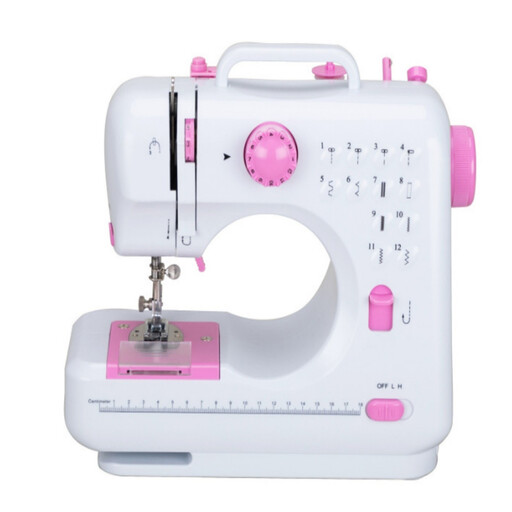
Why this product fits the profile: If you don't want to compromise on stitch variety with a compact machine, this model offers twelve integrated stitch options, two speeds and built-in LED lighting.
The number of stitches is specifically stated as twelve. The description also mentions a thread cutter, bobbin holder and non-slip base, rather than just vaguely referring to "many features".
Dual-power operation, carry handle, LED light and stated uses for clothing, pet wear, dolls and decorations.
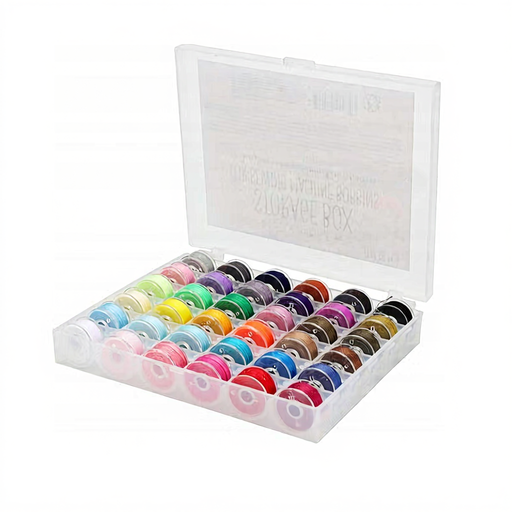
Why this product fits the profile: For frequent repairs, colour matching and DIY projects, a stock of different coloured sewing threads can simplify material selection. This set is intended as a supplement, not as a standalone sewing machine.
The clear product name makes it obvious that this is a set of spools, not a complete machine. This helps avoid accidentally planning for accessories as if they were a device.
36 coloured thread spools for various sewing and mending tasks; suitable as a supplement for compatible household and mini sewing machines.
We've put together a complete, regularly updated list of products that fully meet these strict selection criteria and the safety regulations in force in the EU.
Place the device on a flat, well-lit surface. Guide the thread through the marked points according to the instructions and check the bobbin before inserting the fabric. Start at a low speed with a scrap piece of fabric.
For repairing clothing, first align the damaged area and secure it with pins or clips if necessary. With several layers of fabric, a compact device may reach its limits. Do not pull the fabric forcefully through the needle area, as this can damage the needle, thread guide or material.
Yes, it can be suitable for simple hems, small repairs and craft projects. Models with a marked threading direction, speed selection and foot pedal make it easier to get started. For demanding garment construction or very thick fabrics, a larger machine is often more appropriate.
It's not possible to give a reliable general lifespan. It depends on frequency of use, fabric thickness, care, correct needle selection and storage. Regularly removing thread remnants and following the operating instructions can help keep it running smoothly.
A sewing machine for children should only be used if the age recommendation is appropriate and under direct adult supervision. Even a slow-running model contains a sharp needle and moving parts. For joint parent-child DIY projects, adults should handle the threading, setup and switching off.