
Lieferung heute & morgen

Qualitätsgarantie

Willkommens-Angebote freischalten: KOSTENLOSE Lieferung | Bis zu 80 % RABATT | Kostenlose 30-Tage-JoyPlus-Testphase
App herunterladen
As a Joybuy Product Recommendation Officer, I see every day how the right product choice can significantly enhance home comfort. A no-drill roller blind is a practical solution, especially for renters and anyone who prefers a quick, damage-free window installation. However, the market is flooded with products of widely varying quality. Incorrect material specifications or unstable mounting systems often lead to disappointment. This guide will help you identify the key features and make an informed decision.
Before making a purchase, it's crucial to be aware of three common problems that can severely limit a roller blind's effectiveness:
To avoid the issues mentioned above, you should focus on three core technical parameters. These define the functionality and longevity of your roller blind.
The mounting system is the heart of any clip-on roller blind. Pay close attention to the clamp bracket's specifications:
The fabric determines how well the blind performs its function for privacy, sun protection, or light control.
To prevent light gaps and ensure a perfect fit, accurate measurement is crucial. Follow this rule:
Here are some recommendations tailored to different user profiles that meet the quality criteria mentioned above.
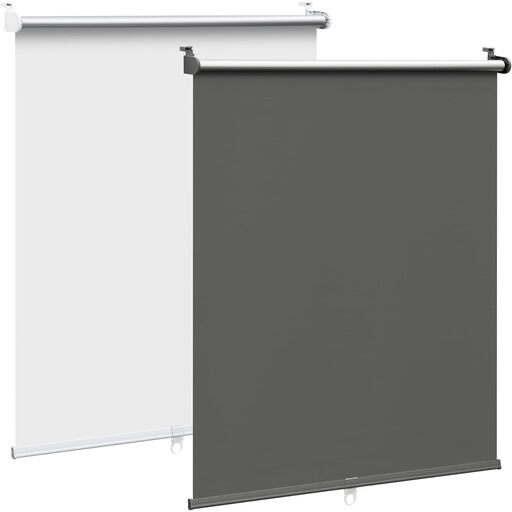
Why This Fits Their Persona: Ideal for bedrooms or children's rooms in a rental property where complete darkness and child-safe operation are required. The cordless design eliminates the hazard of dangling cords.
The silver coating on the back provides 100% blackout according to the manufacturer, thus avoiding the trap of a fabric that only darkens the room. The clip-on mechanism is designed for a clearly defined frame thickness (16-22 mm).
Effective blackout and thermal insulation. The cordless operation via a handle on the bottom rail offers enhanced safety and convenience.
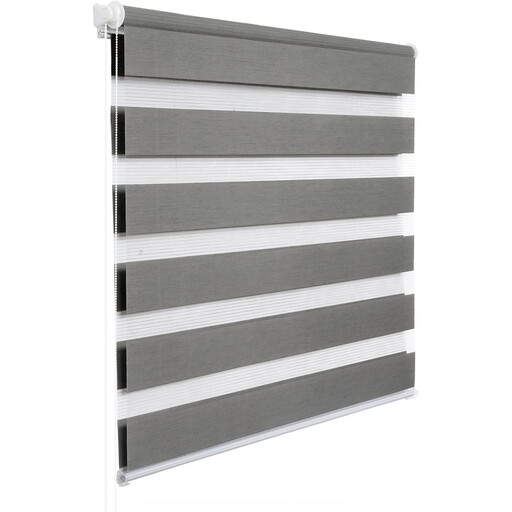
Why This Fits Their Persona: Perfect for living rooms, kitchens, or offices where light levels need to be flexibly adjusted throughout the day—from full privacy to gently filtered light.
Through its design, this blind offers a functional solution that goes beyond simple rolling up and down. The clip-on mount is designed for a specific frame depth (1.3 - 2 cm), ensuring a stable fit.
Infinitely variable light control thanks to two parallel fabric panels. The chain pull can be mounted on either the left or right side.
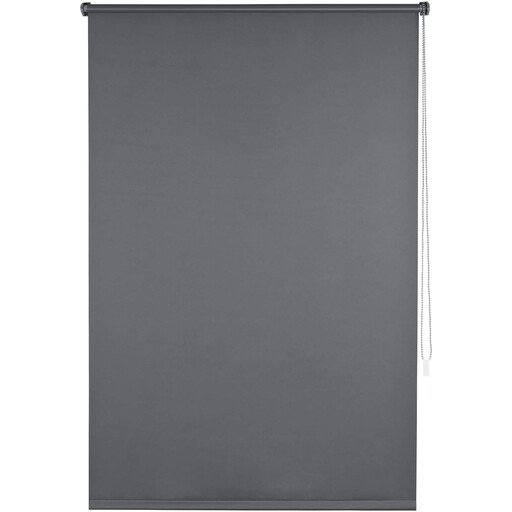
Why This Fits Their Persona: A solid choice for anyone looking for reliable blackout and thermal functions without a premium budget. The uniform colour of the fabric and accessories ensures a cohesive look.
The product description explicitly states that the fabric width is approx. 4 cm narrower than the total width. This helps prevent measurement errors. The aluminium light-stop coating ensures high opacity.
Offers both blackout and thermal insulation. The dual mounting options (clamping or screwing) provide flexibility for different installation scenarios.
We have compiled a complete, up-to-date list of products that fully meet these strict selection criteria and applicable standards.
1. How securely does a clip-on roller blind actually hold? The stability of a clip-on roller blind depends heavily on the quality of the clamp brackets and correct installation. When adhering to the manufacturer's specified adjustment range for the window frame thickness (e.g., 16-22 mm), high-quality systems provide a very secure hold for standard-sized blinds. For very wide or heavy blinds, a screw-in installation may offer greater stability.
2. Is a thermal roller blind effective in both winter and summer? Yes, a thermal roller blind with a special coating can help improve the indoor climate year-round. In the summer, the coating reflects a portion of the solar radiation, helping to reduce heat buildup in the room. In the winter, it acts as an additional barrier that reduces heat loss through the window pane. This can contribute to lowering cooling and heating costs.
3. Can I install a no-drill roller blind on a wooden window? Most clip-on systems are designed for the standardized profiles of modern uPVC windows. On wooden windows, especially older models with rounded or very narrow frames, the clamp brackets often cannot find a secure grip. Some manufacturers explicitly state in their product descriptions that their systems are not suitable for wooden windows. Therefore, always check the manufacturer's compatibility information before purchasing.