Joybuy Insights

Pimple Patch Buyer’s Guide: How to Choose the Right Solution

An unexpected pimple can derail your plans and dent your confidence. In the search for a quick fix, many turn to pimple patches, also known as acne patches or blemish patches. However, the market is saturated with products making a wide range of promises. As your Joybuy Product Recommendation Officer, I'm here to help you separate fact from fiction and make an informed decision.

The Most Common Pitfalls When Buying Pimple Patches

Before you spend your money, you should be aware of the typical marketing traps that often lead to disappointment.

  1. The "Overnight Miracle" Promise: Many products advertise their ability to get rid of a pimple overnight. However, the primary function of most patches is to create a protective, moist environment to absorb fluid and pus from a pustule that has already surfaced. They accelerate the healing process but won't make a deep, inflamed pimple magically disappear.
  2. Unsuitable Materials for Sensitive Skin: Not all patches are created equal. Budget-friendly options may contain harsh adhesives that can further irritate the skin barrier around the pimple, causing more redness. Without clear information on material quality, you risk worsening the problem.
  3. One Patch for All Pimple Types: A common mistake is assuming that any patch is suitable for every type of blemish. A simple hydrocolloid patch is effective on a superficial whitehead but is largely ineffective on a deep, subcutaneous nodule (papule).

What to Look for Before You Buy: The Core Parameters

To avoid a bad purchase, focus on these three objective criteria.

1. The Material: The Function of Hydrocolloid

The core of most pimple patches is hydrocolloid. This material has long been used in medical wound care as a wound healing dressing. It consists of gel-forming particles that absorb wound exudate (in the case of pimples, pus and sebum).

  • How it works: The patch creates a moist, clean environment that supports the healing process. At the same time, it protects the spot from external bacteria and, just as importantly, from unconsciously touching or picking at the pimple, which can lead to scarring.
  • What to look for: Look for products clearly labelled as hydrocolloid patches. The quality of the hydrocolloid determines its absorbency and adhesion.

2. The Active Ingredients: Pure or with Additives?

The market distinguishes between pure hydrocolloid patches and those enriched with active ingredients.

  • Pure Hydrocolloid Patches: Ideal for sensitive skin and for users who want a purely protective and absorbent function. They are the classic choice for a spot treatment on pimples that have already come to a head.
  • Anti-Pimple Patches with Active Ingredients: These often contain ingredients like salicylic acid, tea tree oil, or niacinamide. These can help to clear the pore and calm inflammation. They are an option for more stubborn blemishes but can be potentially irritating for very sensitive skin. Korean pimple patches have popularised this trend.

3. Shape and Size: Fit and Discretion

The physical properties of a patch are crucial for its effectiveness and comfort.

  • Size: The patch should completely cover the pimple and adhere by a few millimetres to the healthy skin around it. Many sets offer various sizes for different needs.
  • Thickness: Thicker patches can absorb more fluid and are well-suited for overnight use. Ultra-thin, transparent patches, on the other hand, are ideal for daytime wear as they are barely noticeable under makeup.
  • Adhesion: A good patch stays securely in place, even with movement, during a shower, or overnight, without peeling at the edges.

Recommended Picks for Every User

Here are some product recommendations tailored to different needs and use cases.
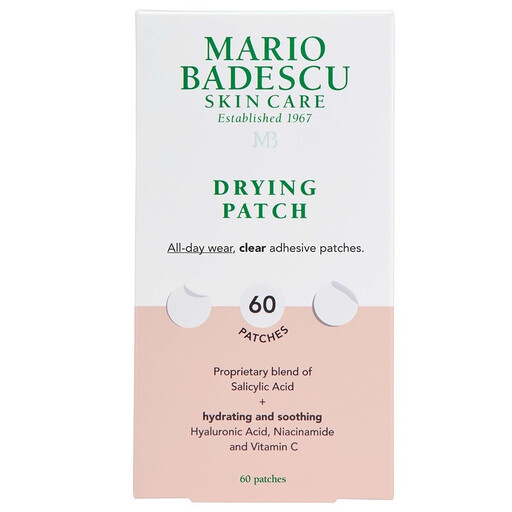
MATCH FOR: Users with Specific Needs
Mario Badescu Drying Patch 60 pieces

Mario Badescu Drying Patch 60 pieces

Why This Fits Their Persona: Suitable for users looking for a targeted treatment with active ingredients. This patch combines a protective function with ingredients aimed at combating blemishes.

How It Avoids the Trap

The active ingredients (Salicylic Acid, Niacinamide, Tea Tree Oil) are clearly declared. The user knows this is a product with additives and can use it specifically for stubborn pimples.

Key Advantage & Pros

Combines several proven active ingredients in one patch. The transparent design allows for discreet use during both day and night.

Looking for More Options?

We have compiled a complete, up-to-date list of products that fully meet these strict selection criteria and all relevant safety standards.

Frequently Asked Questions (FAQ)

How long should you wear a pimple patch?

Generally, it is recommended to wear a pimple patch for 6 to 8 hours or overnight. A clear indicator that it's time to change it is when the patch has turned white. This shows that it has absorbed exudate and has reached its maximum capacity.

Do pimple patches also work on blind pimples?

Standard hydrocolloid patches are most effective on pimples that already have a "white head" (pustules), as they need to absorb fluid. For deeper, closed inflammation without pus at the surface (papules), their effect is limited. For such cases, there are special patches with micro-structures designed to deliver active ingredients deeper into the skin, but their mechanism of action is different.

Can you wear pimple patches under makeup?

Yes, this is possible with many modern, ultra-thin patches. Always apply the patch to clean, dry skin before using any other skincare products or makeup. Makeup can then be carefully applied around or over the patch. The patch protects the wound from direct contact with the makeup.