
Lieferung heute & morgen

Qualitätsgarantie

Willkommens-Angebote freischalten: KOSTENLOSE Lieferung | Bis zu 80 % RABATT | Kostenlose 30-Tage-JoyPlus-Testphase
App herunterladen
An A6 notebook fits into many bags and is ideal for quick notes, sketches, to-do lists or personal entries. With smaller formats in particular, however, the details determine whether the notebook remains practical for everyday use. Compact dimensions alone reveal little about the paper, binding or durability.
The following points help school pupils, students, professionals, creatives and journaling enthusiasts compare products objectively and avoid common buying mistakes.
An offer stating “160 pages” may contain 80 sheets if both sides are used for writing. If you write regularly, check whether the supplier counts pages or individual sheets. The binding also affects the usable surface: a notebook with a firm binding may not open as wide as a flexible model.
A general marketing claim is no substitute for specific information. The paper weight in g/m², paper colour and ruling are more useful points of comparison. For everyday use, 90 g/m² or 100 g/m² may be suitable. Whether a particular fountain pen or marker shows through also depends on the ink, amount applied and properties of the paper.
If you are looking for an A6 lined notebook, you should also check the actual line spacing and the texture of the surface. Ruling that is comfortable for longer texts may be less flexible for small sketches or diagrams.
A notebook with a pen loop, bookmark or elastic closure is useful when these elements are securely attached and suit the way you intend to use the notebook. An elastic band can keep loose sheets secure, but it also makes the notebook slightly thicker. One or more bands in a notebook with bookmarks make it easier to switch between frequently used pages. Before buying, it is worth checking the product description and the dimensions when closed.
The DIN A6 format measures approximately 10.5 × 14.8 cm. Depending on the cover, amount of paper and features, the external dimensions may differ. A pocket notebook should not only fit in a handbag or rucksack, but also be comfortable to use on a small surface.
A thin softcover notebook may be easier to carry around. A hardcover notebook, on the other hand, provides a firmer writing surface when there is no table available. Also check the weight: an A6 model with 192 pages and several accessories can be considerably heavier than a simple exercise book.
PU leather, card and coated paper differ in feel, care requirements and durability. According to the product information, a PU leather notebook can usually be cleaned with a soft, slightly damp cloth. Strong moisture, heat and aggressive cleaning products should be avoided.
A flexible cover is suitable for users who frequently carry their notebook in a bag. A firm cover can be beneficial for those who write a lot or write on different surfaces. Terms such as “premium” or “stylish” should not be assessed in isolation; the material specification, care instructions and exact features are what matter.
Lined paper is an obvious choice for continuous text. If you are looking for a notebook for writing and sketching, you may benefit from a specialised ruling or a larger unprinted area. The paper colour affects the appearance, but not automatically the writing quality.
An undated layout is useful when pages need to be used flexibly. An undated planner will not go to waste if individual days or weeks are skipped. Nevertheless, check whether it actually contains calendar fields or is simply a lined notebook without a date structure.
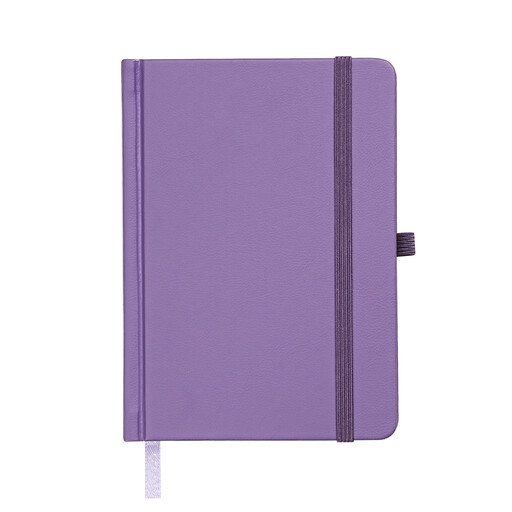
Why this product suits this profile: The compact A6 format, 80 sheets of lined paper and undated layout are ideal for everyday notes, lists and journaling without being tied to a fixed calendar.
The product details explicitly state 160 pages or 80 sheets, 100-g/m² paper and A6 dimensions of approximately 10.5 × 14.8 cm.
The PU hardcover, bookmark ribbon, elastic closure and pen loop are integrated into the design. The notebook is available in several colours.
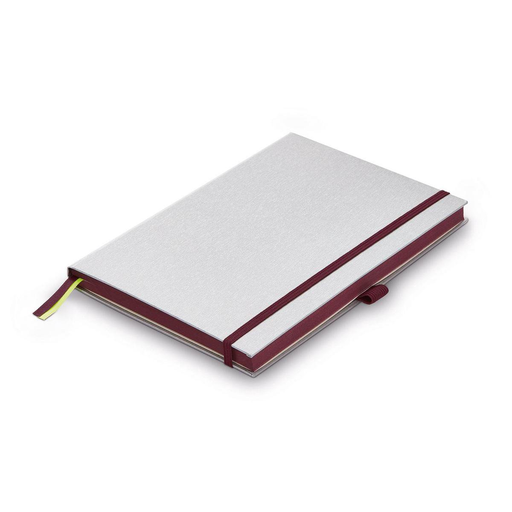
Why this product suits this profile: The hardcover and stated thread stitching are designed for users who want to carry their notebook regularly and use it over a longer period.
The description provides specific details: 192 pages, 90 g/m², acid-free ivory paper, a pen loop, elastic closure and two bookmark ribbons.
The model features an expandable pocket inside the back cover and eight removable sheets for loose notes.
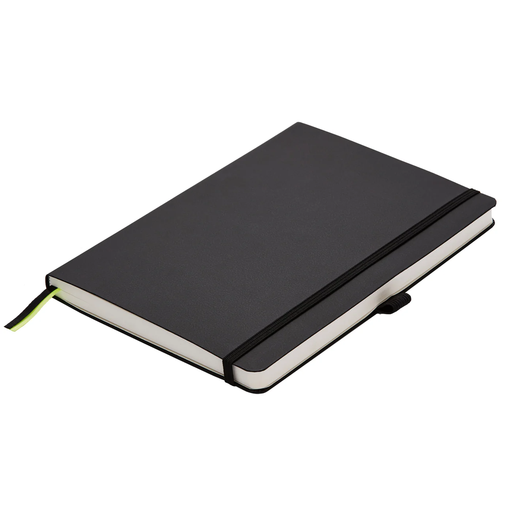
Why this product suits this profile: The flexible softcover is suitable for students, professionals and creatives who need plenty of pages for writing, sketching or organising.
The product data states 192 pages, 90-g/m² paper, Lamy ruling and the actual external dimensions of 144 × 25 × 102 mm.
Two bookmark ribbons, an elastic pen loop and a back pocket support use for notes and loose documents.
We have put together a complete, regularly updated list of products that fully meet these strict selection criteria and the safety regulations applicable in the EU.
The standard DIN A6 size is 105 × 148 mm. The cover, stitching, pocket or elastic band may increase the actual external dimensions. When choosing a pocket notebook, always take the product dimensions when closed into account.
That depends on how you intend to use it. A hardcover provides a firmer writing surface and offers greater protection against pressure. A softcover is generally more flexible and may be easier to store in a bag. Both options are suitable for desks and lessons; for frequent writing on the go, your personal preference may be the deciding factor.
For occasional notes, 80 sheets are often sufficient. If you use a notebook for study, work or regular journaling, 192 pages may be more suitable. It is important to compare the stated number of “pages” with the sheet count and paper weight, so that you do not misjudge the capacity of different models.