
Lieferung heute & morgen

Qualitätsgarantie

Willkommens-Angebote freischalten: KOSTENLOSE Lieferung | Bis zu 80 % RABATT | Kostenlose 30-Tage-JoyPlus-Testphase
App herunterladen
A portable air conditioner can be used without permanent installation, making it a good option for rented homes, bedrooms, home offices, offices and campervans. However, models vary considerably in cooling capacity, noise levels, window installation and energy consumption.
Three common buying mistakes are particularly likely to lead to disappointment:
Depending on the model, a 9000 BTU portable air conditioner provides around 2.6 kW of cooling capacity. Models in this class are often marketed for bedrooms, smaller living rooms and home offices. The models mentioned here, for example, are listed by their manufacturers as suitable for rooms up to around 30 m². This isn’t a one-size-fits-all figure, though: an uninsulated loft room in direct sunlight may need more cooling capacity than a shaded room of the same size.
A 12000 BTU portable air conditioner offers more capacity in reserve and is often used in larger living spaces. The Candy model is listed as suitable for rooms up to 35 m², while other units specify suitability by room volume. So compare BTU/h, kW and the room size used as the basis for the figures together.
A portable air conditioner with an exhaust hose needs to vent warm air outside. You’ll need a compatible window kit or suitable seal. A rigid window panel can be practical for sliding windows. For casement or tilt-and-turn windows, a fabric air conditioner window seal is often a suitable option.
Before buying, check:
A window seal for a portable air conditioner should fit as closely as possible against the window frame. The separately available Window Seal Strips, in lengths of 3 m and 4 m, may suit windows with different perimeters. Check the measurements and compatibility with your window before ordering.
Portable compressor units make noise from both the compressor and the airflow. A model rated at 49 to 53 dB(A) may sound different in sleep or low-fan mode than it does at maximum power. For a bedroom, sleep mode, a timer and the precise dB(A) rating are therefore more useful than marketing claims.
You can estimate energy costs using this simple calculation:
Power consumption in kW × hours of use × electricity price per kWh = approximate running costs
The energy efficiency class and EER rating can also help you compare models, but they don’t replace looking at how you’ll actually use the appliance. An air conditioner with Wi-Fi can make it easier to plan when it runs, but it won’t automatically reduce energy consumption. An air conditioner with heating is only worth considering if you’ll use that feature regularly and its stated heating capacity and efficiency are suitable for your room.
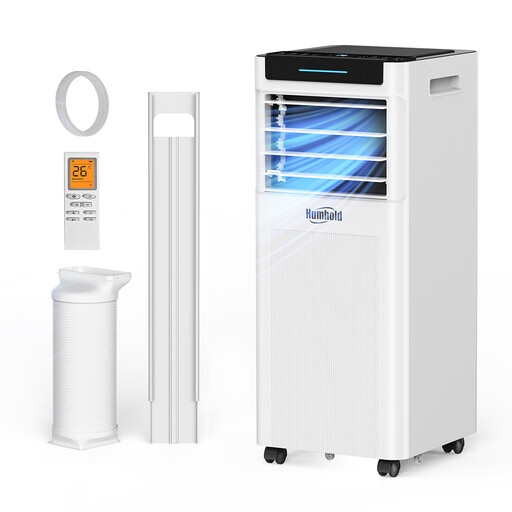
Why this product suits this profile: Designed for smaller rooms, this unit combines cooling, dehumidifying and fan functions in a compact body. According to the product details, its cooling capacity is 2.0 kW or 7000 BTU.
The recommended room size, performance figures and stated noise level of under 49 dB are clearly specified. The listed package contents include a window kit and an exhaust hose.
3-in-1 operation, a 24-hour timer, washable filter and castors for moving it between rooms.
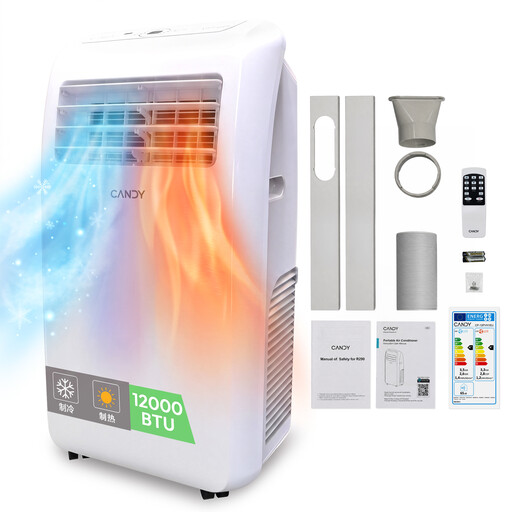
Why this product suits this profile: This model combines 12000 BTU of cooling capacity with heating, dehumidifying and fan functions. According to the product details, it’s designed to cool rooms of up to 35 m².
The technical details include cooling and heating capacity, energy efficiency class, air circulation and dimensions. The description says a window kit for vertical and horizontal sliding windows is included.
4-in-1 functions, remote control, a 24-hour timer and a stated A+ energy efficiency class for cooling and heating.
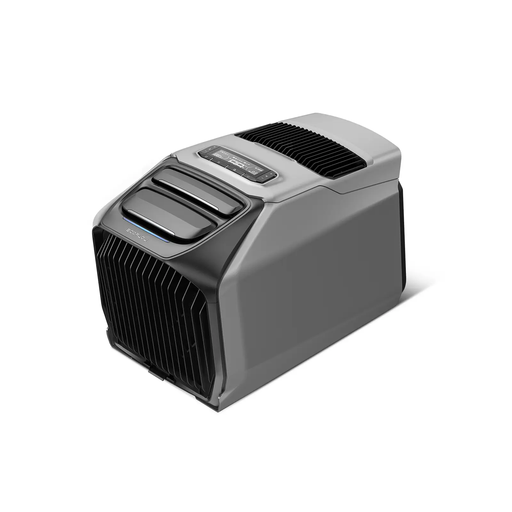
Why this product suits this profile: According to the product description, this unit is designed for campervans, vans, SUVs and similar mobile uses. It offers cooling and heating, as well as app control.
Its specialist use is clearly stated. For heat exchange, the exhaust needs to be vented outside; the product details also say it isn’t designed to be used while the vehicle is moving.
6100 BTU cooling capacity, 6800 BTU heating capacity, app control and optional battery operation for mobile use.
We’ve put together a complete, regularly updated list of products that meet these strict selection criteria and fully comply with the safety regulations in force in the EU.
Place the air conditioner on a flat, stable surface and leave the clearance from walls and furniture specified by the manufacturer. Don’t sharply bend or cover the exhaust hose. Plug the unit directly into a suitable earthed socket and avoid using an extension lead unless the manufacturer specifically allows it.
Clean the washable filter regularly and only put it back once it’s completely dry. Units containing R290 use a flammable refrigerant. Don’t damage the refrigerant circuit, and always follow the instructions and safety guidance provided by the manufacturer.
First, attach the exhaust hose to the unit, then connect it to the window kit. A fabric window seal can be a good option for a tilt-and-turn window, while an adjustable panel is often suitable for sliding windows. The key is to seal the opening as tightly as possible and vent the warm air outside.
Its lifespan depends on how many hours it’s used, filter care, storage and how well the compressor is treated. Regular cleaning, placing the unit on a level surface and following the manufacturer’s clearance requirements can help reduce the usual wear and tear. Before storing it, dry the unit as instructed and keep it protected.
Running costs depend on the unit’s power consumption, how many hours it runs each day and your electricity tariff. A timer, a suitable room size, closed windows and a well-sealed window can all help avoid unnecessary running time. Always calculate the actual cost using the energy label and technical specifications of the model you choose.