
Lieferung heute & morgen

Qualitätsgarantie

Willkommens-Angebote freischalten: KOSTENLOSE Lieferung | Bis zu 80 % RABATT | Kostenlose 30-Tage-JoyPlus-Testphase
App herunterladen
A portable DAB radio should pick up stations reliably when you’re out and about, be easy to use and keep going for more than just a few hours before needing to be plugged in. In practice, however, some common marketing claims can lead to disappointing purchases. A wide choice of stations is little use if reception is unreliable where you plan to use the radio. And a high battery capacity rating alone doesn’t tell you how long the radio will actually last.
This Joybuy Product Recommendation Officer buying guide explains what radio listeners in Germany should look for before buying, and which model suits different listening habits.
A DAB+ radio needs a digital broadcast signal to be available. Coverage can vary depending on the region, building and location. Reception may be limited in basements, densely built-up city centres or rooms with signal-blocking features. A device with an additional FM radio therefore offers a useful alternative.
The aerial is also important with pocket radios. Some compact models use the headphone cable as an aerial. Reception may then be limited if you aren’t wearing headphones.
The rating in milliamp hours, or mAh, describes the battery’s capacity, not necessarily how long it will last in use. According to the product specifications, a radio with a 1,000 mAh battery can provide up to 12 hours of playback. Actual battery life depends on factors such as volume, reception mode, display brightness and battery condition.
So check the stated battery life and the charging port. USB-C makes it easy to charge the radio using a mains adapter, laptop or power bank. A rechargeable radio is more practical for the garden, travelling and commuting than a model that only uses disposable batteries.
Bluetooth, internet radio, podcasts, an alarm clock and different sound modes can all be useful. But for a small portable radio for listening on the go, compact dimensions, easy-to-reach buttons and a clear display are often more important. Check that the features you want are genuinely suited to how you plan to use the radio.
Weight and dimensions matter most for sport, walks and travel. A pocket radio should fit in a jacket or side pocket without the buttons being pressed accidentally as you move. A button lock can help.
For use in the kitchen, bedroom or garden, a device that works from the mains as well as its battery offers more flexibility. Also check whether a mains adapter is included and whether you need to buy batteries separately.
A radio with an LCD display shows the station name, time or programme information, depending on the model. Adjustable brightness can be useful when listening by your bed. Preset stations make the radio quicker to use: depending on the model, you might get 20 DAB and 20 FM presets, or 40 presets in total.
A radio with headphones is useful on public transport, while exercising or when sharing a home. Take care with the volume and use headphones responsibly. Small accessories such as earbuds and cables should be kept out of reach of children under three.
If your radio has a battery, follow the safety instructions: don’t open the casing, keep the radio away from moisture and only use suitable chargers and cables. A CE marking, clear manufacturer information and guidance on disposal under the applicable WEEE rules are useful things to look for.
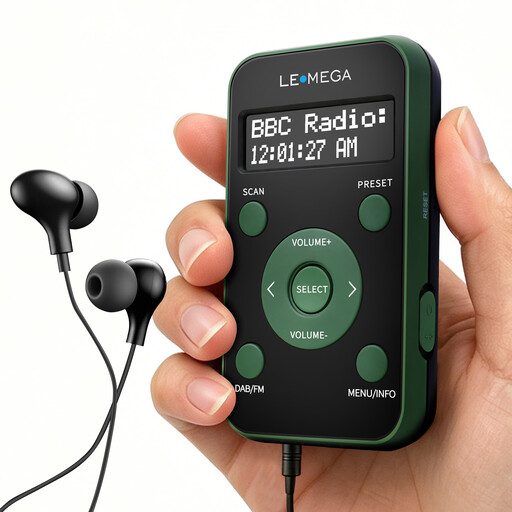
Why this product suits this user: This compact pocket radio weighs 65 g and measures 90 × 51 × 16 mm. DAB/DAB+, FM, an LCD display and a rechargeable battery cover the essentials for listening on the go.
DAB/DAB+ and FM reception are clearly specified. The supplied earbuds also act as the aerial, so bear this in mind when using the radio.
Up to 12 hours of playback according to the product specifications, USB-C charging, 40 presets and a button lock.
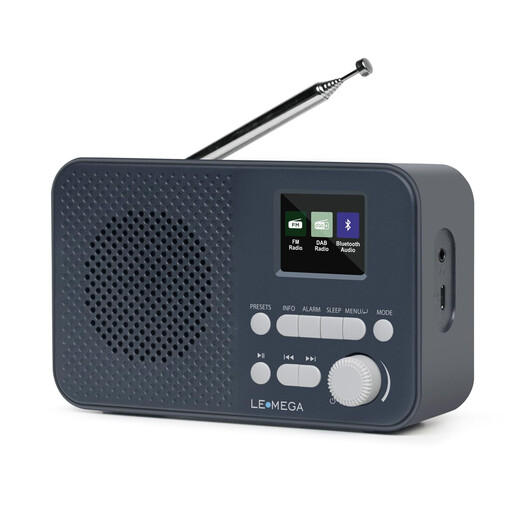
Why this product suits this user: This model combines DAB/DAB+, FM, Bluetooth and a 1.77-inch colour screen with mains and battery power. It’s well suited to the kitchen, bedroom, garden or living room.
As well as digital radio, FM is available as an alternative. The built-in battery means the radio isn’t reliant on a mains socket.
Up to 15 hours of battery life according to the product specifications, 40 presets, a headphone socket, Bluetooth, an alarm clock and a sleep timer.
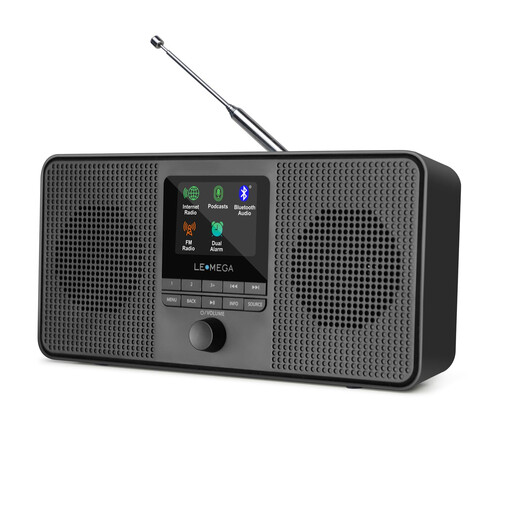
Why this product suits this user: For anyone looking for more than traditional radio, this device offers Wi-Fi internet radio, podcasts, Bluetooth and FM. It can be powered by mains electricity or four AA batteries.
The power options are clearly set out: use mains power for longer listening sessions at home, or batteries for greater portability. Internet radio still requires a Wi-Fi connection.
Access to over 30,000 internet radio stations according to the product specifications, 2.0 stereo speakers, a colour display, a headphone socket and two alarm times.
We’ve put together a complete, regularly updated list of products that meet these strict selection criteria and fully comply with the safety regulations in force in the EU.
Switch on the device and start the automatic station scan. Position the radio somewhere open if possible, and adjust the aerial or headphone cable. Then save your preferred stations to the preset slots. If you have an internet radio, you’ll also need to set up the Wi-Fi connection.
It depends on the battery capacity, volume, display and reception mode. The manufacturer’s “up to” figure indicates a possible maximum under certain conditions. If you’re planning to use the radio on the go, allow for some extra battery capacity and check for USB-C charging and power bank compatibility.
When running on battery, the radio doesn’t use mains electricity while you’re listening, but the battery does need to be charged regularly. A mains-powered radio can stay plugged in at home, while battery power lets you use it more flexibly. With a radio with an alarm clock, keeping the display on or an active Wi-Fi connection can increase power consumption.