
Lieferung heute & morgen

Qualitätsgarantie

Willkommens-Angebote freischalten: KOSTENLOSE Lieferung | Bis zu 80 % RABATT | Kostenlose 30-Tage-JoyPlus-Testphase
App herunterladen
A ratchet wrench is part of the basic equipment found in vehicle workshops, among tradespeople and in home workshops. It speeds up loosening and tightening bolts because the socket does not need to be repositioned after each short return stroke. The choice may seem straightforward at first, but some product specifications can lead to unsuitable purchases in practice.
Three points are particularly often underestimated:
If you focus only on a shiny finish or the largest possible accessory list, you could end up with a tool that is unsuitable for the bolts, installation spaces or torque ranges you intend to work with.
The drive size describes the square drive onto which the socket is fitted. In the German-speaking tool trade, these variants are particularly common:
A socket ratchet with a 1/4-inch drive is not suitable for every 1/2-inch socket. Adapters can extend its range of use, but they alter the overall height and force transmission. Before buying, you should therefore check your existing sockets, typical spanner sizes and the working space available.
The tooth count affects how far the handle has to be moved back before the next engagement. According to the product specifications, a 72-tooth ratchet, for example, operates with a return angle of around 5 degrees. The models specified as 90-tooth ratchets have a return angle of around 4 degrees. This makes working in confined areas easier, but it does not automatically mean that every ratchet is designed for particularly high loads.
For a ratchet for confined spaces, the head shape, overall length and a lever that is as small as possible are also important, in addition to the tooth count. A swivelling head can provide extra flexibility, but it is not equally load-bearing in every position. When dealing with heavily seized bolts, follow the instructions for the specific tool; a ratchet is not a substitute for a suitable breaker bar or impact wrench.
According to the manufacturer, many models are made from chrome vanadium steel or a chrome alloy. A polished chrome surface can make cleaning easier after working with oil and dirt. On its own, however, it says nothing about the permitted load.
Useful features include:
A digital torque wrench is designed for controlled tightening values, not for quickly loosening seized bolts. According to the manufacturer, the Movecrab model with a range of 1–20 Nm offers an accuracy of ±2 per cent clockwise, several units of measurement, as well as vibration, sound and LED signals. The measurement range must be suitable for the intended component. A tool with a range of 1–20 Nm is not suitable for wheel bolts or other applications with considerably higher specified values.
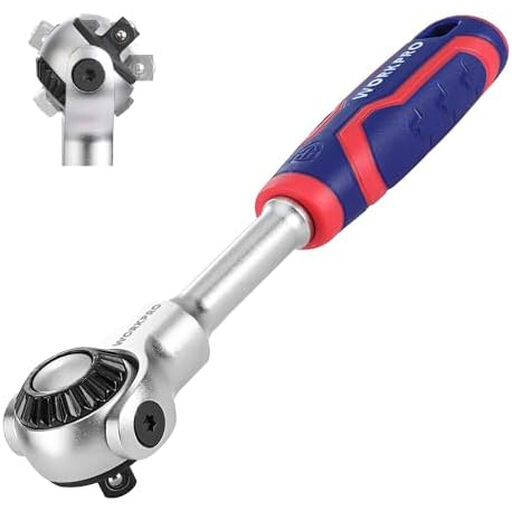
Why this product suits this profile: The 1/4-inch drive is suitable for smaller sockets and typical repairs on bicycles, vehicle interiors or around the home. The swivelling head is designed for confined installation spaces.
The specified 72-tooth mechanism and 270-degree swivelling head make the return stroke and design clear, rather than relying solely on a vague “professional” label.
According to the manufacturer: 140 g weight, 150 mm length, quick-release button and 72 teeth.
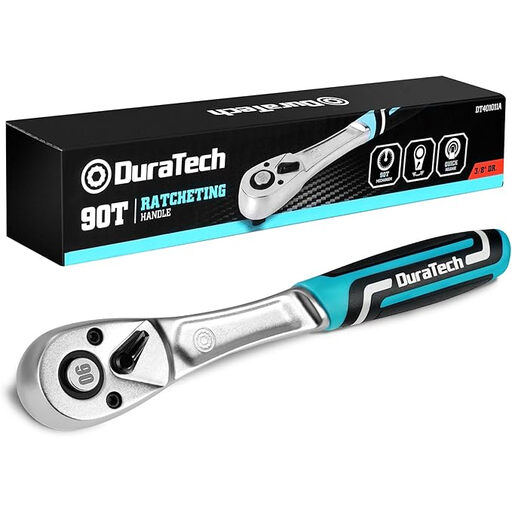
Why this product suits this profile: The medium drive size covers many jobs on cars, motorbikes and machinery. The short working angle is designed for assembly tasks where space is restricted.
The product details specify the drive, tooth count, material and working angle. This makes it easier to compare the tool with your existing vehicle-tool equipment.
According to the manufacturer: chrome vanadium steel, 90 teeth, 4-degree working angle and quick-release function.
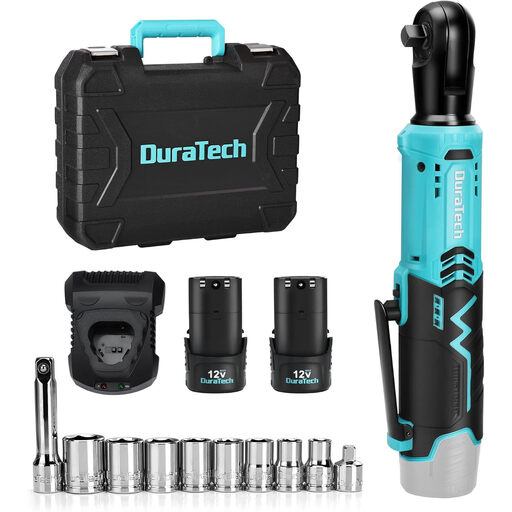
Why this product suits this profile: For repeated assembly and maintenance work, battery operation can reduce the need for manual ratcheting. The 3/8-inch drive is relevant to many vehicle and machinery applications.
The specifications for 65 Nm, 180 revolutions per minute, battery capacity and included accessories help you assess the performance and ongoing use realistically.
According to the manufacturer: two 2.0 Ah batteries, LED work light, charger, eight sockets and storage case.
We have put together a complete, regularly updated list of products that fully meet these strict selection criteria and the safety regulations applicable in the EU.
A manual ratchet wrench is low-maintenance and ready to use straight away. It is particularly suitable when you need feedback through hand pressure and flexible control over the applied force. An electric ratchet wrench saves time when carrying out many identical fastening tasks, but should not be used for uncontrolled final tightening. The battery, charging time, torque limitation and replacement batteries all affect running costs.
For safety-critical fastenings, a calibrated torque tool is required if the vehicle or equipment manufacturer specifies a particular value. A digital wrench with an alarm function makes it easier to recognise the target value, but it does not replace checking that the measurement range is suitable and applying the tool correctly.
A 3/8-inch ratchet is versatile for many general jobs on cars. 1/4 inch is better suited to smaller bolts and confined areas, while 1/2 inch is intended for larger sockets and higher force requirements. Your existing sockets should be the key consideration before buying.
Service life depends on the load, cleaning, storage and correct use. Overloading, extension pipes or striking the tool with a hammer can damage the mechanism. After use, remove oil and dirt and store the tool in a dry place.
Not necessarily. According to the relevant product specifications, a 90-tooth ratchet offers a smaller working angle and can be advantageous in confined spaces. The choice also depends on the drive size, head shape, permitted load and the appropriate socket.