
Lieferung heute & morgen

Qualitätsgarantie

Willkommens-Angebote freischalten: KOSTENLOSE Lieferung | Bis zu 80 % RABATT | Kostenlose 30-Tage-JoyPlus-Testphase
App herunterladen
A robot vacuum with a mopping function and a fully automatic cleaning station promises the ultimate in convenience: floors that practically clean themselves while you focus on more important things. However, the market for high-end models is crowded, and not every device lives up to its marketing promises. As a Product Recommendation Officer at Joybuy, I analyse the available information to provide you with an objective basis for your decision and help you avoid common purchasing traps.
Before you make an investment, you should be aware of the typical weaknesses that often only become apparent in daily use after the purchase.
To avoid a costly mistake, you should focus on three core technical areas that determine actual performance and daily convenience.
A modern cleaning station is more than just a dust-emptying device. Look for the following features that make all the difference:
The robot's ability to move intelligently and safely through your home is fundamental.
The mechanical cleaning mechanism is the heart of the device.
Based on the criteria above, we have identified a few models that are particularly well-suited for specific user profiles.
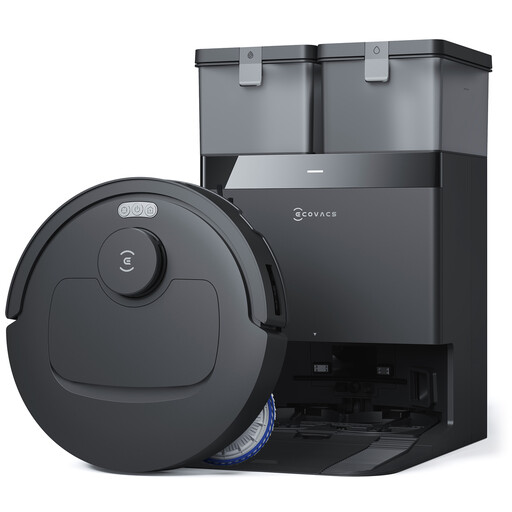
Why This Fits Their Persona: This model is designed for users seeking a nearly completely autonomous cleaning solution. The combination of advanced edge cleaning and a station that handles almost all maintenance tasks minimises manual effort.
The OMNI station counters the problem of high-maintenance stations with 75°C hot water mop washing and hot air drying. The TruEdge 2.0 technology solves the issue of poor edge cleaning with an extendable mop.
Comprehensive station self-maintenance; ZeroTangle 3.0 technology against hair tangles; very high suction power of 25,000 Pa according to manufacturer specifications.
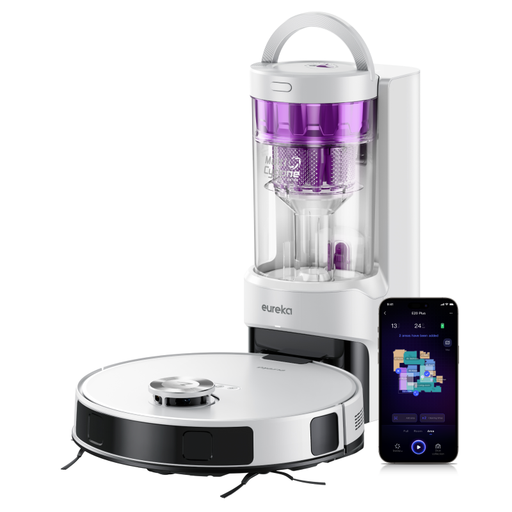
Why This Fits Their Persona: For households with pets, high suction power and effective hair pickup are crucial. This model combines both with a bagless station that avoids recurring costs and makes frequent emptying easier.
The high suction power of 10,000 Pa (manufacturer's claim) is made practical by the special anti-tangle system with a "DragonClaw" side brush. This addresses the trap of relying on suction power claims alone by applying the performance specifically to the problem of hair.
Special anti-hair-tangle system; bagless auto-empty station (up to 60 days capacity); 10 mm mop lift for mixed flooring.
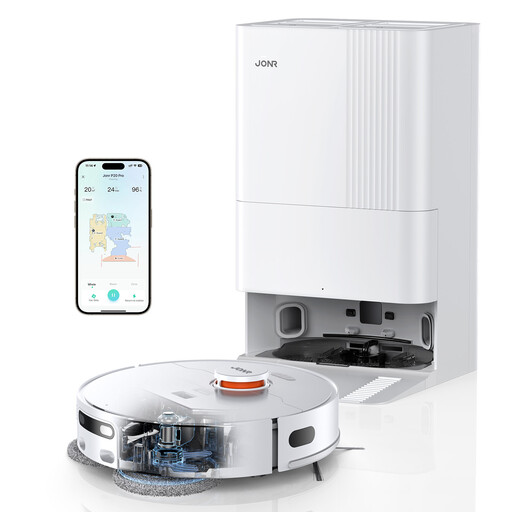
Why This Fits Their Persona: This user is looking for modern features like an all-in-one station and laser navigation but doesn't want to pay the premium for absolute top-tier models. The JONR T5 Pro offers a balanced package of high-end functions.
The model offers a comprehensive all-in-one base station, including hot air drying, which bypasses the trap of high-maintenance stations. It delivers solid suction and navigation performance without inflating the price with niche features.
All-in-one base station with hot air drying; good suction power of 8,150 Pa (manufacturer's claim); precise laser navigation for efficient routes.
We have compiled a complete, up-to-date list of products that fully meet these strict selection criteria and UK safety regulations.
The maintenance intervals depend heavily on the model and frequency of use. For models with hot water washing and drying, the manual cleaning effort for the station itself is lower. Generally, however, you should plan to empty and refill the clean and dirty water tanks every few days, depending on the cleaning area. The dust bag in the station needs to be changed approximately every 30 to 60 days, depending on the size of your household and the amount of dirt (e.g., from pets).
Yes, most modern robot vacuums and mops are suitable for sealed real wood floors. The key is that the water output can be precisely regulated in the app to avoid excessive moisture. Models with an automatic mop-lifting function offer additional safety, as the damp mops do not come into contact with the wood floor when the robot is only vacuuming or crossing a carpet. However, caution is advised for oiled or unsealed wood floors, and the manufacturer's instructions should be checked carefully.
The lifespan of a robot vacuum is typically three to five years, depending on its quality, use, and maintenance. The most critical component is the battery, usually a lithium-ion type. Its capacity noticeably decreases after about 500 to 800 charging cycles. However, on many high-quality models, the battery can be replaced, which extends the device's lifespan. Regular cleaning of the brushes, filters, and sensors also contributes significantly to its longevity.