
Lieferung heute & morgen

Qualitätsgarantie

Willkommens-Angebote freischalten: KOSTENLOSE Lieferung | Bis zu 80 % RABATT | Kostenlose 30-Tage-JoyPlus-Testphase
App herunterladen
Self-adhesive labels may seem straightforward at first glance. In practice, however, the wrong printing method, unsuitable dimensions or an inappropriate adhesive can quickly lead to unnecessary expense. This applies to individuals as well as offices, small businesses, retailers and dispatch teams.
Three purchasing problems occur particularly often:
The first step is to match the labels to your printing system. Thermal labels are usually printed in compatible thermal printers without ink or toner. This reduces the need for printer consumables, but the label width and the printer’s roll holder must be compatible.
For Phomemo devices, for example, model-specific Phomemo labels are available. The product description for Phomemo T02 Self Adhesive Thermal Paper states compatibility with the T02, Q02E, M02X and M02L models. For an M110 or M220 device, however, you should use the rolls designed for those models.
For laser and inkjet printers, printer labels on A4 sheets are a different product category. Important factors include:
The label size determines how much information can be included legibly. Small formats are sufficient for short descriptions, folders or cables. Barcode labels, parcel labels and price labels, on the other hand, usually need more space for a barcode, item number, price or delivery instructions.
Before buying, measure:
A format that is too small can result in information being cut off. An oversized label, by contrast, uses more material and may not fit into an existing filing system.
Label paper can be matt, coated, coloured or transparent. A matt surface often makes handwritten write-on stickers easier to read. Coloured sheets can be useful for colour-coded filing systems or eye-catching notices.
The adhesive also matters. A removable adhesive may be suitable for temporary labels, while permanent parcel or storage labels have different requirements. Also check whether the labels are intended for smooth, dust-free surfaces. Cardboard, plastic, glass and textile materials can behave differently when it comes to adhesion.
Thermal paper should be stored in a dry place, protected from direct sunlight and in accordance with the manufacturer’s instructions. With direct thermal printing, readability can be affected by heat, light, friction or certain chemicals. For documents that need to be kept for a long time, choosing the right printing method is therefore more important than simply opting for the lowest price per roll.
The following products cover a range of applications: mobile labelling, barcode and price marking, as well as A4 labels for office use and organisation.
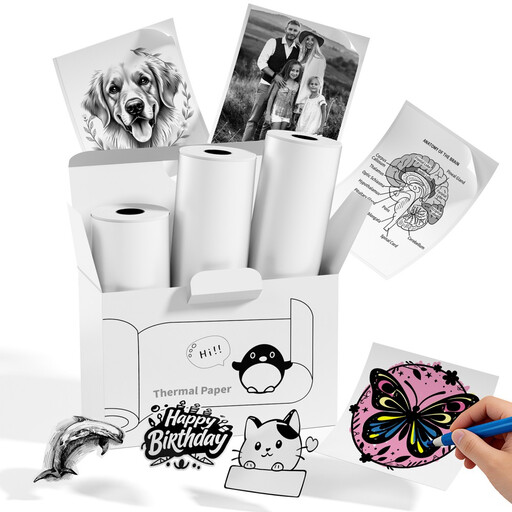
Why this product suits this profile: The set of three rolls is ideal for users who want to create notes, photos, scrapbooking elements or short labels with a compatible mini printer.
The listed compatible models make it easier to check suitability before buying. Nevertheless, the 50mm width should be compared with the specific device.
Three rolls of self-adhesive thermal paper, with a format of 50mm x 3.5m per roll.
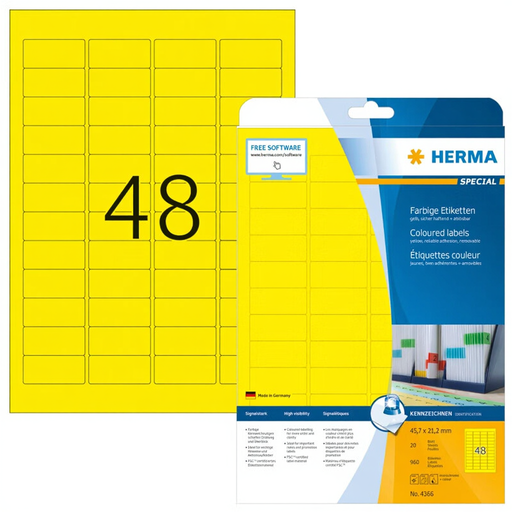
Why this product suits this profile: The A4 sheets are suitable for structured office processes, colour-coded filing systems, notices and labelling with laser or inkjet printers.
The exact format, printer compatibility and quantity per pack are specified. The removable adhesive is suitable for temporary markings.
20 A4 sheets, each with 48 yellow labels, giving 960 labels in total; FSC Mix Credit-certified paper according to the product description.
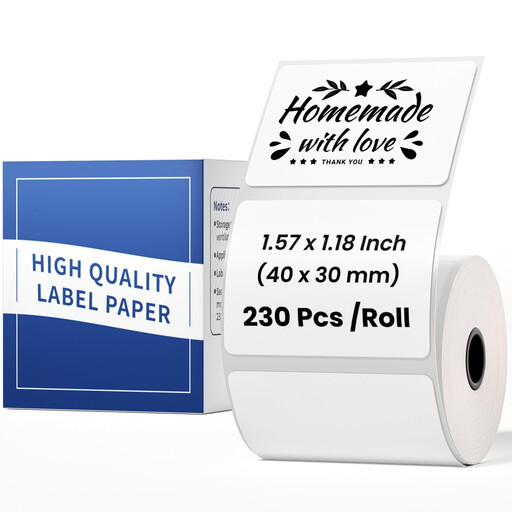
Why this product suits this profile: The format is designed for barcode, price and parcel labelling with compatible M110 or M220 devices.
The dimensions and intended device series are clearly specified. This makes it easier to check compatibility before buying.
White roll labels in a 1.57 x 1.18-inch format, with 230 labels per roll.
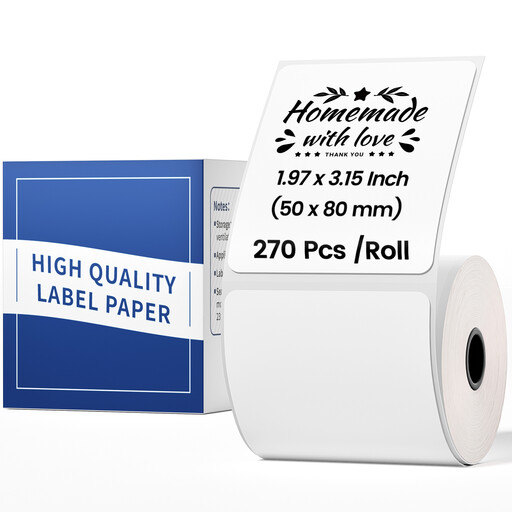
Why this product suits this profile: The larger surface provides more room for delivery details, barcodes, pricing information or additional internal markings.
The larger dimensions reduce the risk of having to squeeze important information onto a label that is too small. Compatibility with M110 and M220 devices should still be checked.
White roll labels in a 1.96 x 3.14-inch format, with 100 labels per roll.
We have put together a complete, regularly updated list of products that fully meet these strict selection criteria and the safety regulations applicable in the EU.
For roll labels, it is worth looking at the number of labels per roll, rather than just the pack price. A larger roll may reduce the need to reorder, but it must suit your storage space and printing volume. A multipack may be unnecessary for occasional craft projects; for regular dispatch tasks, it makes sense to keep an adequate reserve.
Create a test label before starting a print run. Check the following:
For labels for mini printers, you should also compare the roll width, core diameter and printer roll holder. With A4 labels, a template suited to the specific format is helpful, so that the text does not shift between the designated fields.
Durability depends on the paper, adhesive, surface and environment. Dry indoor spaces are generally less demanding than conditions involving moisture, strong sunlight, heat or frequent friction. With thermal paper, the printed text can change under unfavourable conditions. For labels that need to remain in place for longer periods, follow the product information on storage and use.
No. Thermal labels require a suitable thermal printer. Depending on the product, A4 label sheets may be intended for laser and inkjet printers, copiers or specific colour systems. The information on the packaging and product page should be checked against the device you have.
That depends on how you plan to use them. Rolls are practical for compatible label printers and recurring individual labels. A4 sheets are better suited to printing many labels in one go using existing office equipment. Compare the price per label, the quantity you need and any potential misprints caused by unsuitable templates.