
Lieferung heute & morgen

Qualitätsgarantie

Willkommens-Angebote freischalten: KOSTENLOSE Lieferung | Bis zu 80 % RABATT | Kostenlose 30-Tage-JoyPlus-Testphase
App herunterladen
A well-equipped socket set is the cornerstone of many workshops and garages. However, the selection is vast, and differences in quality are often only apparent on second glance. Buying uninformed can quickly lead to investing in a tool set that brings more frustration than joy. Before you make a decision, it's crucial to understand the common pitfalls that can lead to a bad purchase.
Many buyers are dazzled by a high piece count, only to find later that half the components go unused or are of inferior quality. Another common issue is the choice of material: tools made from low-grade steel can bend under load or start to rust after a short time. A particularly frustrating problem is an imprecise mechanism in the reversible ratchet, which makes working in tight spaces difficult or can even damage bolt heads.
To ensure your new socket set is a valuable long-term investment, you should carefully examine three key parameters. These features determine its functionality, durability, and practical everyday use.
The durability of a tool hinges on the material used. For sockets and ratchets, Chrome Vanadium Steel (Cr-V) has become the industry standard. This alloy offers high strength and toughness, making the tool resistant to deformation and breakage. A high-quality surface finish, whether it's matte or polished chrome plating, provides additional protection against corrosion and makes cleaning easier. Look for this material specification to ensure your professional tool set meets high demands.
The ratchet is the central component of the set. Its quality is largely determined by two factors:
A good socket set is defined not by the sheer number of pieces, but by a well-thought-out selection. Check if the most common metric socket sizes (e.g., 8 mm to 19 mm) are included without gaps. Useful additions like extensions, universal joints, and adapters significantly increase flexibility. For some users, an integrated combination wrench set or an assortment of bits (Slotted, Phillips, Torx) can provide decisive added value.
To help you make your decision, we have matched different tool sets to various user profiles.
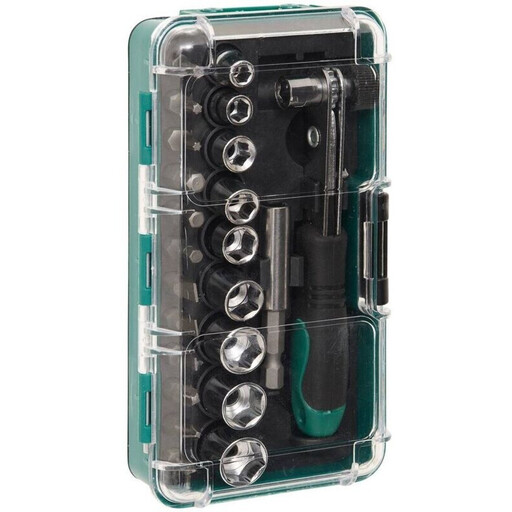
Why This Fits Their Persona: Ideal for individuals who need a compact and straightforward set for furniture assembly, bike repairs, or other small household tasks without having to invest in a large tool case.
This set avoids the trap of oversized tool cases. It focuses on the essential socket sizes (4-12 mm) and the most common bits, rather than being filled with rarely used parts.
Extremely compact and lightweight; all parts are organised in a sturdy case. The magnetic adapter allows for quick changes between bits and sockets.
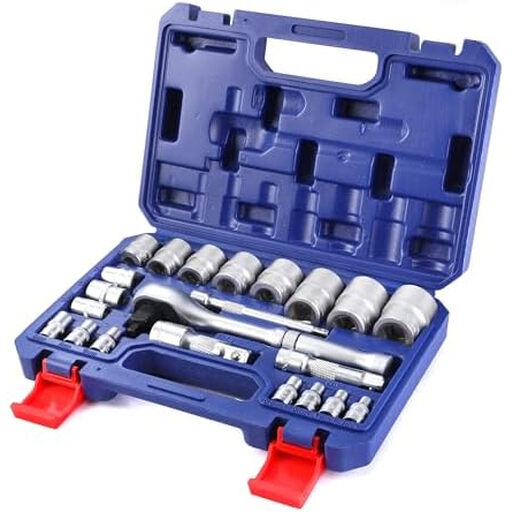
Why This Fits Their Persona: Perfect for DIY enthusiasts and hobby mechanics who regularly work on cars, motorcycles, or appliances and need a versatile, durable set that covers multiple drive sizes.
Instead of three separate ratchets, this set offers an innovative 3-in-1 handle. It prioritises quality (Cr-V steel, 72-tooth mechanism) and functionality over a bloated parts list.
The 3-in-1 ratchet handle combines 1/4", 3/8", and 1/2" drives, saving space and money. The set covers a wide metric size range (4-24 mm).
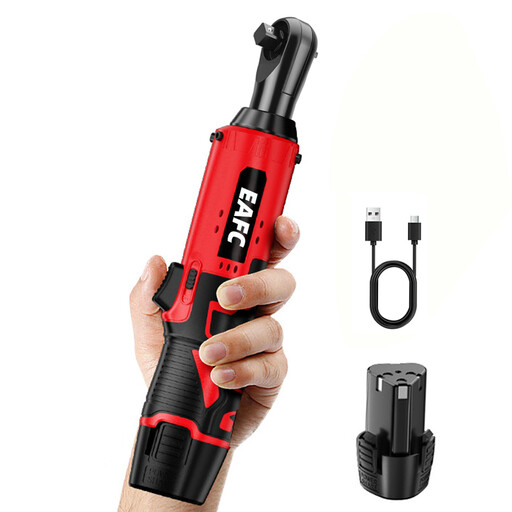
Why This Fits Their Persona: For users who frequently work in tight spaces and value speed and convenience. This cordless ratchet wrench significantly speeds up repetitive fastening tasks.
This tool solves the problem of tedious manual labour that persists even with ratchets that have a small swing arc. It is a specialised solution for efficiency, not a generic all-purpose set.
The electric drive with 45 Nm of torque and variable speed control enables fast and controlled work. The slim head (3 cm) can reach even very tight spots.
We have compiled a complete, up-to-date list of products that fully meet these strict selection criteria and all relevant safety standards.
The number of pieces is not a direct indicator of quality. It's more important that the set contains the sizes and tools relevant to your projects. Entry-level sets with 20-50 pieces are often sufficient. For ambitious mechanics, a tool case with over 100 pieces can be useful, provided the selection is well-curated and doesn't include low-quality "filler" parts.
That depends on the application. 1/4-inch is for precision work, while 1/2-inch is for heavy-duty tasks requiring high torque. The 3/8-inch drive is the most versatile compromise and a great choice for most general repair and maintenance jobs around the house and on a car. Many comprehensive sets include ratchets and sockets in all three sizes.
Look at the tooth count: 72 teeth or more allows for a small swing arc, making it easier to work in tight spaces. Also, check the material (ideally Chrome Vanadium or Chrome Molybdenum steel) and the overall feel. The directional switch lever should move smoothly but click precisely into place.