
Lieferung heute & morgen

Qualitätsgarantie

Willkommens-Angebote freischalten: KOSTENLOSE Lieferung | Bis zu 80 % RABATT | Kostenlose 30-Tage-JoyPlus-Testphase
App herunterladen
Whether you are a coffee lover, tea drinker or keen home cook, tea and coffee filters need to do more in everyday use than simply separate liquids from solids. The right mesh size, sufficient capacity, durable materials and easy regular cleaning are all important considerations.
Anyone who focuses solely on product images or advertising claims can easily overlook practical details. The following criteria will help you compare a tea filter, coffee press, French press or versatile kitchen sieve objectively.
A compact tea infuser can be sufficient for a single cup. However, when preparing larger quantities of tea or using bulky leaves, the available space can quickly become limited. Loose-leaf tea needs enough room for the water to reach the leaves evenly. For several people, a teapot with filter or tea press is often more practical.
Size is also important for coffee: a small coffee press with a capacity of 350 millilitres is more suitable for one to three cups, while a 1-litre model is designed for several portions.
Descriptions such as ‘fine’ or ‘Micro-Mesh’ are of limited value without additional technical information. A specific mesh-size measurement or a clear description of the filter design makes comparison easier. For example, a stainless steel sieve with 1.5-millimetre openings is used differently from a particularly fine-mesh coffee filter.
Coffee, tea and kitchen tasks also have different requirements. A straining sieve or flour sieve for flour and sauces is not automatically suitable for fine coffee grounds.
A filter that is difficult to rinse or has numerous hard-to-reach edges can become impractical in everyday use. Features such as dishwasher-safe should be checked before buying. It is also important to confirm whether all components are suitable for the dishwasher. Products with wooden lids, for example, may need to be washed by hand.
With glass vessels, the permitted temperature is a key consideration. According to the product description, the Bialetti Preziosa is designed for temperatures of up to 120 °C. This limit should be observed to prevent deformation or damage.
Stainless steel filters are widely used for reusable solutions. In many cases, stainless steel is easy to clean and does not require paper refills. Pay attention to the finish of the edges, handles and connections.
Borosilicate glass is often used for French presses and teapots. It allows you to watch the brewing process and, according to the relevant product information, is designed for defined temperature ranges. Glass is nevertheless more susceptible to impact than a coffee maker made entirely from stainless steel.
Paper or cellulose filters are another option for tea. According to the product description, Bünting Tea Aroma-Plus filters are made from bleached cellulose and abaca fibres and are supplied in a pack of 100. They are intended for single use and do not require extensive cleaning after brewing.
Before buying, consider how many portions you usually prepare:
A kitchen sieve can also be used for draining, washing and sifting. An extendable draining sieve can be placed over sinks of different widths, but it requires sufficient storage space.
Check whether the filter can be fully dismantled and whether residue can be removed from the mesh. Hanging loops can make storage easier. According to the product description, the Leifheit Kitchen Sieve ProLine features an integrated hanging eye. The handle also has a thumb rest.
Bamboo components require special care: wooden lids should not be soaked in the dishwasher or stored permanently in wet conditions. Stainless steel surfaces can be cleaned with mild washing-up liquid and a soft sponge; abrasive cleaners may scratch the surface.
The following selection matches different solutions to specific everyday situations. Technical details are based on the product information provided.
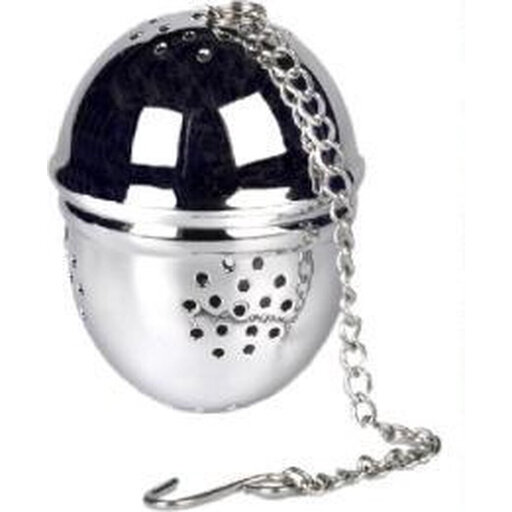
Why this product suits this profile: The compact, round tea filter made from stainless steel is designed for individual cups or small teapots and can be rinsed after use.
The compact design makes its intended use clear: smaller quantities rather than an overfilled teapot.
Stainless steel, a round 4-cm design and reusable use.
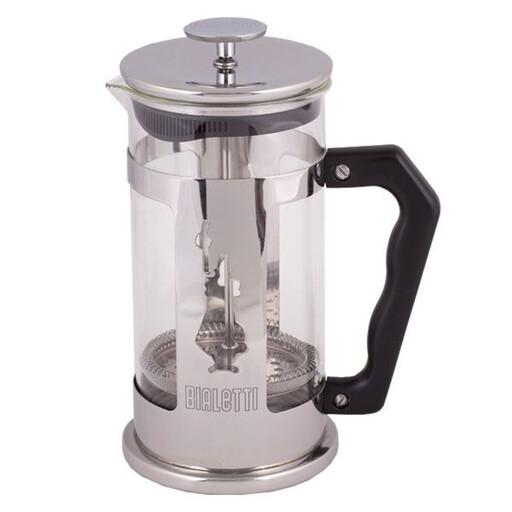
Why this product suits this profile: The coffee press combines an 18/10 stainless steel casing with a borosilicate glass container and offers a capacity of 1 litre.
The clearly stated capacity makes portion planning easier. The maximum temperature of 120 °C should be observed.
1-litre capacity and a dishwasher-suitable design according to the product information.
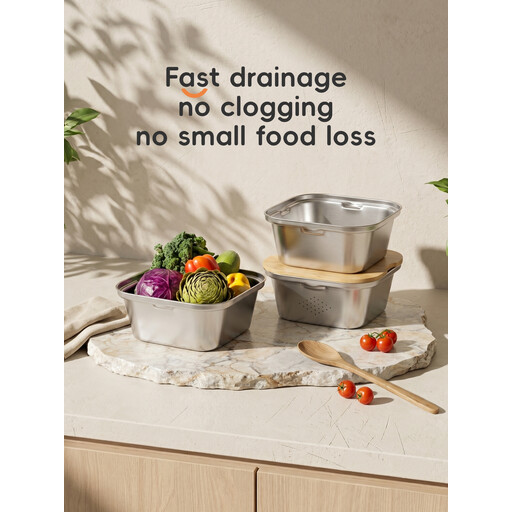
Why this product suits this profile: The set includes bowls and sieves with capacities of 1,300 and 2,500 millilitres for rice, fruit, vegetables, dough and ingredient storage.
The separate bowl and sieve components cover several kitchen tasks instead of providing just one filtering function.
304 stainless steel, stackable square design and two stated sizes.
We have put together a complete, regularly updated list of products that fully meet these strict selection criteria and the safety regulations applicable in the EU.
For smaller quantities, the Bialetti Preziosa Coffee Press with 350 ml is a good choice. According to the product description, it is designed for three cups, is made from stainless steel, glass and plastic, and can be used at temperatures of up to 120 °C. If you prefer loose-leaf tea, you can also use a teapot with a metal filter. The Crane teapot holds 1,000 ml and, according to the description, features an integrated stainless steel filter.
For classic tea preparation with a clear view of the infusion, consider the BODUM ASSAM Tea Press with 0.5 litres. According to the product description, the container is made from heat-resistant borosilicate glass and features a stainless steel filter. For larger sinks, an extendable stainless steel draining sieve with 3.6 litres may be suitable; according to the specifications, it is 53.5 centimetres wide.
For a single cup, a small tea strainer or tea infuser is often sufficient. For larger quantities, a tea press or teapot with a filter is more practical, as the tea leaves have more room. The right size and a sufficiently fine filter mesh are the key considerations.
That depends on the individual model. The product information for the Bialetti Preziosa and the Leifheit Kitchen Sieve states that they are suitable for dishwashers. Individual components, such as bamboo lids, may be excluded. Always check the manufacturer’s care instructions before cleaning.
Its service life depends on the material thickness, construction, frequency of use and care. Stainless steel is designed for repeated use. However, sharp edges, aggressive cleaning products and improper handling can damage the filter mesh and surfaces. Thoroughly rinsing the filter immediately after use helps reduce residue.