
Lieferung heute & morgen

Qualitätsgarantie

Willkommens-Angebote freischalten: KOSTENLOSE Lieferung | Bis zu 80 % RABATT | Kostenlose 30-Tage-JoyPlus-Testphase
App herunterladen
A precision torque wrench set is fundamental for safe and professional work on vehicles and machinery. However, the market is flooded with products that overpromise and underdeliver. Incorrectly tightened bolts can not only damage components but also pose a significant safety risk. As your Joybuy Product Recommendation Officer, I'll help you identify the crucial features and steer clear of common purchasing traps.
Many users invest in a tool that later turns out to be unusable or inaccurate. Pay close attention to these three points to avoid a poor investment:
To find the right tool, focus on the following technical specifications. These define the functionality and reliability of your future torque wrench.
The most important characteristic of a torque wrench is its accuracy. Professional tools are manufactured and delivered according to standards like DIN EN ISO 6789. A calibrated torque wrench comes with an individual certificate documenting the results of the factory inspection. A typical release accuracy is between ±3% to ±4% of the set scale value. A digital torque wrench can even achieve accuracies of ±2%. Without this proof, you are essentially buying a guessing tool.
The required torque range is specified in Newton-metres (Nm) and depends entirely on your application:
Here are some product recommendations tailored to specific requirements and users.
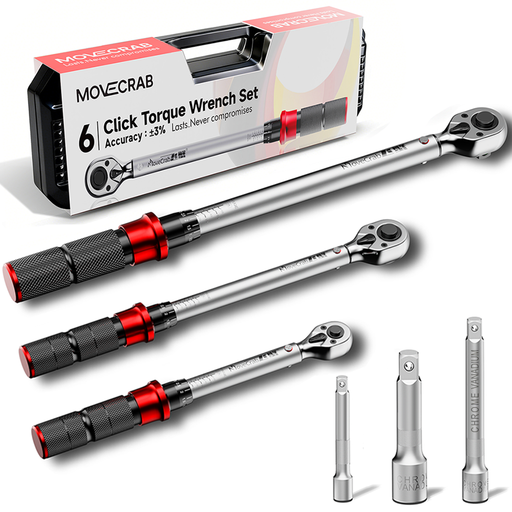
Why This Fits Their Persona: Ideal for users who need reliable and broad coverage for work on cars, motorcycles, and bicycles without having to buy three separate tools.
This set solves the problem of a limited torque range by including three separate wrenches (5-25 Nm, 10-80 Nm, 20-220 Nm). According to the manufacturer, each wrench is supplied with a calibration certificate (±3% accuracy) and is made from robust Cr-V steel.
Wide Application Range: Covers almost all common vehicle fastening tasks with three wrenches. Includes Accessories: Comes with extension bars for 1/4", 3/8", and 1/2" drives.
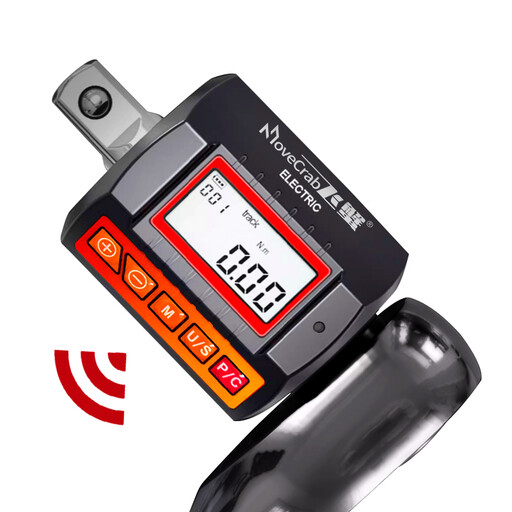
Why This Fits Their Persona: Perfect for mechanics and technicians who want to upgrade their existing ratchets and value digital precision, data logging, and flexible unit conversion.
This adapter bypasses the trap of inaccurate mechanics by using digital measurement with a high accuracy of ±2% (according to the manufacturer). It eliminates the need for a whole new set if ratchets are already owned and offers compatibility for 1/4", 3/8", and 1/2" drives thanks to included adapters.
High Precision & Modes: Offers real-time, peak, and preset modes. Data Storage: Can store up to 1,000 readings, according to the manufacturer, which simplifies documentation.
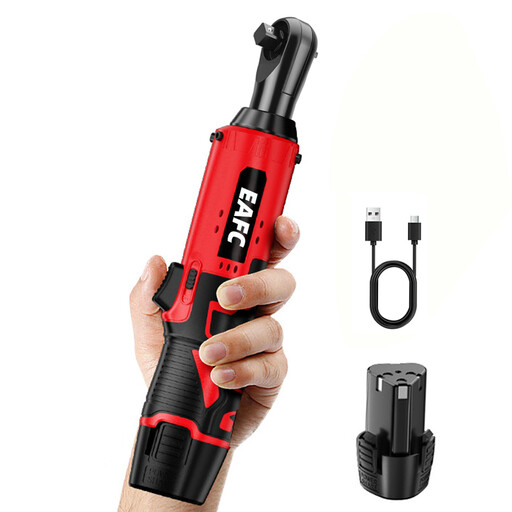
Why This Fits Their Persona: Designed for auto mechanics who frequently work in hard-to-reach areas like engine bays and need a fast, compact tool for loosening and tightening bolts.
This tool is clearly positioned as a cordless ratchet wrench, not a precision torque wrench. It avoids the trap of false expectations. Its strength lies in its speed and slim head (3 cm), not in its torque accuracy.
Compact Design: The ultra-slim head allows access to tight spots. Reduces Workload: Significantly speeds up fastening tasks and reduces hand fatigue.
We have compiled a complete, up-to-date list of products that fully meet these strict selection criteria and comply with current safety regulations.
For professional use, an annual calibration or an inspection after approximately 5,000 load cycles is recommended. If the tool has been dropped or subjected to impact, it should also be recalibrated to ensure accuracy. For occasional private use, the intervals are correspondingly longer.
It is strongly advised not to use a mechanical click-type torque wrench to loosen seized bolts. The high force required can damage the internal spring mechanism and permanently throw off the calibration. Always use a breaker bar or an impact wrench for loosening. Some digital models are designed for counter-clockwise use, but caution is still advised.
The inch measurement (e.g., 1/4", 3/8", 1/2") refers to the size of the square drive. This is the square end of the tool where the sockets are attached. 1/2 inch is the most common standard for high-force applications on a car, such as changing wheels or working on the suspension, as it can safely transfer high levels of torque.