
Lieferung heute & morgen

Qualitätsgarantie

Willkommens-Angebote freischalten: KOSTENLOSE Lieferung | Bis zu 80 % RABATT | Kostenlose 30-Tage-JoyPlus-Testphase
App herunterladen
A vacuum mop promises to be a significant time-saver in floor cleaning: vacuuming and mopping in a single step. However, the market is filled with models whose marketing promises don't always hold up in practice. Before you make a purchasing decision, it's helpful to know the most common weaknesses and exaggerated marketing claims that can lead to disappointment.
To find a reliable hard floor cleaner, it is advisable to focus on a few key technical parameters that go beyond mere advertising claims.
A fundamental feature of any effective vacuum mop is a dual-tank system. This design ensures that fresh water and cleaning solution remain separate from the vacuumed dirty water. This prevents the redistribution of dirt—a common problem with traditional mopping. When choosing, pay attention to the capacity of the tanks. A fresh water tank of at least 700 ml and a dirty water tank of over 500 ml reduce the frequency of refilling and emptying, which is particularly advantageous for larger living spaces.
A high-quality vacuum mop with self-cleaning offers more than a simple rinse cycle. Advanced systems use hot water to more effectively dissolve grease and stubborn dirt from the brush roller. An integrated drying function, preferably with warm air, is crucial to prevent the formation of mould and odours. For households with pets, it is also important that the cleaning station can reliably remove tangled hair from the brush of a vacuum mop for pet hair.
Suction power, often specified in Pascals (Pa), is only part of the overall performance. Equally important is the design of the brush roller. Models with an edge-to-edge design minimise the uncleaned strip along baseboards. A high rotation speed of the brush helps to loosen even dried-on dirt. An intelligent dirt sensor that automatically adjusts the performance of the cordless vacuum with mopping function can optimise both cleaning performance and battery life.
Based on these objective criteria, we present a few models that are suitable for different user profiles.
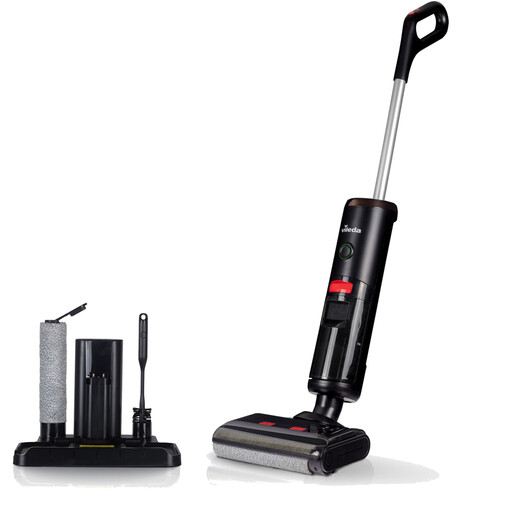
Why this model is a good fit: This device focuses on core functions. It offers solid 2-in-1 cleaning for hard floors and is a pragmatic choice for users seeking reliable basic equipment without complex extra features.
The self-cleaning function cleans the brush roller in the station at the touch of a button, reducing manual effort, even though a separate air-drying feature is not included.
The device features a clear dual-tank system (750 ml fresh water, 600 ml dirty water) and a battery life of up to 35–45 minutes, which is sufficient for standard-sized homes.
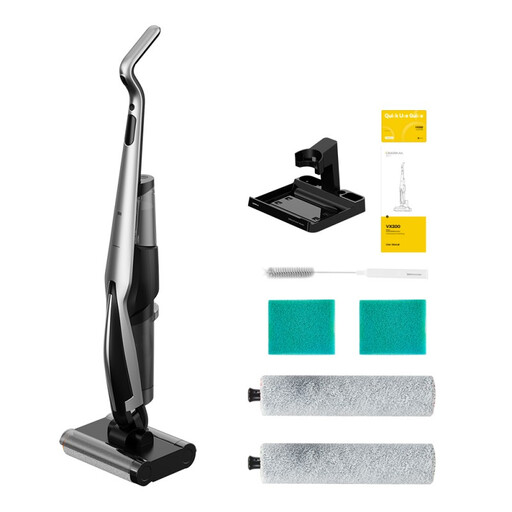
Why this model is a good fit: For households that deal with daily pet hair, food spills, or liquids. The combination of strong suction power and hygienic cleaning is crucial here.
Self-cleaning with 70°C hot water followed by 70°C hot air drying actively combats the growth of bacteria and odours—a common problem with simpler devices.
The dual brush roller improves dirt pickup, while the comb-tooth structure reduces hair tangling. The suction power of 22,000 Pa is designed for demanding messes.
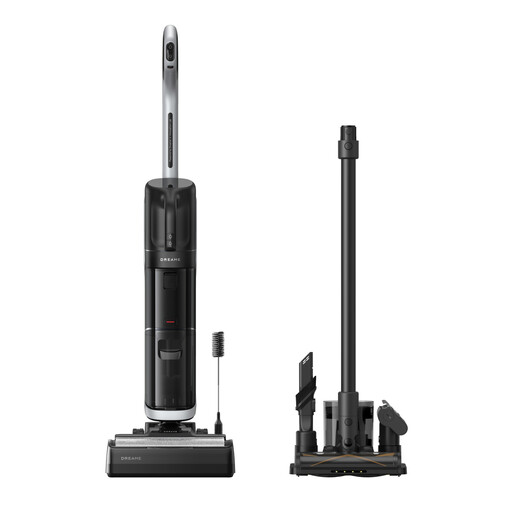
Why this model is a good fit: Ideal for users with large living spaces who aim for maximum cleaning coverage per battery charge and water tank fill, and who value smart automation.
With a battery life of up to 75 minutes and large tanks (880 ml fresh water, 650 ml dirty water), this model counters the pitfall of unrealistic runtime claims and allows for cleaning large areas without interruption.
The dual-sided edge-cleaning design and the 180° lay-flat feature enable thorough cleaning even in hard-to-reach places like under furniture and along baseboards.
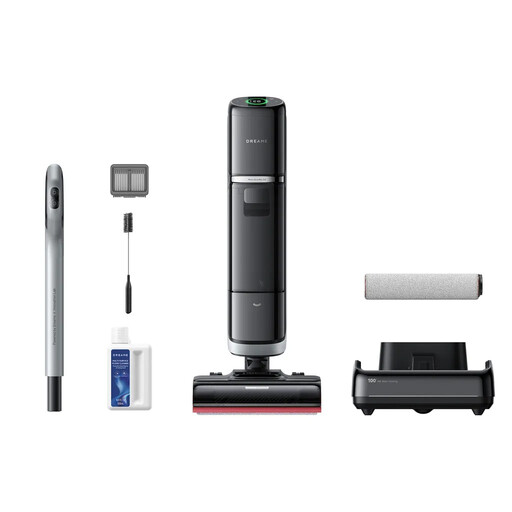
Why this model is a good fit: For users seeking a deep clean with the most advanced technology, who are willing to invest in features like hot water cleaning during operation and app control.
The ThermoTub 100°C Self-Cleaning goes far beyond a simple rinse, providing hygienic disinfection of the brush and avoiding the pitfall of superficial self-cleaning.
The ThermoRinse 85°C Hot Water Deep Cleaning actively dissolves stubborn dirt and grease during the cleaning process, delivering a level of performance difficult to achieve with conventional devices.
We have compiled a complete, up-to-date list of products that fully meet these strict selection criteria and German safety regulations.
How often should the filter on a vacuum mop be cleaned or replaced? Most vacuum mops use a HEPA filter that should be cleaned regularly, depending on the level of dirt, typically after every few uses. Usually, it's enough to tap it out and rinse it under running water. It is important that the filter is completely dry before being reinserted to maintain suction power and prevent damage. The manufacturer's instructions provide specific recommendations on this.
Can I use any cleaning solution in a vacuum mop? No, it is generally recommended to only use the cleaning solution specified by the manufacturer or products explicitly designated for vacuum mops. Household cleaners can foam too much, leave streaks, or damage the internal components of the device, such as seals and hoses.
Are vacuum mops also suitable for delicate wooden floors like parquet? Many modern vacuum mops are suitable for sealed hard floors, including parquet and laminate. They use a minimal amount of water that is immediately vacuumed up, so no moisture can penetrate the wood. Some devices offer a special mode for delicate floors that further reduces water output. It is always advisable to check the manufacturer's specifications and, if in doubt, test the device on an inconspicuous area.