
Lieferung heute & morgen

Qualitätsgarantie

Willkommens-Angebote freischalten: KOSTENLOSE Lieferung | Bis zu 80 % RABATT | Kostenlose 30-Tage-JoyPlus-Testphase
App herunterladen
The changing of the seasons brings a recurring challenge: where to store your winter wardrobe in the summer, and your light summer clothes in the winter? When space in closets and basements is limited, vacuum storage bags for clothes seem like an easy solution. But the market is flooded with products of widely varying quality. Many buyers are frustrated to find their compressed bags re-inflate after just a few weeks, or that the material tears on the very first use.
As your Joybuy Product Recommendation Officer, I'm here to help you identify the common pitfalls and understand the key criteria for making an informed purchase. This will ensure your textiles are stored not only compactly, but also safely and for the long term.
Before you invest in space-saving bags, you should be aware of the three most common flaws that often only become apparent after purchase, rendering the product useless.
To avoid these problems, you should check three technical parameters before buying. These are crucial in determining the durability and functionality of your vacuum storage bags.
Pay close attention to the material composition. A combination of Polyamide (PA) and Polyethylene (PE) is the more robust choice. The PA gives the bag necessary tear resistance and flexibility, while the PE ensures it remains airtight. This multi-layer construction is the foundation for reusable vacuum bags that last for several seasons. Pure PE is often cheaper but significantly less durable.
A reliable seal is essential. Look for models with a double-zip seal. This provides a dual barrier against air entry. Many manufacturers also include a slider clip to ensure both sides of the zip are pressed firmly together. On some models, a colour-change indicator shows whether the seal is correctly closed.
The shape of the bag should match its contents. There are three basic types:
travel vacuum bags), as they lie flat in a suitcase.vacuum bags for duvets, pillows, and large quantities of winter clothing.vacuum clothes storage in the wardrobe, hanging vacuum bags are the right choice. They feature integrated hooks for hanging coats, suits, or dresses, which minimises creasing and multiplies the space on your clothes rail.Here are some product recommendations tailored to different needs and the quality criteria mentioned above.
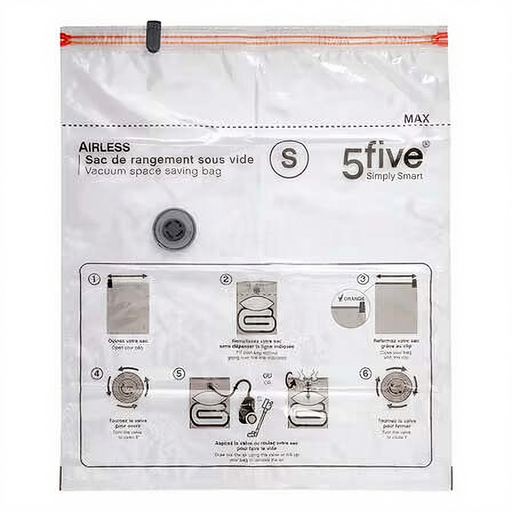
Why it's a great fit: Ideal for beginners who want to try out the vacuum-sealing concept. This set of two different-sized flat bags covers basic needs, such as storing sweaters or a single duvet, without requiring a large investment.
This set avoids the pitfall of over-investing. It offers a functional, entry-level solution to test the benefits of vacuum bags before committing to more specialised systems.
Two different sizes for flexible use. A simple, straightforward system that works with an external vacuum cleaner.
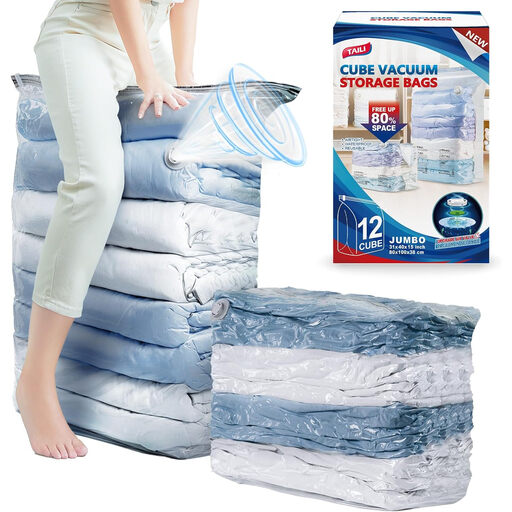
Why it's a great fit: For anyone who needs to store large quantities of duvets, pillows, and seasonal clothing for the whole family. The jumbo cube shape maximises volume and ensures neat, stackable storage on shelves or under the bed.
The durable PA+PE material prevents tears, making the bags long-lasting and reusable. The cube shape solves the problem of unwieldy, unstackable packages that occurs when using flat bags for bulky contents.
Very high capacity per bag. The three-dimensional structure makes filling easier and creates a stable, block-like shape after compression.
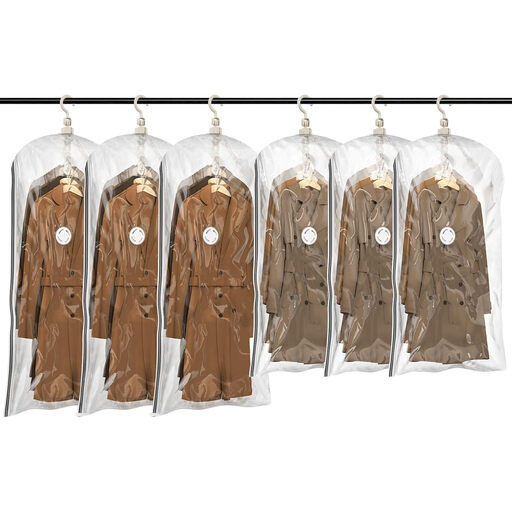
Why it's a great fit: Perfect for those who want to store valuable coats, suits, or long dresses directly in the wardrobe to save space. The vertical storage protects the shape of the clothing and instantly creates more room on the clothes rail.
This product is the specialist solution for the "impractical format" pitfall. Instead of folding and pressing expensive clothes into flat bags, they are compressed while hanging, which helps preserve their shape.
Set includes two lengths for different garments. The double-zip seal with a colour-change indicator signals a secure seal.
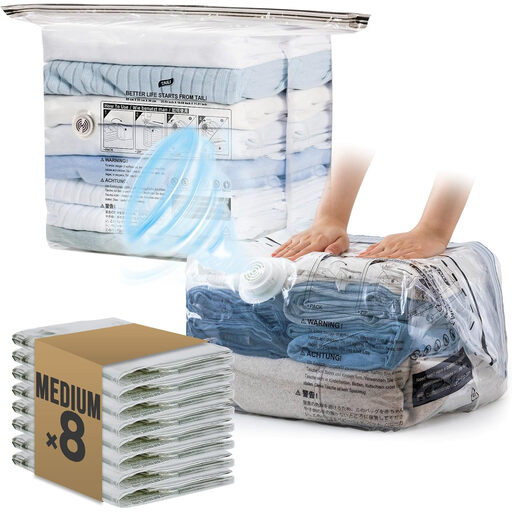
Why it's a great fit: For travellers who want to maximise suitcase space without relying on a vacuum cleaner. These bags are compressed simply by pressing and rolling them by hand—ideal for the return trip from a holiday.
This system completely bypasses the pitfall of an incompatible or missing vacuum. It's a no-vacuum bag, offering maximum flexibility on the go.
Patented valve for manual compression. The cube shape fits well into standard carry-on suitcases and backpacks.
We have compiled a complete, up-to-date list of products that fully meet these strict selection criteria and all relevant safety regulations.
Yes, but with caution. It is recommended not to compress textiles with down or feather fillings by 100%. Excessive compression can break the structure of the feathers and permanently damage their insulating properties. Reduce the volume by only about 50% to protect the material.
In a high-quality vacuum bag made of PA+PE material with a tight double-zip seal and a reliable valve, the vacuum should hold for an entire storage season, i.e., at least 3 to 6 months. Check the bag after sealing to ensure no air is escaping.
Reusability depends directly on the material quality and construction. Models made from a robust PA+PE composite material are designed for multiple uses. Cheaper bags made of thin PE can develop leaks with repeated use, especially at the seal or seams. Careful handling, avoiding contact with sharp objects, will extend the life of any bag.