
Lieferung heute & morgen

Qualitätsgarantie

Willkommens-Angebote freischalten: KOSTENLOSE Lieferung | Bis zu 80 % RABATT | Kostenlose 30-Tage-JoyPlus-Testphase
App herunterladen
A well-chosen wall-mounted clothes rail can make all the difference in small apartments or narrow hallways. It creates order without taking up valuable floor space and can also serve as a stylish design element. However, the market is full of products that look convincing at first glance but quickly turn out to be a bad buy. Before you decide on a model, it's important to know the typical weaknesses that often only become apparent after installation.
Many buyers focus on design and overlook crucial technical details. This often leads to frustration and unnecessary expenses. Pay special attention to these three points:
To avoid a bad buy, don't be guided by marketing promises; focus on verifiable facts instead. These three parameters are crucial for the durability and functionality of your wall-mounted wardrobe.
The specified maximum load capacity is an important guideline but must always be considered in the context of your own wall's condition. Robust metal pipes, for example made of powder-coated steel or iron, offer high structural stability. Pay attention to the diameter of the pipes and the size of the mounting flanges. Larger flanges distribute the load over a wider area, which increases stability. A clothes rail with a shelf must also specify the load capacity of the shelf. Check whether the specifications apply to solid walls (concrete, solid brick) or also to other wall types.
For practical use, the distance from the wall to the center of the clothes rail should be at least 25 cm, ideally around 30 cm. This provides enough space for wider hangers with bulky jackets or coats without them touching the wall. This protects both your clothes and your wallpaper or wall paint. A simple wall-mounted clothes rail for the hallway benefits from this dimension just as much as a more elaborate design.
Think carefully about what you want to hang. For heavy coats, suits, and dresses, a continuous wall-mounted clothes rail is the better choice as it distributes the weight evenly. A coat hook rack, on the other hand, is excellent for the entryway to keep handbags, scarves, keys, and lighter jackets within easy reach. Models that combine both offer maximum flexibility.
Here are some recommendations tailored to different needs and living situations.
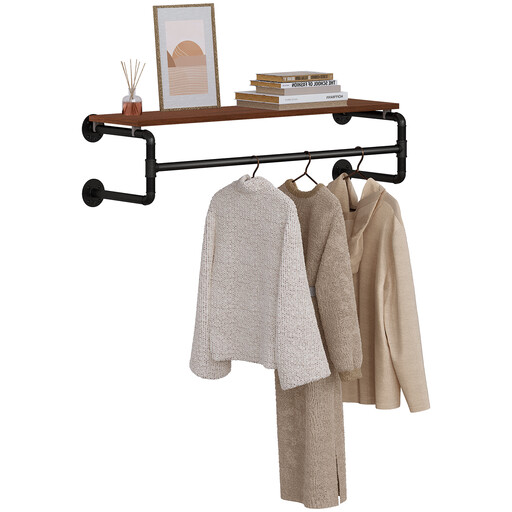
Why This Fits Their Persona: Ideal for anyone looking for a functional industrial-look wall wardrobe that offers more than just a rail. It combines storage for clothes with a practical shelf for decor, hats, or boxes.
The construction of metal pipes and engineered wood is designed for stability. The manufacturer's specified load capacity of 40 kg for the rail and 20 kg for the shelf provides a clear guideline, avoiding the trap of an unstable, overloaded rack.
2-in-1 solution: Combines a clothes rail with a shelf. The side pipes offer additional hanging options for scarves or bags.
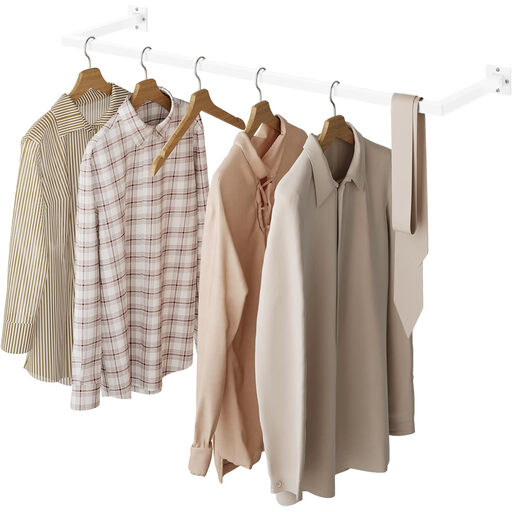
Why This Fits Their Persona: Perfect for minimalists who need a simple yet robust space-saving wardrobe. Its clean design blends unobtrusively into any room, from the bedroom to the hallway.
With a specified 30 cm distance from the wall, it effectively solves the problem of clothes rubbing. According to the manufacturer, the sturdy metal construction is designed for a load of up to 50 kg on solid walls, preventing it from bending.
Focuses on the essentials: high functionality thanks to a generous wall clearance. The open design ensures clothes are well-ventilated and easily accessible.
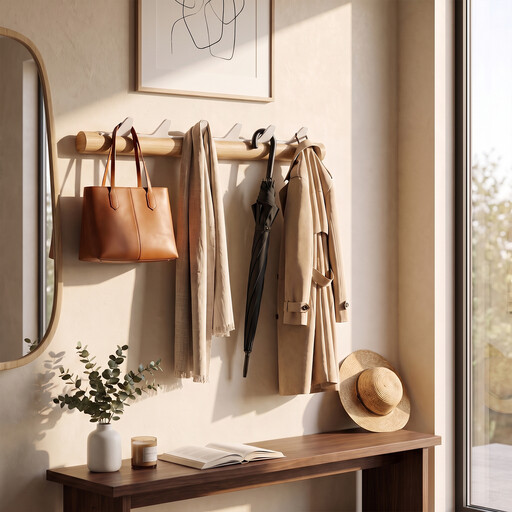
Why This Fits Their Persona: This coat hook rack is the ideal solution for the entryway or bathroom. With six hooks, it provides quick access to jackets, towels, backpacks, and keys without taking up much space.
The use of solid rubberwood (FSC-certified, according to the manufacturer) and aluminium alloy hooks counteracts the trap of cheap, rusting materials. The specified load capacity of up to 66 lbs (approx. 30 kg) promises robust performance.
Combines natural aesthetics with high functionality. The rounded edges of the hooks are designed to be gentle on clothing.
We have compiled a complete, up-to-date list of products that fully meet these strict selection criteria and UK safety regulations.
1. How high should a clothes rail be mounted on the wall? The ideal height depends on its intended use. For long coats and dresses, a height of about 160-175 cm from the floor to the rail is recommended. If you'll mainly be hanging shirts and jackets, about 100-120 cm is sufficient. Measure your longest garment as a reference to ensure it doesn't touch the floor.
2. Will a clothes rail hold on a drywall wall? Yes, but only with the right fixings. The standard plugs included are often unsuitable. For drywall, you should use special hollow-wall anchors (e.g., toggle bolts or metal expansion anchors) that spread out behind the board and have a significantly higher load capacity. Check the maximum load capacity of your chosen anchor type and distribute the weight across as many fixing points as possible.
3. What is the ideal distance from the wall for a clothes rail? A distance of 25 to 30 cm between the wall and the rail is recommended. This provides enough space for standard hangers and prevents your clothes from rubbing against the wall, which can cause wear and stains. For models with a smaller clearance, check if they are practical for your wardrobe.