
Lieferung heute & morgen

Qualitätsgarantie

Willkommens-Angebote freischalten: KOSTENLOSE Lieferung | Bis zu 80 % RABATT | Kostenlose 30-Tage-JoyPlus-Testphase
App herunterladen
A wall shelf might seem like a straightforward purchase. However, the selection is vast, and not every model that looks great in product photos holds up in everyday life. Many buyers only realize after installation that the shelf sags, the material is unsuitable for the intended room, or the usable surface area is surprisingly small.
As your Joybuy Product Recommendation Officer, I'm here to help you identify these common pitfalls. This guide focuses on the crucial features that distinguish a good wall shelf from an unsuitable one, so you can make an informed and satisfying long-term decision.
Before we dive into the ideal features, it's important to understand the most common reasons for disappointment. Pay attention to these three critical points to avoid a bad purchase.
To ensure your new wall shelf is both functional and durable, you should carefully examine three technical aspects.
The choice of material determines not only the look but also the stability and durability.
The specified maximum load capacity is a critical value that should never be exceeded. Check whether this value applies per shelf or to the entire unit. The mounting system is just as important:
Consider exactly what you want to place on the shelf. A decorative wall board for picture frames has different requirements than a bookshelf. Measure the items that will go on the shelf. The depth is often the most critical factor. A depth of 15 cm is sufficient for paperbacks, but for larger coffee table books or binders, at least 25-30 cm is required.
Here are some recommendations tailored to different user profiles and requirements.
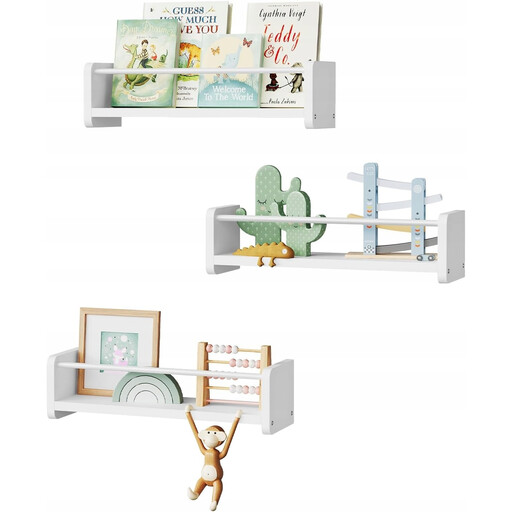
Why This Fits Their Persona: Ideal for first-time setups or flexible decorating projects. The set of 3 provides a cohesive look and can be distributed around the room as needed to display decor, small plants, or spices.
The metal rod not only serves as a design element but also as a front guard rail, adding extra stability to the MDF construction, which counteracts sagging under light loads.
Flexible set design; two mounting options (rod on top or bottom); lacquered surface is easy to clean.
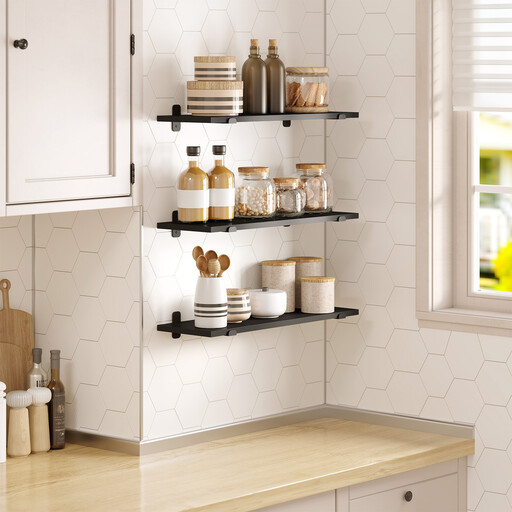
Why This Fits Their Persona: Perfect for fans of rustic or industrial interior styles who are looking for a solution that is both sturdy and aesthetic. The combination of a wood-look finish and a black metal frame is an eye-catcher in any living room or hallway.
The sturdy metal frame bears the main load and is mounted directly to the wall. This prevents the MDF boards from bending and ensures a high load capacity of up to 15 kg per shelf, which is well above average.
High load capacity; moisture and scratch-resistant surface; 20 cm depth provides ample space for books and larger decorative objects.
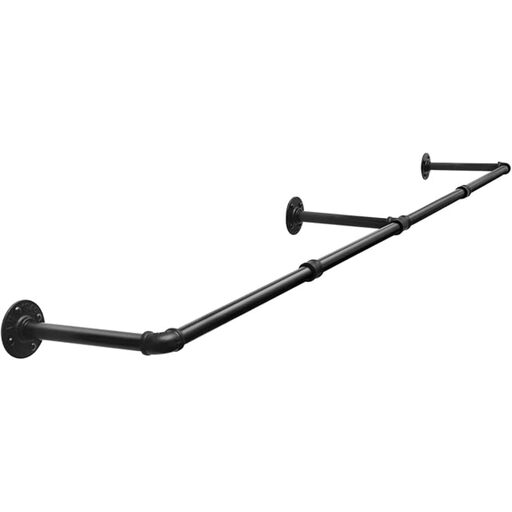
Why This Fits Their Persona: For anyone seeking an extremely durable and space-saving alternative to a wardrobe. Ideal for dressing rooms, hallways, or boutiques to hang heavy jackets and coats without taking up floor space.
The construction of robust metal pipes and mounting via flanges at multiple points on the wall distributes weight optimally. This allows for an exceptionally high load capacity of up to 50 kg, completely eliminating typical stability issues.
Extremely high load capacity; scratch-resistant, matte finish; versatile use (also as a towel rack or for kitchen utensils).
We have compiled a complete, up-to-date list of products that fully meet these strict selection criteria and safety standards.
1. How do you securely mount a wall shelf on drywall? For mounting on drywall (plasterboard walls), the standard anchors included with the shelf should not be used. You need special hollow-wall anchors (e.g., toggle bolts or metal expansion anchors) that expand behind the board to provide the necessary support. Pay attention to the load capacity specified by the anchor manufacturer and use multiple mounting points if possible.
2. What depth should a wall-mounted bookshelf have? The ideal depth depends on the type of books. For most paperbacks, a depth of 15-20 cm is sufficient. For larger hardcover books, coffee table books, or binders, you should plan for a depth of at least 25-30 cm to ensure the items stand securely and do not hang over the edge.
3. Can you cut a floating shelf to a shorter length? Cutting a floating shelf is generally not recommended. Many of these shelves are hollow inside or have a honeycomb structure to save weight. Cutting it would destroy this internal structure and render the mounting points for the invisible bracket unusable. Furthermore, the surface seal on the cut edge would be lost. Instead, choose a shelf that is the correct length from the start.