Owners of narrow window panes
If you have narrow panes, compare their actual unobstructed width and height with the minimum size for the exact model. ECOVACS specifies 22 × 25 cm for the WINBOT MINI; this doesn’t automatically apply to other models.


First, measure the unobstructed glass area and any tight spaces around the window handle. A compact design alone doesn’t tell you whether a robot will fit your window or navigate around obstacles. ECOVACS specifies a minimum glass area of 22 × 25 cm for the WINBOT MINI; HOBOT states that the frameless-glass-compatible HOBOT-2S can clean windows larger than 40 × 40 cm. If the dimensions, edges or obstacles fall outside the specifications for the model, cleaning by hand may be the safer option.
If you have narrow panes, compare their actual unobstructed width and height with the minimum size for the exact model. ECOVACS specifies 22 × 25 cm for the WINBOT MINI; this doesn’t automatically apply to other models.
For frameless glass, check that the specific model is explicitly approved for this use, as well as its edge-detection requirements and the prescribed safety precautions. HOBOT lists these features for the HOBOT-2S.
Measure the clearance below and around handles, glazing bars and other protrusions. The robot’s height alone doesn’t prove it can fit or move through the space; check the clearance against the specifications for that exact model.
Suitable if: Your pane meets the minimum size for the specific model. ECOVACS specifies 22 × 25 cm for the WINBOT MINI.
Keep in mind: Meeting the minimum size doesn’t automatically mean the robot is suitable for handles, glazing bars or frameless edges.
Suitable if: The glass meets the model’s specifications and there is a safe place to position the robot and attach its safety tether. HOBOT lists the HOBOT-2S for frameless windows.
Keep in mind: HOBOT specifies that this model can clean windows larger than 40 × 40 cm and requires the safety tether to be attached.
Suitable if: The pane isn’t approved for robot cleaning, or an obstacle blocks the route, and you can reach the area safely.
Keep in mind: You’ll need to do the cleaning yourself; a narrow attachment doesn’t automatically make hard-to-reach areas safe to access.
Measure every clear area of glass and each tight space before comparing models. If different buying considerations matter to you, the key questions for each are set out below.
| Consideration | What to check before buying | Who should consider this? |
|---|---|---|
| Usable pane size | Compare the clear width and height with the minimum size for the exact model; check the positioning requirements for narrow, tall panes. | If your panes are small, the actual clear area matters more than the robot’s dimensions. Around 33% of consumers put finding the right pane size first. |
| Frameless edges and safety | Check that the model is approved for frameless glass, as well as the positioning distance, safety tether and secure attachment point. | With frameless glass, you need clear model-specific guidance on edges and safety. Around 27% of consumers prioritise this consideration. |
| Handles and glazing bars | Measure the clearance and route; check them against the specifications for the exact model on offer. | If a handle or glazing bar might get in the way, the key question is whether the device can actually get past it. Around 27% of consumers check for these obstacles first. |
| An alternative to robot cleaning | Check whether you can safely reach the area by hand and whether the chosen set includes a suitable narrow attachment. | If the pane isn’t approved for robot cleaning, you’ll need a hand-operated solution for areas you can reach safely. Around 13% of consumers prioritise this alternative. |
The length of one side of the robot isn’t the same as the smallest glass area it can clean. ECOVACS gives the WINBOT MINI a side length of 215 mm and specifies a minimum glass area of 22 × 25 cm; HOBOT specifies more than 40 × 40 cm for the HOBOT-2S.
Measure the clear glass area in both directions and compare it with the specifications for the full model name.
Edge detection listed for frameless glass doesn’t replace the requirement to attach the safety tether. For the HOBOT-2S, HOBOT requires the tether to be secured to a fixed object before use.
Before use, check that there is a suitable fixed attachment point and follow the instructions for the specific model.
ECOVACS lists a height of 55 mm for both the WINBOT MINI and WINBOT mini 2. This doesn’t confirm that the device will fit or move under a particular handle.
Measure the clearance around the handle and check it against the instructions. Don’t assume the robot is suitable unless the model specifications confirm it.
The WINBOT MINI and WINBOT mini 2 are compact models, and each should be checked against its own usage requirements.
The HOBOT-2S is an option for frameless panes, provided the glass area and positioning and safety requirements are suitable.
The GlassVAC is a hand-operated alternative for areas you can reach safely.
Dreame lists the C1 as a window-cleaning robot with features for route planning and corner cleaning.
This selection includes window-cleaning robots for narrow areas, with a focus on obstacles and edges. Before using any model on your window, check the manufacturer’s specifications for the exact pane dimensions, glass shape and clearances.
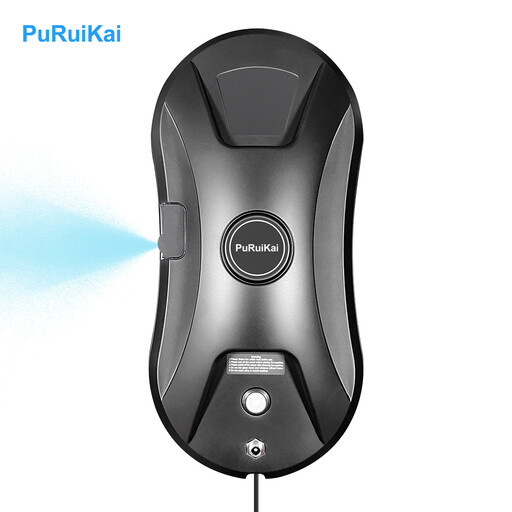 No image available
The product description lists smooth glass surfaces as suitable for use; check the actual pane dimensions and any obstacles against the model’s specifications.
The product title lists a suction power of 5600pa. The product description also mentions safety sensors and a safety tether.
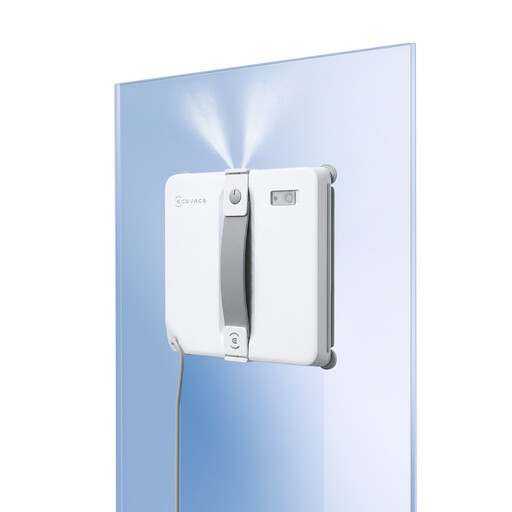 No image available
ECOVACS describes the WINBOT mini 2 as a model for narrow windows; check the usage limits for this exact model before buying.
The German ECOVACS product page lists a side length of 215 mm and a height of 55 mm. The product title mentions ultrasonic spray and four corner brushes. The product description says the safety tether and power connection must be secured before use.
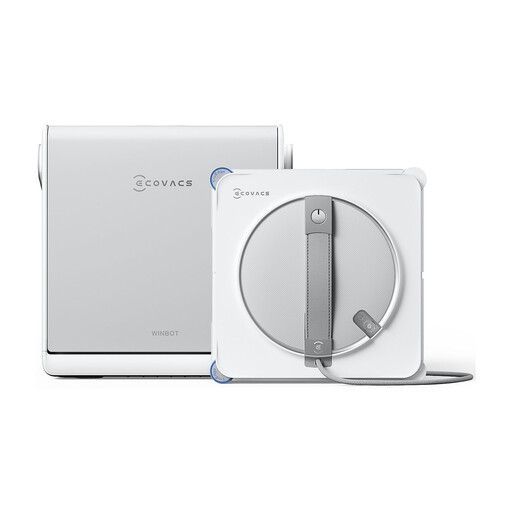 No image available
This is another window-cleaning robot option; the features listed alone don’t tell you whether it’s suitable for your pane dimensions or any obstacles.
The product title lists 8000 Pa suction power, WIN-SLAM 4.0, a multifunctional station and a 110-minute runtime. According to the product description, the safety cable must be attached before use.
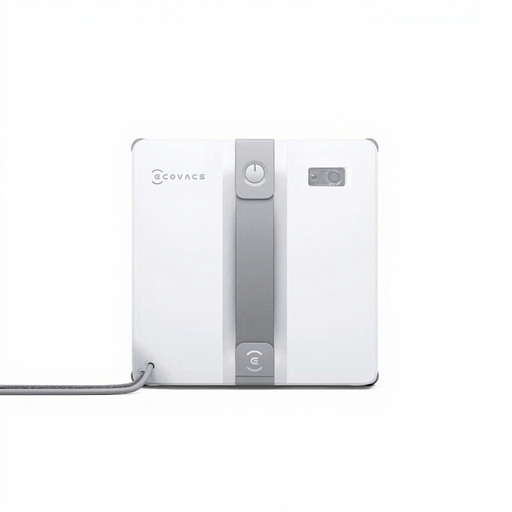 No image available
ECOVACS specifies a minimum glass area of 22 × 25 cm for the WINBOT MINI. Also check that the shape of your glass and any obstacles allow you to use it.
The German product page lists a side length of 215 mm and a height of 55 mm. The product description says the safety tether must be attached during use.
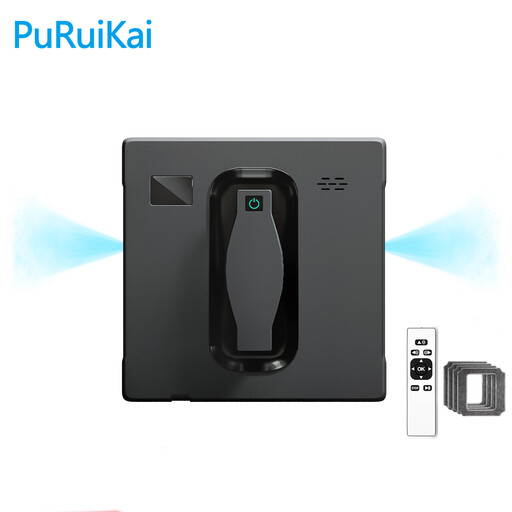 No image available
The product title mentions automatic cleaning and edge detection. Check the model’s specifications for pane size, glass shape and obstacles before relying on these features.
The title lists two water sprayers and a laser sensor. According to the product description, the device must be connected to a power supply during use, and the safety tether must be attached.
No, “compact” on its own isn’t enough. Compare both usable sides of the pane with the minimum size for the exact model: ECOVACS specifies 22 × 25 cm for the WINBOT MINI, while HOBOT lists more than 40 × 40 cm for the HOBOT-2S.
According to HOBOT, you must position the HOBOT-2S at least 10 cm from the edge of the pane and make sure it is firmly attached before letting go. First, attach the safety tether to a fixed object and follow the other safety information in the instructions.
An ECOVACS support response about a WINBOT model that isn’t clearly identified recommends positioning it along the longer side of narrow, tall panes. Don’t apply this instruction or the minimum dimensions given there to the WINBOT MINI, WINBOT mini 2 or other models without checking; refer to the instructions for your exact device.
If a product is faulty, you have statutory rights against the seller; a voluntary manufacturer’s warranty is separate. Under § 438 BGB, the limitation period for the usual claims relating to defects in goods is generally two years from delivery.