
Lieferung heute & morgen

Qualitätsgarantie

Willkommens-Angebote freischalten: KOSTENLOSE Lieferung | Bis zu 80 % RABATT | Kostenlose 30-Tage-JoyPlus-Testphase
App herunterladen
By the Joybuy Product Recommendation Officer, August 30, 2026
The search for a powerful charger can quickly become overwhelming. With a 140W GaN charger in particular, manufacturers promise high speeds and compact designs. However, not every power adapter that advertises 140 watts on the box delivers the performance your devices expect. Many users invest in an expensive charger only to find that their laptop still charges slowly or the adapter overheats when multiple devices are in use.
Before you make a purchase, it's crucial to understand the most common pitfalls that lead to disappointment and unnecessary expense.
To ensure you get a charger that meets your needs, you should check three core technical specifications. These details are critical for performance and compatibility with your devices.
The most important specification for a charger for multiple devices isn't just the total output, but how it's distributed among the individual ports. A good 140W USB C power adapter should be able to deliver the full 140 watts through a single USB-C port to replace a demanding USB C laptop charger.
Check the product description for a detailed breakdown of power configurations, for example:
This information tells you exactly what performance to expect when charging your notebook and smartphone simultaneously, for instance.
Modern devices require specific protocols for fast charging. Without the right support, even the most powerful charger is ineffective.
A high-performance charger generates a significant amount of energy. Therefore, it's essential to look for recognised safety certifications like the CE mark, which confirms compliance with EU safety standards.
Additionally, the right cable is essential. To transfer the full 140 watts, you need a USB-C cable rated for this power level (often marked as "EPR" or "240W-capable"). A standard cable will limit the charging power to 60W or 100W.
Based on the criteria above, we have identified a few models that are particularly well-suited for specific user profiles in the UK and Europe.
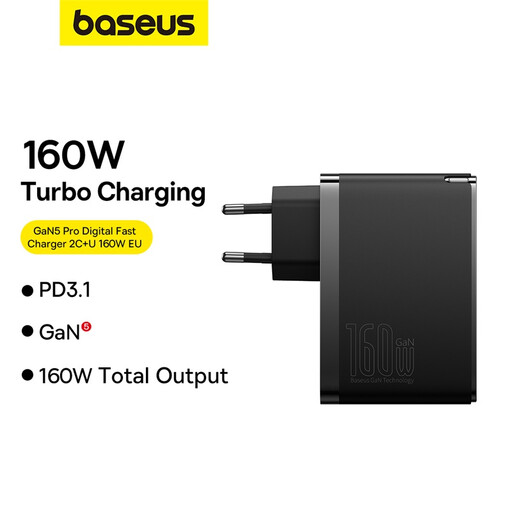
Why This Fits Their Persona: Ideal for users who need to charge a high-end device like a 16" MacBook Pro at maximum speed while simultaneously powering other devices like a tablet and smartphone. The high total output of 160W provides plenty of reserves.
The product description clearly lists that a single USB-C port can deliver up to 140W (28V/5A). This bypasses the trap of insufficient single-port power and confirms PD 3.1 support.
Delivers true 140W on a single port and features a clear power allocation for multi-port operation. Includes a matching 240W cable.
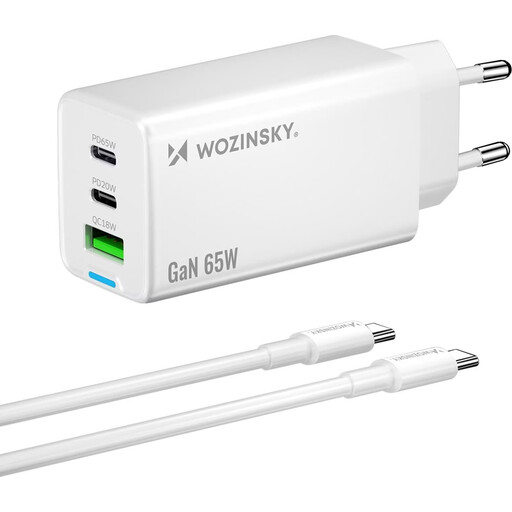
Why This Fits Their Persona: Perfect for professionals and students who need a compact charger for an ultrabook (e.g., MacBook Air), a smartphone, and headphones. The 65W output is an excellent balance of power and portability.
This model focuses on a realistic performance class. It doesn't make exaggerated 140W promises, but reliably delivers 65W, which is sufficient for most mobile setups and meets user expectations.
Very compact design thanks to GaN technology. Offers high flexibility for old and new devices with two USB-C ports and one USB-A port.
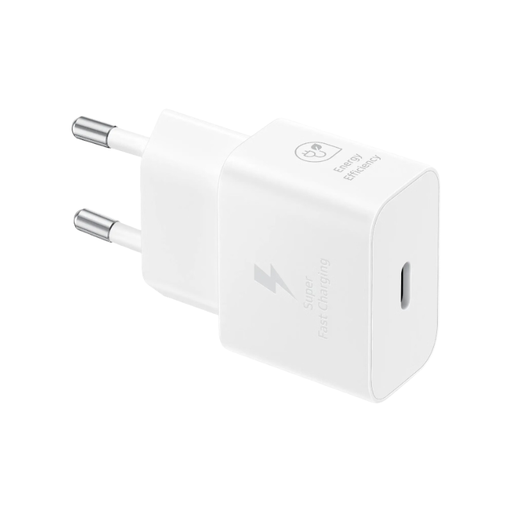
Why This Fits Their Persona: An excellent choice for Samsung smartphone users who want a reliable and safe fast-charging feature. It is specifically optimised for the "Super Fast Charging" protocol (PPS).
This charger avoids the trap of missing protocol support by explicitly supporting PPS. Users are guaranteed the fastest possible charge for their compatible Samsung devices, instead of getting stuck at a slower speed.
Official Samsung accessory that ensures optimal compatibility and safety. The GaN technology provides a compact size and low heat generation.
We have compiled a complete, real-time updated list of products that fully meet these strict selection criteria and European safety regulations.
No. Modern chargers and devices communicate with each other via the USB Power Delivery protocol. The charger only supplies as much power as the connected device can safely request and handle. A smartphone designed for 25W charging will only be charged at 25W by a 140W power adapter.
Yes, this is crucial. To use the full 140W of power, you need a USB-C cable that is explicitly certified for this high power level (Extended Power Range, EPR). These cables are often marked "240W" or "140W". Using a standard USB-C cable (usually rated for 60W or 100W) will limit the charging speed and prevent you from using the full potential of your fast charger for MacBook Pro.
The main difference is the maximum power output. Power Delivery 3.0 is limited to a maximum output of 100 watts (20V/5A). Power Delivery 3.1 extends this range (Extended Power Range, EPR) up to 240 watts. For a 140W GaN charger, PD 3.1 support is mandatory to actually deliver its namesake power to a compatible device.