
Lieferung heute & morgen

Qualitätsgarantie

Willkommens-Angebote freischalten: KOSTENLOSE Lieferung | Bis zu 80 % RABATT | Kostenlose 30-Tage-JoyPlus-Testphase
App herunterladen
Finding the right charging cable for modern devices like the MacBook Pro or iPhone 15 can quickly become overwhelming. With the new 240W PD 3.1 standard, many manufacturers promise maximum charging speeds, but not every cable delivers on its promise. As your Joybuy Product Recommendation Officer, I'll help you identify the key features and avoid common purchasing pitfalls.
Before you make a decision, you should be aware of three common issues that often lead to disappointment and unnecessary expenses.
The "240W Trap": A cable advertised as 240W doesn't automatically deliver that power. The actual charging speed depends on the entire charging chain: the power adapter, the cable, and the end device. A 240W USB-C to USB-C cable can only reach its full potential if the charger and the device (e.g., a high-performance laptop) also support the PD 3.1 standard. For a smartphone that only draws 30W, a 240W cable offers no speed advantage, but it is a future-proof investment.
Subpar Material Quality: Many budget-friendly cables use simple PVC jackets and weak connection points at the plug. The result is often cable fraying or a loose connection after just a few months of intensive use. Especially for high-power charging, a robust construction is essential to prevent overheating and ensure longevity.
Missing E-Marker Chip: This is an invisible but critical omission. Every USB-C cable designed for more than 60W (3A) of power must have a so-called E-Marker Chip. This chip communicates with the charger and the device to negotiate the maximum safe current and voltage. If this chip is missing or of poor quality, the cable might, at best, only charge at a reduced speed or, at worst, cause damage to your expensive devices.
To ensure your new cable combines performance, safety, and durability, focus on these three technical specifications.
The USB Power Delivery (PD) standard governs power transmission. The latest version, PD 3.1, introduces the "Extended Power Range" (EPR) mode, which increases the maximum charging power from 100W to 240W. This is particularly relevant for power-hungry devices like gaming laptops or large workstation notebooks, making it the ideal USB-C cable for MacBook Pro. A cable that meets this standard is backward compatible and can also safely and efficiently charge devices like an iPhone 15 charging cable or other smartphones.
A braided nylon cable offers significantly higher resistance to abrasion, kinks, and fraying compared to standard plastic cables. The fibres distribute tensile stress and protect the internal wires. Also, look for connector housings made of an aluminium alloy. These dissipate heat better than plastic and provide a more stable connection that won't loosen even after hundreds of plug-in cycles.
As mentioned, the E-Marker Chip is not a marketing gimmick but a safety-critical component. It ensures that your fast-charging Type-C cable communicates intelligently with your devices. This prevents a 140W laptop power adapter from trying to charge a smartphone that can only handle 25W at full power. The chip acts as a digital mediator, negotiating the parameters and thus protecting the battery health of your devices. Such a cable also functions as a reliable USB-C data cable, although the data transfer rate (usually 480 Mbps for USB 2.0) is independent of the charging power.
Here are some recommendations tailored to different user profiles that meet the quality criteria mentioned above.
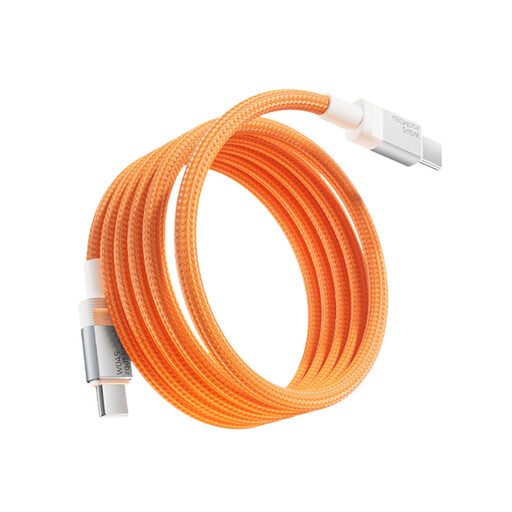
Why It's a Match: Ideal for users who want to get the most out of their high-end devices like a MacBook Pro or a Samsung Galaxy S-series. It is designed for maximum performance and durability.
According to the manufacturer, it features an E-Marker Pro Chip for safe charging and a 48-strand nylon braid that prevents fraying.
Supports the full 240W PD 3.1 power. The aluminium alloy housing ensures robustness and good heat dissipation.
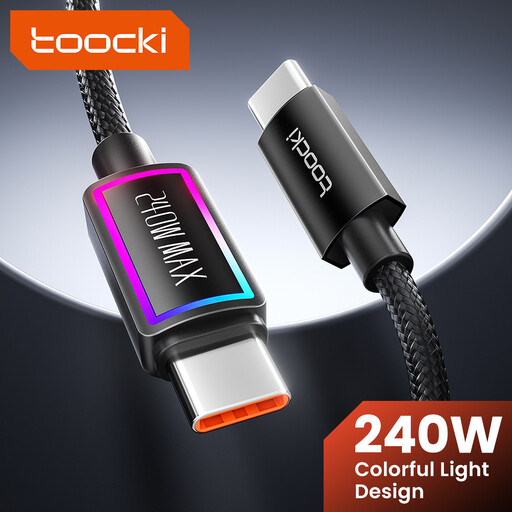
Why It's a Match: Perfect for the desk or living room where more reach is needed. It offers future-proofing with its 240W specification for all current and upcoming devices.
The 240W specification and robust construction address the performance and quality pitfalls. It's designed as a future-proof, all-around cable.
The length of approximately 2 metres (6.6ft) offers excellent flexibility in daily use, so you don't have to sit right next to the power outlet.
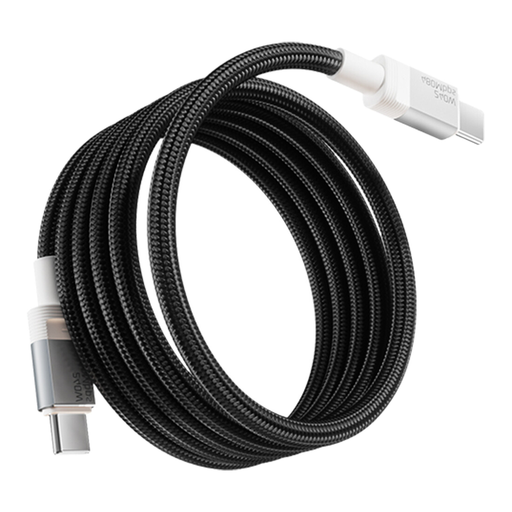
Why It's a Match: For commuters and travellers who need a compact yet extremely powerful cable. The 1.2-metre length is a great compromise between reach and portability for a laptop bag.
Combines the same high-quality components as the orange version (E-Marker Pro Chip, nylon braid) in a more compact format.
Full 240W power in a travel-friendly format. The design is built for durability with frequent packing and unpacking.
We have compiled a complete, up-to-date list of products that fully meet these strict selection criteria and safety regulations.
No, a high-quality 240W USB-C to USB-C cable with an integrated E-Marker Chip is safe. The cable, power adapter, and your smartphone communicate to negotiate the maximum permissible charging power. Your smartphone will only draw as much current as it can safely handle.
Look for a braided nylon jacket, as it is more resistant to wear and tear than standard PVC. Also, check the connectors: housings made of aluminium or another metal alloy are a good sign of stability and better heat dissipation. Reinforced strain relief at the transition from the cable to the plug significantly increases its lifespan.
If you already own a high-performance laptop that supports the PD 3.1 standard, such a cable can reduce your charging times. For all other users, such as with a charging cable for iPhone 15, it's a future-proof purchase. As the USB-C port and PD technology become increasingly powerful, a 240W cable will have you well-prepared for the next generation of devices.