
Lieferung heute & morgen

Qualitätsgarantie

Willkommens-Angebote freischalten: KOSTENLOSE Lieferung | Bis zu 80 % RABATT | Kostenlose 30-Tage-JoyPlus-Testphase
App herunterladen
Purchasing a high-performance 3600W power station is a significant investment in your energy independence, whether as a home backup system or a mobile power source for demanding projects. However, the market is filled with technical promises that don't always deliver. Before you make a decision, it's crucial to understand the common pitfalls that can lead to dissatisfaction and unnecessary expense.
This guide is designed to provide clarity. We analyse the critical features that define a reliable power station and show you how to separate marketing hype from verifiable performance.
Many buyers focus on big numbers and advertising slogans, overlooking crucial technical details. These three points are the most frequent causes of a poor purchasing decision:
To make an informed decision, focus on the following three core specifications. These define the true performance and reliability of your future power station.
Continuous power, measured in Watts (W), indicates how much power the station can deliver consistently. A 3600W power station can supply devices with a total power consumption of up to 3600 watts. The capacity, measured in Watt-hours (Wh), determines how long it can do so.
The choice of battery is critical for safety and lifespan.
A high-quality power station should offer versatile connectivity, including multiple 230V AC outlets, USB-A, USB-C with Power Delivery (PD) for fast-charging laptops and smartphones, and a 12V port. Equally important are the charging options: in addition to charging from a wall outlet, a solar input (often available as a solar generator bundle) is essential for off-grid operation.
Instead of making a one-size-fits-all recommendation, we have identified products that meet specific needs and avoid the pitfalls mentioned earlier.
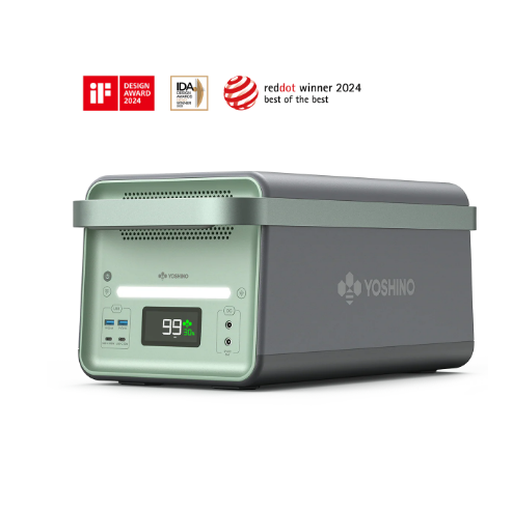
Why This Fits Their Persona: Ideal for homeowners seeking an uncompromising home backup power solution. The high continuous power and advanced battery technology provide security and reliability during power outages.
This model bypasses all three pitfalls: it delivers a clear continuous output of 3600W, uses a future-proof solid-state battery, and features a true UPS function for seamless switchover.
According to the manufacturer, the solid-state battery technology allows for 4,000 charge cycles to 80% capacity, which translates to an exceptionally long lifespan. It is also safer and lighter than comparable models.
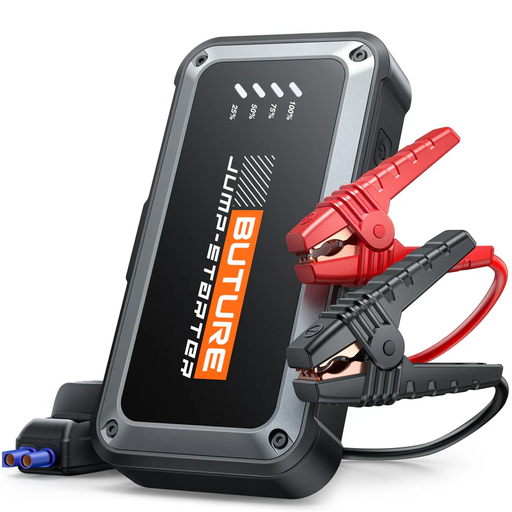
Why This Fits Their Persona: For campers and RV owners, the vehicle battery is a lifeline. This device is not a power station, but a specialised safeguard that ensures you never get stranded with a dead battery.
This product is honest about its specialisation. It doesn't promise to power an entire house but delivers an extremely high peak current (3000A) for a single, critical purpose: starting engines.
The ability to start large petrol (up to 9.0L) and diesel (up to 8.5L) engines, combined with its function as a power bank for small devices and a rugged, water-resistant design, makes it an indispensable companion.
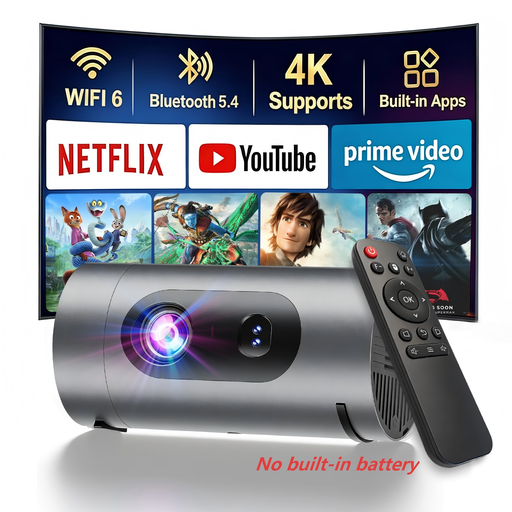
Why This Fits Their Persona: This product is for users who want to enhance their outdoor experience with technology. It perfectly illustrates the need for a reliable, mobile power source, as it is explicitly designed to be operated with an external power bank.
The projector is transparent about its power requirements, thus avoiding the pitfall of hidden costs or needs. It forces the user to think proactively about their entire energy setup.
Its extreme portability (the size of a water bottle) and the flexibility to be powered by various power banks enable a modular and lightweight outdoor cinema experience. The image quality is optimised for outdoor use.
We have compiled a complete, real-time list of products that fully satisfy these strict selection criteria and UK safety regulations.
The runtime doesn't depend on the power (3600W), but on the capacity (in Wh) and the consumption of your devices. A simple formula for estimation is: Runtime (in hours) = Battery Capacity (in Wh) / Device Consumption (in W). A power station with 2562 Wh powering a refrigerator and some lights with a total of 300 W would theoretically run for about 8.5 hours (2562 / 300 ≈ 8.5).
The term solar generator typically refers to a kit consisting of a portable power station and one or more compatible solar panels. The power station is the actual battery and control unit that stores and delivers the electricity. The solar panels are used to recharge the power station off-grid using solar energy. In essence, you buy a power station that becomes a solar generator when paired with solar panels.
Based on manufacturer technical data, solid-state batteries offer objective advantages over conventional lithium-ion batteries. These include higher energy density (more capacity at the same weight), improved thermal stability (lower risk of overheating), and a significantly higher number of charge cycles, leading to a longer overall product lifespan.