
Lieferung heute & morgen

Qualitätsgarantie

Willkommens-Angebote freischalten: KOSTENLOSE Lieferung | Bis zu 80 % RABATT | Kostenlose 30-Tage-JoyPlus-Testphase
App herunterladen
A power station can come in handy when you’re camping, travelling in a motorhome, spending time in the garden or dealing with a power cut. But unclear power ratings, overestimated run times and incompatible connections can easily lead to the wrong purchase. If you’re looking to buy a portable power station, don’t focus only on the price or an impressive wattage figure.
Watts (W) indicate how much power a power station can supply at any one time. Watt-hours (Wh) show how much energy is stored in the battery.
So, a unit with a 1,000 W output can power high-draw appliances, but that doesn’t necessarily mean it will run them for long. Capacity is the main factor that determines run time. As a rough guide:
Run time in hours ≈ capacity in Wh × 0.8 ÷ power consumption in W
The 0.8 factor accounts for conversion losses and is only an estimate. In theory, a unit with 1,024 Wh could run a 100 W appliance for around eight hours. Actual results depend on factors such as temperature, battery condition and operating mode.
Many manufacturers advertise a high peak or surge output. This is only available briefly to start certain appliances. For kettles, power tools, fridges and heaters, the key figure is the rated or continuous output.
Before you buy, check the power consumption of every appliance you plan to connect. Motors and compressors can draw significantly more power when starting up. A camping power station therefore needs not only enough Wh, but also sufficient continuous output and a suitable peak output.
A solar generator or a power station with solar charging won’t automatically operate at its maximum stated input. Sunlight, panel angle, shade, temperature and cables all affect the actual output.
Check the following:
In this context, solar generator usually means a battery with an inverter and charging inputs, not a conventional petrol or diesel generator.
Compact models with around 200 to 500 Wh are often enough for smartphones, cameras, tablets and smaller laptops. A portable power station with 500 to 1,000 Wh is better suited to cool boxes, several laptops, lighting or longer stays outdoors. From around 1,000 Wh upwards, you can also consider uses such as motorhomes, DIY projects and backup power.
For emergency backup power, decide which appliances you actually need to keep running. A router, lights and a laptop use considerably less energy than a fridge, coffee machine or heater. A power station also won’t automatically replace a permanently installed home power supply or a backup generator.
Many current models use LiFePO4, or lithium iron phosphate. This battery chemistry is often promoted for its high cycle life and good temperature stability. However, check the conditions behind the manufacturer’s figures, including the remaining capacity, temperature and depth of discharge they refer to.
Also look for:
A power station should be used in a dry, well-ventilated place and kept away from direct heat. An IP rating on the casing doesn’t automatically mean it’s suitable for heavy rain or submersion.
An inverter with a pure sine wave is a good choice for sensitive electronics. Check that it has the connections you need: 230-volt sockets, USB-C with Power Delivery, USB-A, a 12-volt output or a vehicle connection.
If you want to use the power station as an uninterruptible power supply, check the stated switchover time and compatibility with the appliance in question. Permanently connected solar or home storage systems have additional technical requirements. For a grid-connected system, such as a balcony solar storage system, you’ll need to follow the requirements set by your network operator and the relevant installation rules. Work on the electrical grid should be carried out by a qualified electrician.
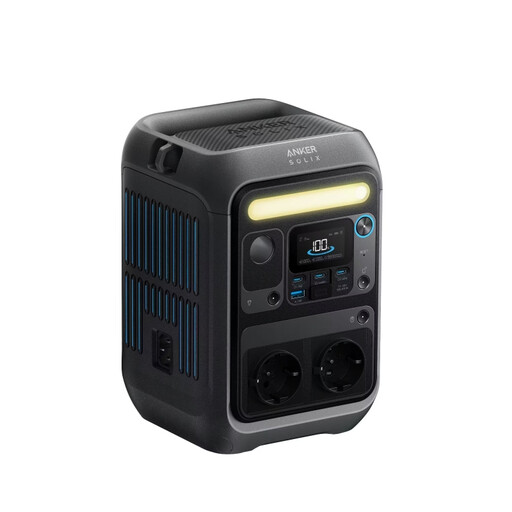
Why it suits this type of user: With 288 Wh, a rated output of 300 W and a weight of 4 kg, this model is designed for smartphones, tablets, lighting and smaller outdoor appliances.
Capacity and continuous output are listed separately, making it easier to judge whether it will suit smaller appliances than if you were relying on a peak output figure alone.
LiFePO4 battery, up to 140 W USB-C output and solar input of up to 100 W, according to the product specifications.
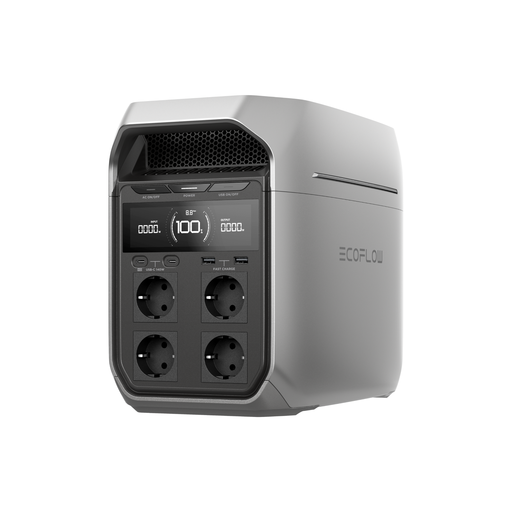
Why it suits this type of user: With 1,024 Wh, a continuous output of 1,800 W and eleven outputs, this power station is suitable for more demanding camping and household uses.
The continuous output, solar input and capacity figures make it easier to check whether the unit will work with specific appliances. Expansion batteries should be considered separately as part of the system.
LFP battery, up to 4,000 charge cycles before reaching 80% remaining capacity, according to the manufacturer, and a UPS switchover time of under 10 ms according to the product data.
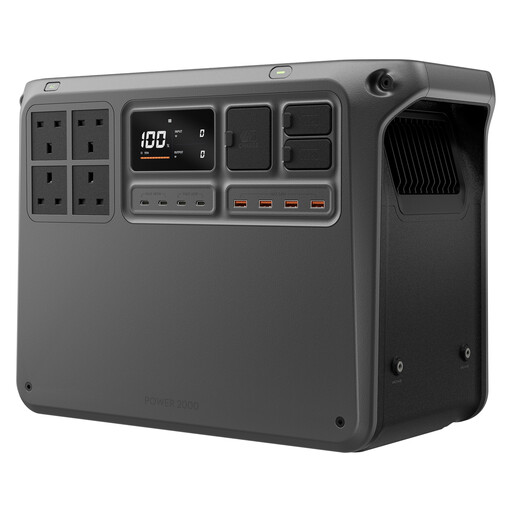
Why it suits this type of user: Its 2,048 Wh capacity and stated output of 3,000 W make it a good option for motorhomes, DIY projects and more extensive backup applications.
Its high capacity should be weighed against its weight and dimensions, as well as the fact that the charging cable is sold separately. This makes transport and accessory costs easier to factor into your plans.
LiFePO4 battery, 15 connections and stated expandability to 22.5 kWh with additional batteries.
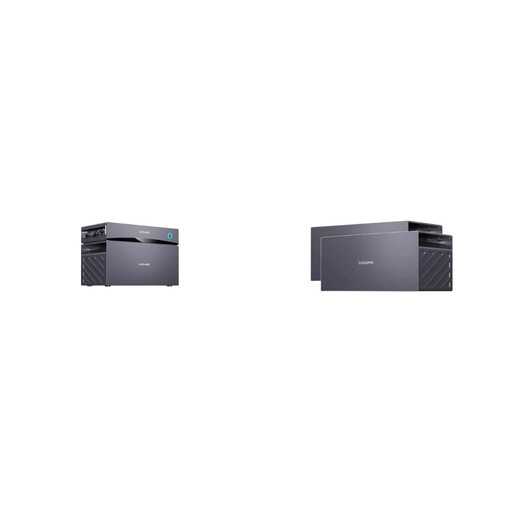
Why it suits this type of user: This set combines a 1.52 kWh expansion battery with an 800 W micro-inverter, and is designed for use with a compatible SUNSHARE system.
Compatibility with the SUNSHARE Glory hybrid inverter is clearly stated. Even so, check your existing components and grid requirements before buying.
IP65-rated battery module, IP67-rated micro-inverter and expandability to up to 7.6 kWh, according to the product data.
We’ve put together a complete, regularly updated list of products that meet these strict selection criteria and fully comply with the safety regulations applicable in the EU.
A capacity of 300 to 600 Wh may be enough for a smartphone, camera, lights and laptop. A cool box, coffee machine or several appliances running for longer will generally need 1,000 Wh or more. Work out what you need based on the actual power consumption and how long you want to use each appliance.
Service life depends on charge cycles, temperature, depth of discharge and storage conditions. Manufacturers often state a cycle life up to a particular remaining capacity, such as 80%. This is a useful figure for comparison, not a guarantee of a specific service life.
A power station with solar charging can be a good choice if you want to camp away from the mains, travel in a motorhome or store solar energy for later use. Check the maximum PV input, voltage range and realistic charging time. A permanent home storage system has different requirements from a portable power station.