
Lieferung heute & morgen

Qualitätsgarantie

Willkommens-Angebote freischalten: KOSTENLOSE Lieferung | Bis zu 80 % RABATT | Kostenlose 30-Tage-JoyPlus-Testphase
App herunterladen
Anyone looking to buy a 3D printer will quickly come across high print speeds, automatic functions and multicolour systems. However, for makers, model builders, cosplayers, educational institutions and small businesses, maximum figures are not the only consideration. What matters is whether the print volume, material feed, build chamber and maintenance requirements suit your intended use.
A manufacturer may specify a speed of 600 or 800 mm/s. This figure generally describes a maximum value under certain conditions. In everyday use, model geometry, layer height, material, acceleration and cooling all affect the actual print time.
You should therefore also check:
A fast 3D printer is only worthwhile if the material flow and motion system can reliably support that speed.
A multicolour 3D printer can feed several colours automatically. However, depending on the system, colour changes can create purge material, add extra changeover time and require more extensive setup. Not all flexible or abrasive filaments are suitable for automatic feed systems either.
Before buying, check:
A 3D printer for large models needs more than enough room for the build chamber. You also need to allow space for the enclosure, filament box, cables and access to the build plate. Models with heated build chambers are also heavier and require a stable, heat-resistant surface.
Measure the intended location, including the space needed for movement and maintenance. For indoor use, ventilation, noise levels and the distance from children or flammable materials are also important.
Print volume is specified as X × Y × Z. A volume of 250 × 250 × 250 mm is suitable for many household and model-making projects. 350 × 350 × 350 mm or more is advantageous when you want to produce prototypes, cosplay parts or several components in a single print run.
An open-frame design makes access easier and is often more compact. A fully enclosed build chamber can be more practical for temperature-sensitive materials. With a 3D printer with a heated build chamber, you should consider the maximum chamber temperature, hotend temperature and heated-bed temperature separately.
PLA filament is suitable for many beginner projects and is generally easy to process. According to product specifications, PETG filament often combines toughness with good layer adhesion. However, its actual suitability depends on the print profile, whether the filament is dry and the printer itself.
Important points:
With PETG, you should follow the manufacturer’s recommendations for nozzle temperature, print bed and speed. 1.75 mm PETG filament, matt PETG and high-speed filament are not automatically ideal for every FDM system.
Automatic levelling, filament detection, print-resume functionality and camera monitoring can reduce the amount of hands-on operation required. However, they do not replace checking the first layer, cleaning the print plate or drying the material correctly.
You should also look for:
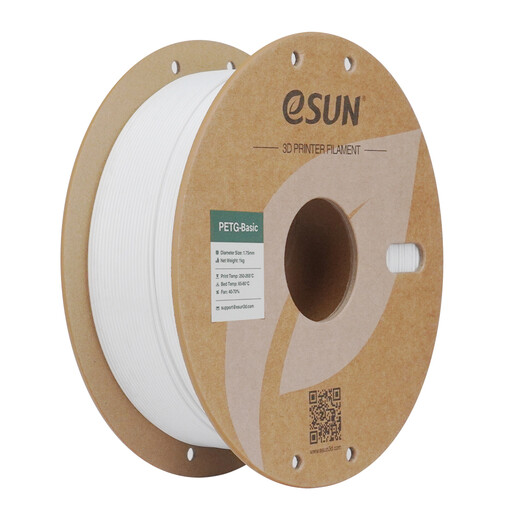
Why this product suits this profile: The 1 kg spool is an interesting option for users who want to make functional parts and prototypes with a standard FDM 3D printer.
The 1.75 mm filament diameter is clearly specified, making it easier to check compatibility before buying.
PETG base, 1 kg spool and, according to the product specifications, suitability for high-speed printing.
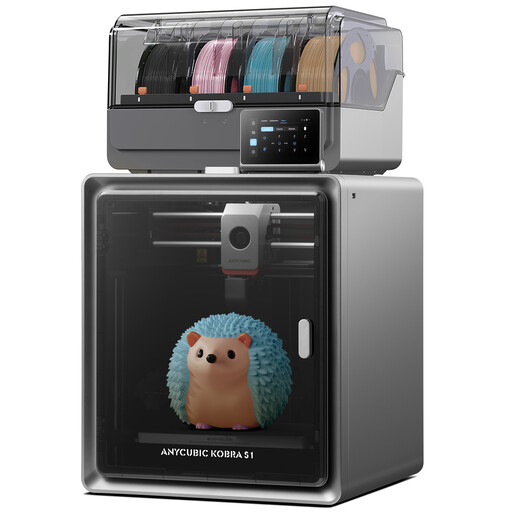
Why this product suits this profile: The enclosed CoreXY system is designed for users who want to combine multicolour printing, automatic functions and a compact build area.
The product specifications distinguish between standard and expandable colour options: four colours as standard, and up to 16 with additional ACE-2-Pro units.
250 × 250 × 250 mm print volume, speeds of up to 600 mm/s according to the product specifications, and filament drying up to 65 °C.
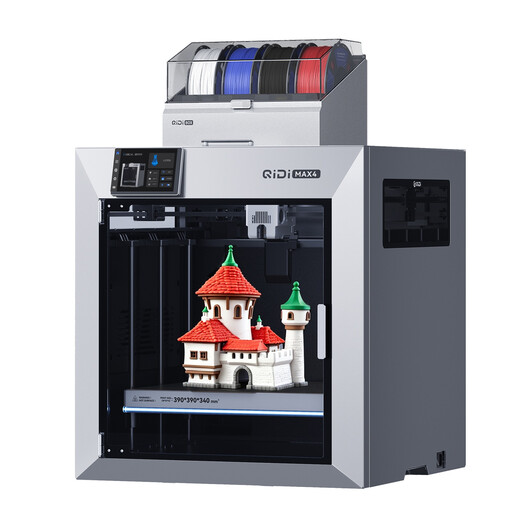
Why this product suits this profile: This model is designed for large components, frequent print jobs and materials that require a controlled environment.
The 390 × 390 × 340 mm print volume and heated chamber are clearly specified, making it easier to plan the space and material requirements.
65 °C heated build chamber, speeds of up to 800 mm/s according to the product specifications, and support for a QIDI box system with up to 16 colours.
We have put together a complete, regularly updated list of products that fully meet these strict selection criteria and the safety regulations applicable in the EU.
For models that will be on display, matt PETG filament can provide a subtle finish. The Joybuy range includes eSUN Matte PETG in Light Khaki, Alabaster White and Dark Grey, for example. eSUN PLA Matte Rainbow variants are available for decorative colour gradients. If you use high movement speeds, you may wish to consider a designated high-speed filament such as Creality Hyper PLA.
A 0.4 mm nozzle is a common starting point for detailed prints. For fibre-reinforced materials, the nozzle should be specifically suitable for abrasive filaments. A compatible 0.4 mm quick-swap hardened steel nozzle is available for the Anycubic Kobra S1 Max, for example. Always check the specific printer model and nozzle diameter before placing your order.
In addition to the purchase price, you will need to budget for filament, electricity, wear parts and, where applicable, print plates. PLA and PETG are usually calculated by the kilogram. Multicolour printing can also use additional purge material during colour changes. For realistic planning, you should take material consumption, failed prints and maintenance intervals into account.
Service life depends on the number of print hours, choice of material, maintenance and operating environment. Regular cleaning, dry filament storage and timely replacement of nozzles or PTFE tubes can help keep the printer running smoothly. It would not be accurate to give one general service-life estimate for all models.
For beginners, automatic levelling, a clearly specified material diameter, easily accessible wear parts and a moderate print volume are useful features. If you initially want to create single-colour PLA models, you do not necessarily need a multicolour system or heated print chamber. For larger or more technically demanding projects, an enclosed housing, higher nozzle temperatures and a heated chamber may become important.