
当日/次日达

品质保障

开启新人专享福利: 全场免邮 | 低至 2 折 | 免费试用 30 天 JoyPlus 会员
下载 Joybuy
When buying 3D printer filament, you should look beyond colour and price per kilogram. For hobbyists, makers, model builders and small businesses, the material, diameter, storage and printer settings all affect whether a print turns out well or ends up as unnecessary waste. Problems are often caused by unclear printing temperature information, choosing the wrong type of filament or using damp material.
This buying guide explains what to look for in PLA filament, PLA+ filament, PLA Matte, PLA Silk, PLA Rainbow and PETG filament.
Metallic, Silk and Rainbow effects can change the look of a model, but they don’t tell you what the filament is made from. Glossy PLA Silk is used differently from durable PETG. So check the material first, then look at the colour or finish.
With filament in different colours, it’s also worth considering how the colour changes. With Rainbow filament, the transition may look different depending on the object being printed. For example, the product description for eSUN PLA Matte Rainbow specifies colour changes at intervals of around 15 to 20 metres. The result therefore depends on the model’s size, layer height and material usage.
Many products are described as suitable for FDM or FFF printers. However, the nozzle temperature, print bed, speed and build chamber conditions still need to suit your particular printer. PLA is straightforward to use with many machines, whereas PETG often requires a heated print bed and higher temperatures.
For high-speed materials, also check whether your printer can actually handle the advertised speed. Creality Hyper PLA and other high-speed filaments may be designed for suitable print profiles, but the material’s maximum speed isn’t automatically the right setting for every machine.
Damp filament can cause popping sounds during extrusion, stringing or an uneven surface. Vacuum-sealed packaging with desiccant helps, but you’ll still need to store the filament somewhere dry once it’s opened. Keep the spool in a sealed box or filament bag with desiccant wherever possible.
PLA filament can usually be printed at moderate temperatures and tends to have low shrinkage. It’s suitable for figures, decorations, prototypes and many educational projects. Depending on the product formulation, PLA+ is sold as a modified version of PLA. Always check the label or datasheet for the specific manufacturer’s recommended print settings.
PETG filament is often used for models where greater heat resistance or a more durable material is needed. Printing with it usually requires more attention to bed adhesion, stringing and drying. For example, the DoPro PETG set lists 230–250 °C nozzle temperature, 70–85 °C print bed and 40–100 mm/s print speed as guidelines.
1.75 mm filament is the standard for many FDM 3D printers. The nominal diameter alone isn’t enough, though: consistent filament thickness helps ensure a steady feed. Several ANYCUBIC products specify a tolerance of ±0.02 mm. This kind of detail is more useful to buyers than vague claims about print quality.
Before buying, check:
A 1 kg filament spool can be enough for numerous prints, depending on the size of your models. Usage depends on factors such as infill, wall thickness, support structures and layer height. Gradient or effect filament can be a cost-effective choice if you want colour changes without using several spools. For one-off test objects or less common colours, smaller packs may be more suitable.
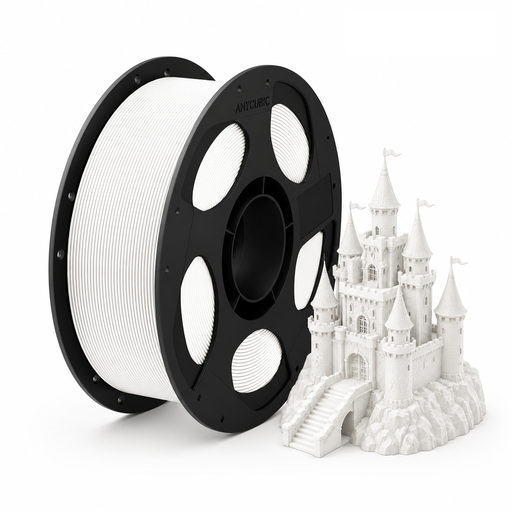
Why this product suits this profile: The white PLA filament is a versatile base colour for models, prototypes, school projects and items you plan to paint later. The 1 kg spool is designed for regular printing.
The product details specify a diameter of 1.75 mm and a tolerance of ±0.02 mm. This lets you check the key specifications against your printer before buying.
PLA base, white colour, 1 kg spool and stated ±0.02 mm tolerance.
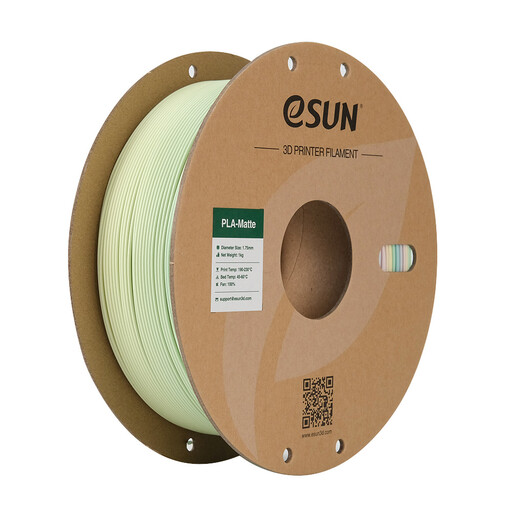
Why this product suits this profile: This matte Rainbow filament is for users who want to create decorative models with a colour gradient and a subtle finish.
The product description states that colour changes occur at intervals of around 15 to 20 metres. This helps you judge whether a model will show the gradient as you want it to.
Matte finish, multicolour gradient, 1.75 mm diameter and 1 kg spool.
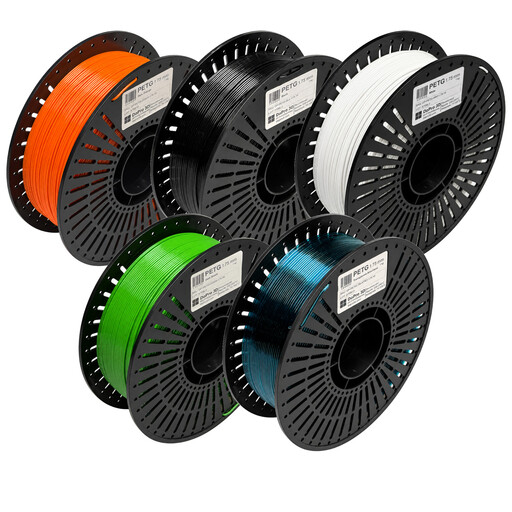
Why this product suits this profile: This set combines five colours for decorations, props, lights and seasonal projects. It’s designed for frequent users who want to keep several PETG colours in stock.
The product description lists the material, diameter tolerance, temperature range and recommended drying method. This makes it easier to plan for PETG’s more demanding requirements.
Five 1 kg spools, 1.75 mm filament, several colours and reusable spools.
We’ve put together a complete, regularly updated list of products that meet these strict selection criteria and fully comply with the safety regulations in force in the EU.
PLA filament is a practical starting point for many beginners, as it can often be printed using moderate settings. You’ll still need to check the temperature range specified by the manufacturer, the filament diameter and your printer’s profile. A white or grey PLA spool is also a good choice for prototypes and models you plan to paint later.
Shelf life depends greatly on the packaging, humidity and storage conditions. Unopened, vacuum-sealed material with desiccant usually stays usable for longer than an open spool kept somewhere damp. Store filament somewhere dry and out of direct light, and keep it as airtight as possible. PETG may need to be dried before printing; always follow the manufacturer’s instructions.
As well as the price per kilogram, factor in electricity use, print time, failed prints and material consumption. A model with high infill or lots of support structures will use considerably more filament than a thin-walled decoration. For a realistic estimate, multiply the weight shown in your slicer by the price per kilogram, then add electricity and finishing costs if applicable.