
Lieferung heute & morgen

Qualitätsgarantie

Willkommens-Angebote freischalten: KOSTENLOSE Lieferung | Bis zu 80 % RABATT | Kostenlose 30-Tage-JoyPlus-Testphase
App herunterladen
A single power adapter for your laptop, smartphone, and tablet—the concept of a multi-port USB-C charger is compelling. Instead of a bag full of different adapters and a tangle of cables, these devices promise a streamlined and efficient charging solution. However, the market is flooded with products boasting seemingly identical specs, making the choice difficult. Certain marketing promises and technical shortcomings can quickly turn a supposedly good investment into an impractical or even unsafe one.
This guide highlights the crucial criteria you should check before buying and helps you avoid the most common pitfalls.
Many chargers are advertised with impressive wattage figures, but their actual real-world performance can be disappointing. Watch out for these three common issues to avoid a bad investment.
To find the right charger, you should focus on three technical fundamentals that go beyond pure wattage.
The most important specification isn't just the maximum total output, but the power distribution matrix. This indicates how many watts each port delivers when multiple ports are in use simultaneously. For example, a good 100W fast charger should be able to provide at least 65W to a laptop even while a smartphone is charging at 20W. Look for a detailed breakdown of power scenarios in the product specifications. This is especially critical if you're looking for a single charger for MacBook and iPhone.
Modern devices rely almost exclusively on USB-C. However, many users still own accessories like smartwatches, headphones, or older devices that require a USB-A port. A charger with a combination of multiple USB-C ports and at least one USB-A port offers the greatest flexibility, making the device future-proof without sacrificing compatibility with older tech.
Thanks to its higher efficiency, a GaN charger is smaller and lighter than traditional silicon-based chargers at the same power output. This makes it an excellent choice for the office or for travel. For international trips, a dedicated USB-C travel adapter with interchangeable plugs and integrated charging electronics is often the more practical solution. Those who spend a lot of time in the car should consider a specialised USB-C car charger, which is designed for a vehicle's voltage requirements and often provides very high charging power.
Here are some models tailored to specific use cases that meet the criteria mentioned above.
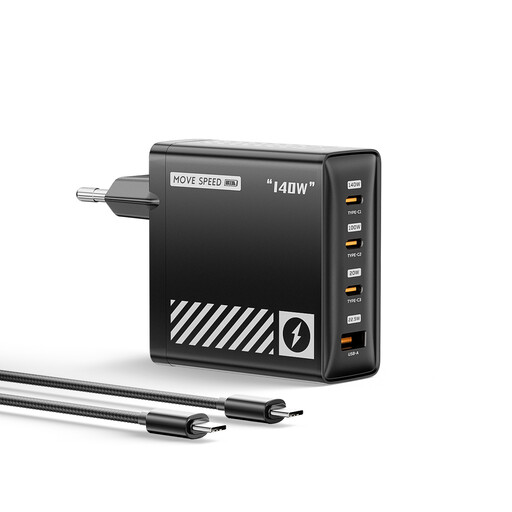
Why This Fits Their Persona: Ideal for professionals and creatives who need to quickly charge a high-performance notebook (e.g., a 16-inch MacBook Pro) along with other devices like a tablet and smartphone. The high output and four ports cover the needs of a complete mobile workstation.
This charger supports the modern PD 3.1 standard and delivers up to 140W from a single port. The power distribution is clearly specified, so users know exactly what output to expect when multiple ports are in use, avoiding the "total wattage trap."
The combination of 140W maximum output, four ports (3x USB-C, 1x USB-A), and a compact GaN design makes it a powerful all-in-one solution.
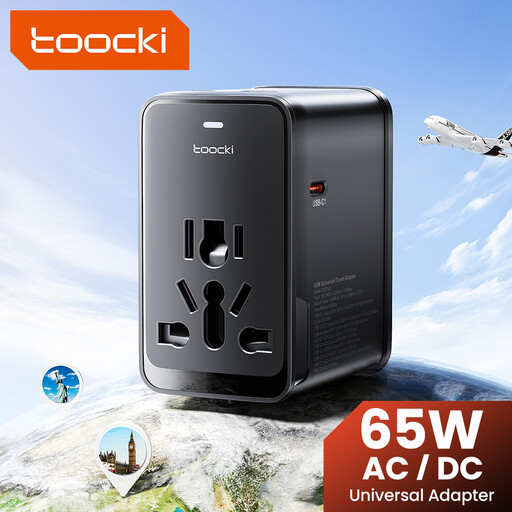
Why This Fits Their Persona: Perfect for people who travel internationally frequently. This device combines a powerful 65W charger with integrated adapters for EU, UK, US, and AUS outlets, replacing multiple separate items in your luggage.
Instead of pairing a standard charger with a wobbly adapter, this is an integrated solution. The 65W PD output is sufficient for most ultrabooks and tablets and is intelligently distributed across the four ports, making it a true USB-C travel adapter.
All-in-one design with worldwide compatibility and four charging ports (3x USB-C, 1x USB-A). The 65W output is a great compromise between size and charging capacity for travel.
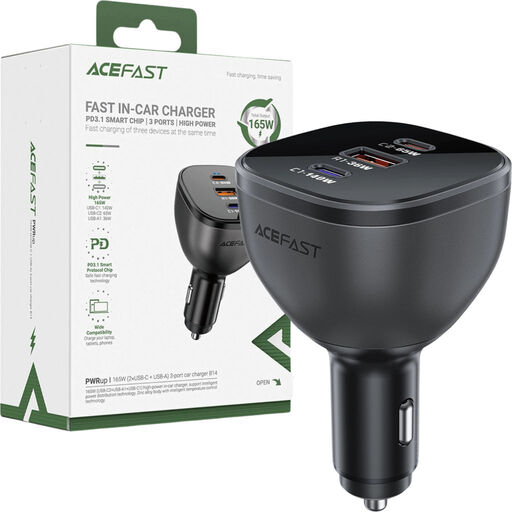
Why This Fits Their Persona: For anyone who spends a lot of time in the car and needs to charge their devices on the go—from field sales representatives to families on a road trip. With 165W of total power, it can even fast-charge multiple laptops and smartphones simultaneously.
This USB-C car charger is specifically designed for a vehicle's 12V/24V socket. It bypasses the issues that can arise from using non-dedicated home chargers with a power inverter, providing a stable and safe power supply.
Extremely high total output of 165W in a compact format for the car. The two USB-C and one USB-A port offer great flexibility for all passengers.
We have compiled a complete, up-to-date list of products that fully meet these strict selection criteria and safety regulations.
No, modern chargers and devices communicate with each other using protocols like USB Power Delivery (PD). The smartphone tells the charger how much power it can safely accept. The charger then delivers only the requested amount of power, even if it is theoretically capable of more. Overcharging or damage from excessive power is not a risk with certified devices.
GaN stands for Gallium Nitride, a semiconductor material that operates more efficiently than traditional silicon. A GaN charger can be built smaller and lighter for the same power output and generates less waste heat. The result is a more compact and energy-efficient power adapter.
Reputable manufacturers specify the power distribution in the product's technical specifications. Look for a table or a list that describes different scenarios, such as "USB-C1 + USB-C2: 65W + 30W". This information is crucial to ensure the charger meets your specific needs when charging multiple devices at once.