
Lieferung heute & morgen

Qualitätsgarantie

Willkommens-Angebote freischalten: KOSTENLOSE Lieferung | Bis zu 80 % RABATT | Kostenlose 30-Tage-JoyPlus-Testphase
App herunterladen
A modern USB-C car charger has become indispensable for many drivers. But the market is confusing and full of technical promises that aren't always kept. The wrong model charges devices painfully slowly, is incompatible with new smartphones, or breaks down after a short time in a truck or RV. As your Joybuy Product Recommendation Officer, I'll help you identify the crucial features and make an informed choice.
Before we get to our recommendations, it's important to understand the typical pitfalls that often lead to a bad purchase.
To avoid these traps, you should check three core technical aspects before buying. These determine whether a USB car charger will perform its job reliably.
Don't focus on the advertised total output, but on the maximum power a single USB-C port can deliver. For modern smartphones, 30 watts is a good benchmark to take full advantage of fast charging. If you want to charge a laptop in the car, the USB-C port should provide at least 65 watts. A good PD car charger supports the Power Delivery standard, which is essential for Apple devices and most notebooks. Other important protocols include Quick Charge (QC) for many Android devices and PPS (Programmable Power Supply) for particularly efficient charging on compatible devices.
Consider how many devices you typically charge at the same time. A car charger with multiple ports is ideal for families or commuters with both work and personal phones. A combination of at least one high-power USB-C port and one or more USB-A ports offers the greatest flexibility for older and newer devices. For users with extremely high power needs, such as in camping or field service, a cigarette lighter splitter with additional sockets and USB ports can be the right solution.
If you plan to use the charger not only in a passenger car but also in a van, truck, or RV, compatibility with 12V and 24V electrical systems is a mandatory requirement. This information can be found in the product's technical specifications. A device designed for both voltages has a corresponding protection circuit to ensure safe operation.
Based on the criteria above, we have identified a few models that are particularly well-suited for specific user groups.
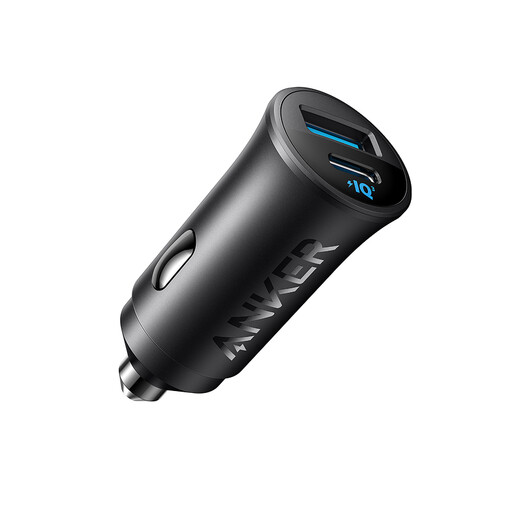
Why This Fits Their Persona: Ideal for commuters who need a compact and reliable solution for fast-charging their smartphone. The minimalist design blends unobtrusively into any cockpit.
It bypasses the "total output" trap by providing a clear 30W on the USB-C port, which is sufficient for fast-charging most current smartphones, even when the USB-A port is also in use.
Combination of a USB-C and a USB-A port for high compatibility. Its compact design doesn't block access to other controls in the vehicle.
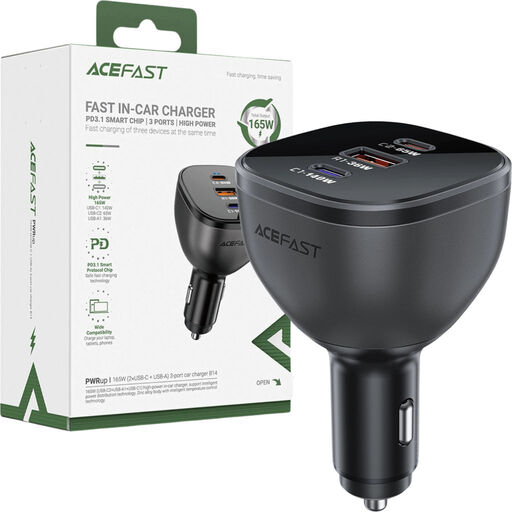
Why This Fits Their Persona: Perfect for long road trips with the family or for users who need to charge multiple power-hungry devices like a laptop, tablet, and smartphone simultaneously at maximum speed.
This model solves the power-splitting problem with an extremely high total output of 165W. It can power a laptop via a USB-C port at high speed while simultaneously fast-charging other devices.
Two USB-C ports and one USB-A port offer maximum flexibility. The high power output allows for charging demanding devices like laptops, which is often not possible with standard chargers.
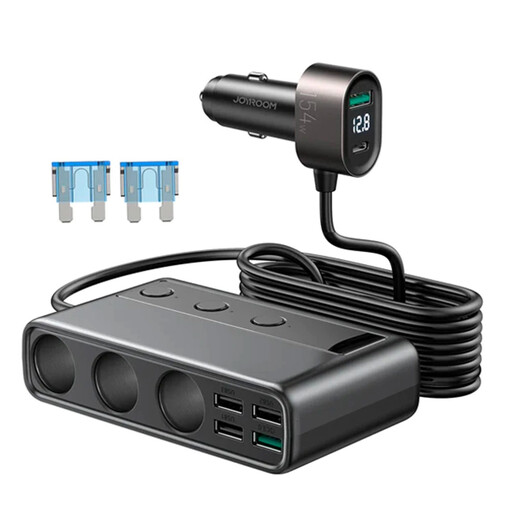
Why This Fits Their Persona: An all-in-one charging solution for professional use or long trips in an RV. It powers not only USB devices but also classic 12V appliances like coolers or navigation systems.
This model is explicitly designed for 12V and 24V systems, thus avoiding the voltage trap. As a splitter, it also offers a multitude of ports, solving the problem of having too few charging options.
Enormous port variety with 6 USB ports and 3 additional cigarette lighter sockets. Supports PD, QC, and PPS for fast and efficient charging of a wide range of devices.
We have compiled a complete, up-to-date list of products that fully meet these strict selection criteria and safety regulations.
In most modern vehicles, the power supply to the cigarette lighter is cut off as soon as the ignition is turned off. In this case, the charger cannot drain the battery. However, with some older models or vehicles with permanently powered sockets, it is advisable to unplug the charger during long periods of non-use to prevent a slow discharge of the car battery.
To efficiently charge a laptop while using it in the car, the charger's USB-C port should deliver a power output of at least 65 watts. Models with 45 watts can slowly charge a laptop when it's turned off, but are often not sufficient to power it during operation. Check your laptop's power adapter requirements for an exact value.
No, not every USB-C cable is designed for high power delivery. In particular, for power levels above 60 watts, a specially certified cable with an E-Marker chip is required. Using an unsuitable cable with a powerful charger can limit the charging speed or, in the worst case, lead to overheating. When buying, look for cables that are explicitly rated for power outputs like 65W or 100W.