
当日/次日达

品质保障

开启新人专享福利: 全场免邮 | 低至 2 折 | 免费试用 30 天 JoyPlus 会员
下载 Joybuy
As a Joybuy Product Recommendation Officer, I analyse market information to provide you with objective and practical purchasing advice. The goal is to help you make informed decisions based on facts, not marketing promises.
AR (Augmented Reality) sports glasses promise to revolutionise the cycling experience by projecting navigation cues, performance data, and notifications directly into your field of view. However, the market is filled with products whose advertised features often fail to deliver in practice. Before you invest, you should be aware of the most common pitfalls.
Common Pitfalls When Buying AR Sports Glasses:
To avoid a poor investment, you should base your selection on objective technical parameters. Pay special attention to the following three areas.
The centrepiece of any AR glasses for cycling is the display. The specifications here are crucial. A sports glasses with a head-up display should offer sufficient brightness (measured in nits) to be clearly visible even in bright daylight. Pay attention to the display type: binocular displays (for both eyes) offer a more immersive experience than monocular ones (for one eye). Equally important is the field of view (FOV), which indicates how large the projected area is without you having to move your head. A FOV that is too small can be distracting.
Modern smart cycling glasses must integrate seamlessly with your existing setup. Check the Bluetooth version (e.g., Bluetooth 5.3 for a stable and energy-efficient connection) and whether the glasses support peripherals like heart rate monitors, cadence sensors, or power meters. If you want to record your rides, data glasses with a camera are worth considering. Look for the video resolution (e.g., 4K) and the camera's field of view. Integrated sports glasses with navigation should offer precise GPS and allow route planning via an associated app.
In cycling, your gear is exposed to the elements. Waterproof smart glasses are therefore essential. The IP rating indicates the level of protection. IPX4, for example, means protection against splashing water from all directions, which is sufficient for rain showers. Weight is also a critical factor—glasses over 80 grams can become uncomfortable on long tours. UV protection (e.g., UV380) is a standard that should not be overlooked, and compatibility with prescription lenses is a must-have for glasses wearers.
Here are some recommendations tailored to different user profiles and their specific requirements.
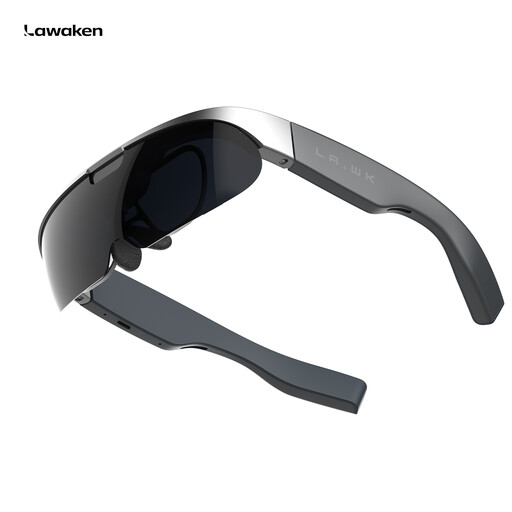
Why This Fits Their Persona: Ideal for tech-savvy cyclists who want to improve their performance with data. These glasses combine AR navigation, real-time data visualisation, and an integrated camera, allowing you to keep your focus on the road while all relevant information remains in view.
The product description specifies concrete figures: an 8-hour usage time and an IPX4 certification. The binocular waveguide display is designed for outdoor use, avoiding the problem of poorly readable screens.
Integrated 4K camera with a 120° wide-angle lens; compatibility with prescription lenses; open-ear audio to maintain awareness of your surroundings.
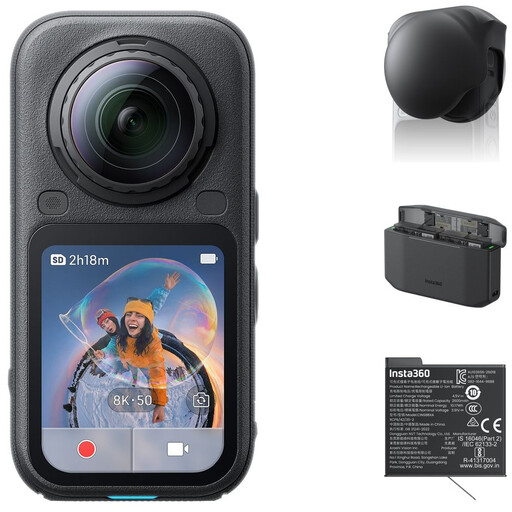
Why This Fits Their Persona: For users whose priority is creating high-quality video content, a dedicated action camera is often the better choice. This model offers 8K 360° recording and is not an AR device, but an alternative for content creators.
This product avoids the "jack-of-all-trades" pitfall by specialising in one core function: first-class video recording. It doesn't promise AR features, instead delivering high performance in its specific area.
Native 8K 360° video recording; up to 140 minutes of battery life at 8K30fps according to the manufacturer; wind-resistant microphones for clear outdoor audio.
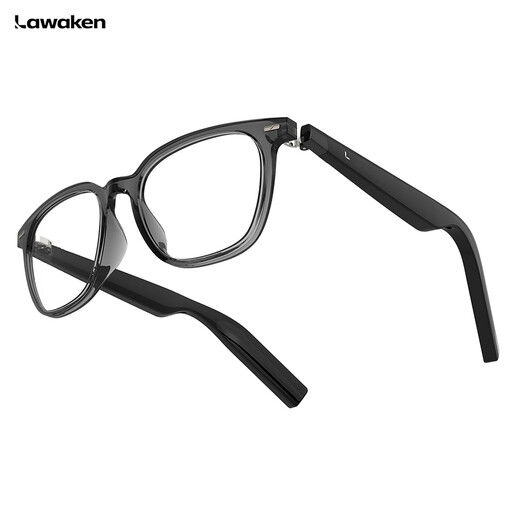
Why This Fits Their Persona: Suitable for users looking for smart glasses for daily life to make calls, listen to music, and use AI assistants, without needing an AR display for sports data. The lightweight design and open-ear audio feature make them ideal for commuters and daily use.
This model is clearly positioned as "AI Smart Audio Glasses," so it doesn't create the false impression of being a full-featured AR sports device. It focuses on audio and AI functions, thus avoiding disappointed expectations regarding visual displays.
Very lightweight (from 33g); long battery life of up to 12 hours of use according to the manufacturer; real-time translation function and AI notes for meetings.
We have compiled a complete, real-time list of products that fully satisfy these strict selection criteria and UK safety regulations.
Can I use AR sports glasses with my prescription? Some models, like the LAWAKEN LAWK ONE, are compatible with prescription lenses. This means an optician can fit lenses with your individual prescription into the frame. Before purchasing, be sure to check the product description for a note like "Prescription Lenses Compatible" or similar wording.
How long does the battery of smart cycling glasses really last during active use? The actual battery life depends heavily on the intensity of use. Features like GPS tracking, continuous 4K camera recording, and a constantly active display consume significantly more power than simply showing notifications. Look for models that specify a usage time of at least 6-8 hours under realistic conditions to get through an all-day ride without recharging.
Are AR glasses legal for cycling on public roads? In Germany, there is no specific law that prohibits the use of AR glasses while cycling. However, § 23 of the German Road Traffic Regulations (StVO) applies, which states that vision and hearing must not be impaired by devices. As long as the glasses' display does not significantly obstruct the view of traffic and ambient sounds remain audible (e.g., through open-ear audio), their use is generally permissible. However, the rider always remains responsible for participating safely in road traffic.