
Lieferung heute & morgen

Qualitätsgarantie

Willkommens-Angebote freischalten: KOSTENLOSE Lieferung | Bis zu 80 % RABATT | Kostenlose 30-Tage-JoyPlus-Testphase
App herunterladen
A good cutting board is the cornerstone of any kitchen. The bamboo cutting board, in particular, has become a popular choice for home cooks and everyday gourmets across the UK and Europe in recent years. It's valued for its hardness, appealing look, and sustainable properties. However, not every bamboo board lives up to its promise. Many buyers invest in products that warp, crack, or dull their knife blades after only a short time.
As your Joybuy Product Recommendation Officer, I'm here to help you separate the wheat from the chaff. In this guide, I'll show you the three most common pitfalls when buying a bamboo cutting board and which crucial features you should look for to make a durable and functional choice.
The market is flooded with offers that look convincing at first glance. But often, their weaknesses only reveal themselves with daily use. Pay attention to these three points to avoid a bad purchase:
To ensure your new bamboo wood cutting board becomes a reliable partner in the kitchen, you should check three core parameters before buying.
The manufacturing method is the most important quality criterion.
The dimensions of a cutting board should match your cooking habits.
Additional features can make everyday kitchen tasks significantly easier.
Based on the quality criteria mentioned, we have selected a few products from our range that are suitable for different user profiles.
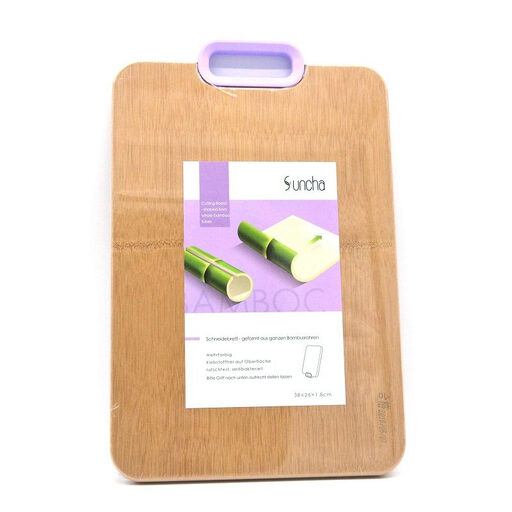
Why This Fits Their Persona: This board offers an ideal balance of size and functionality for daily kitchen tasks. It's large enough for most jobs, yet still manageable for quick cleaning and easy storage.
The single-piece bamboo construction minimises the 'glue trap' risk. At 18 mm, it's not extremely thick, but it's sufficiently stable for everyday use and less prone to warping than thinner models.
Solid, single-piece bamboo construction; integrated handle for easy handling.
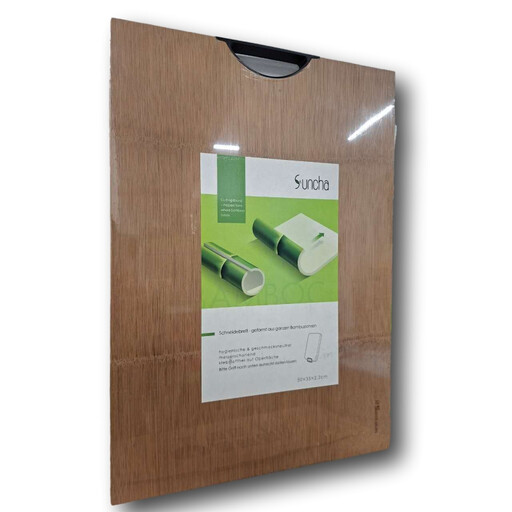
Why This Fits Their Persona: For anyone who cooks often and with passion, processes large quantities, or needs a stable surface for kneading dough. This board is an investment in a professional-grade work surface.
It addresses both main pitfalls: the solid, glue-free construction makes it extremely robust, and the 26 mm thickness ensures maximum stability and longevity. Nothing wobbles or warps here.
Very large and thick format; seamless, glue-free surface made from a single piece of bamboo.

Why This Fits Their Persona: Ideal for users who regularly carve roasts or cut juicy foods like melons and tomatoes and appreciate a clean work surface. The WMF brand also stands for renowned quality in the kitchen sector.
This board focuses on a clearly defined, useful function—the juice groove. It avoids exaggerated marketing promises and delivers a practical solution to an everyday kitchen problem.
Integrated juice groove for clean work; reversible design for hygienic separation of foods.
We've compiled a complete, up-to-date list of products that fully meet these strict selection criteria and stringent safety standards.
1. How do you properly care for a bamboo cutting board? Proper care is crucial for longevity. After use, clean the board by hand with a damp cloth, warm water, and mild washing-up liquid. Rinse it thoroughly and dry it immediately with a cloth. Store it upright to allow air to circulate. The board must never be cleaned in the dishwasher or left to soak in water for extended periods. To prevent drying out and cracking, you should regularly (about once a month) treat it with a food-safe mineral oil or special bamboo conditioning oil.
2. Is the 'antibacterial' quality of bamboo cutting boards a myth? Bamboo naturally has a high density and low porosity. This makes it harder for liquids and bacteria to penetrate the material compared to some softer types of wood. This property makes it a hygienic choice. However, no cutting board is inherently germ-free. Thorough cleaning after every use, especially after contact with raw meat or fish, is essential to prevent cross-contamination.
3. How can I identify a high-quality bamboo cutting board at first glance? Pay attention to the weight and thickness—a good board feels solid and heavy. Check the surface: it should be smoothly sanded but not lacquered. Examine the edges: do you see many small, pressed pieces (an indicator of a lot of glue) or a continuous, solid structure? A solid construction and a thickness of over 2 cm are reliable signs of a durable and sturdy cutting board.